
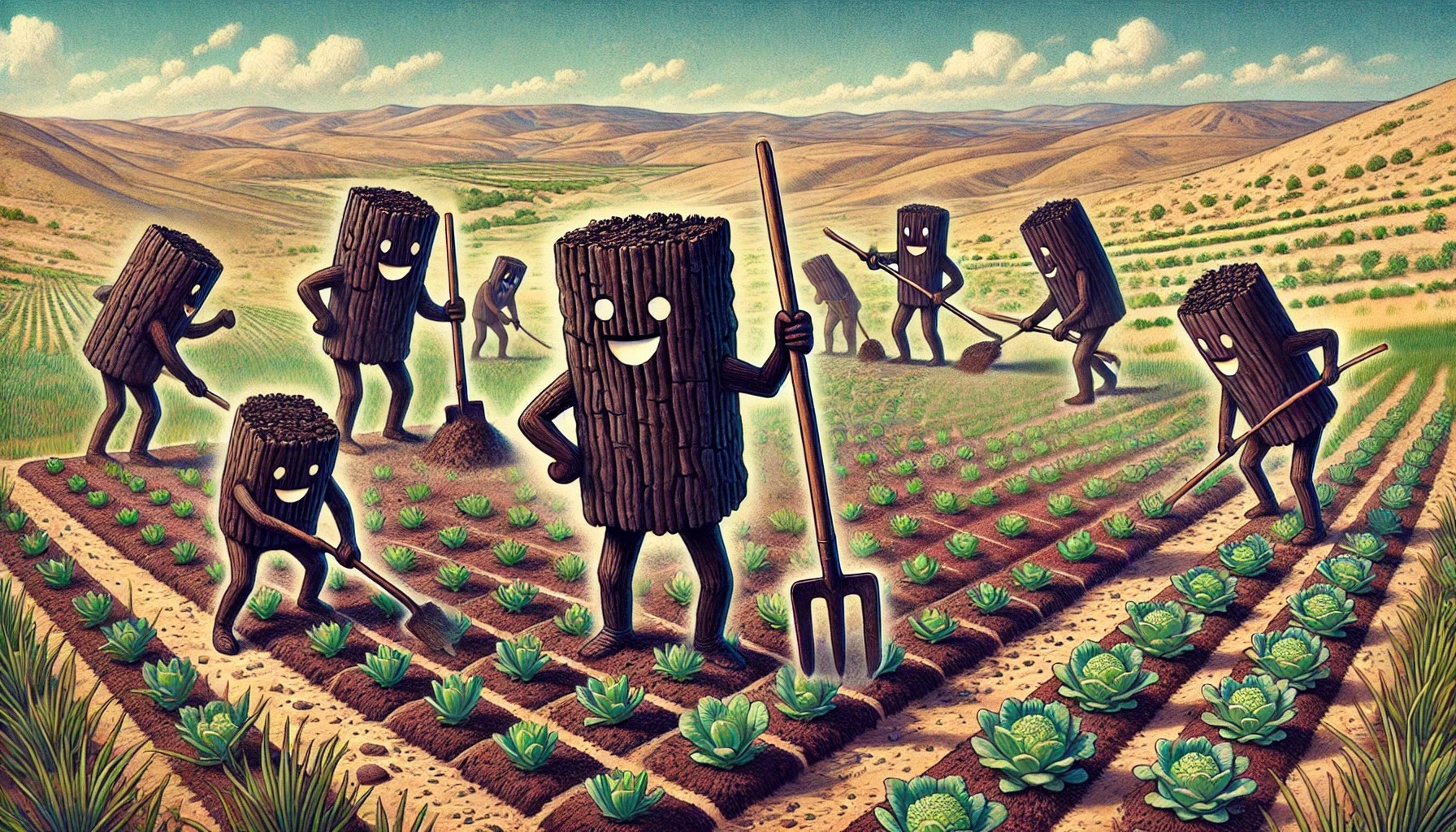
Haddad, et al (2024) Sustainable Agriculture in Jordan: A Review for the Potential of BiocharBiochar is a carbon-rich material created from biomass decomposition in low-oxygen conditions. It has important applications in environmental remediation, soil improvement, agriculture, carbon sequestration, energy storage, and sustainable materials, promoting efficiency and reducing waste in various contexts while addressing climate change challenges. More from Agricultural Waste for Soil and Crop Improvement. Journal of Ecological Engineering. https://doi.org/10.12911/22998993/191186
Jordan’s agriculture faces significant hurdles due to a combination of environmental and socio-economic factors. These include soil degradation, poor fertility, increasing salinity, limited arable land, and scarce water resources. Approximately 90% of the land is arid or semi-arid, with desertification affecting about 80% and soil salinization impacting 30-40% of irrigated lands, particularly in the Jordan Valley. Traditional agricultural practices and the heavy use of chemical fertilizers have further degraded soil quality, creating a vicious cycle of declining yields and rising costs. This situation threatens farmers’ livelihoods and Jordan’s food security, emphasizing the need for sustainable agricultural practices to restore soil health, improve water management, and enhance crop productivity.
Biochar (BC), a carbon-rich product derived from the pyrolysisPyrolysis is a thermochemical process that converts waste biomass into bio-char, bio-oil, and pyro-gas. It offers significant advantages in waste valorization, turning low-value materials into economically valuable resources. Its versatility allows for tailored products based on operational conditions, presenting itself as a cost-effective and efficient More of agricultural organic wastes, presents a promising solution to these challenges. BC offers numerous benefits, including improved soil physical properties, enhanced microbial activity, increased crop growth and yield, and reduced greenhouse gas emissions. It is particularly effective in arid and semi-arid regions like Jordan, where water and soil resources are limited.
BC contributes to climate change mitigation by sequestering carbon in the soil and reducing the need for inorganic fertilizers. Unlike conventional carbon materials, BC is made from renewable feedstockFeedstock refers to the raw organic material used to produce biochar. This can include a wide range of materials, such as wood chips, agricultural residues, and animal manure. More and has a simple preparation process, making it a cost-effective and environmentally friendly solution for soil remediation and nutrient management in agriculture. Converting agricultural organic waste into BC can also be a strategy for sustainable waste management.
Jordan generates a substantial amount of organic waste, primarily from the organic fraction of municipal solid waste, accounting for 50-65% of the total waste generated. Agricultural organic waste, including corn stover, sorghum residues, fruit tree cuttings, seed pods, sunflower seed shells, sugar cane bagasse, and date palm residues, is also abundant and suitable for BC production. Utilizing this waste for BC production can improve soil quality and offer a sustainable solution for waste management.
Various methods exist for producing BC from agricultural organic waste, including torrefaction and pyrolysis. In Jordan, the predominant method is slow pyrolysis at low temperatures (300-350°C), which achieves higher BC yields (25-35%) and is less energy-intensive. This method produces BC with a stable carbon structure, beneficial for soil amendmentA soil amendment is any material added to the soil to enhance its physical or chemical properties, improving its suitability for plant growth. Biochar is considered a soil amendment as it can improve soil structure, water retention, nutrient availability, and microbial activity. More and carbon sequestration.
The properties of BC vary depending on the feedstock and production conditions. For instance, wood-based BC typically has an alkaline pHpH is a measure of how acidic or alkaline a substance is. A pH of 7 is neutral, while lower pH values indicate acidity and higher values indicate alkalinity. Biochars are normally alkaline and can influence soil pH, often increasing it, which can be beneficial More (8-10), high carbon content, and is very stable, making it ideal for carbon sequestration and soil structure improvement. Poultry manure BC, rich in nutrients like nitrogen, phosphorus, and potassium, has a high cation exchange capacity (CEC) but is less stable and may contain heavy metals. Corn BC offers a balanced nutrient profile, moderate CEC, and stability, while olive mill waste BC is rich in potassium and other minerals, making it suitable for potassium-deficient soils.
BC improves soil physical properties by reducing soil bulk density and enhancing soil porosityPorosity of biochar is a key factor in its effectiveness as a soil amendment and its ability to retain water and nutrients. Biochar’s porosity is influenced by feedstock type and pyrolysis temperature, and it plays a crucial role in microbial activity and overall soil health. Biochar More, which promotes better water infiltration, root growth, and soil aeration. It also positively influences soil chemical properties and nutrient content, increasing soil organic matter, enhancing nutrient retention, and reducing nitrogen leachingLeaching is the process where nutrients are dissolved and carried away from the soil by water. This can lead to nutrient depletion and environmental pollution. Biochar can help reduce leaching by improving nutrient retention in the soil. More. Furthermore, BC provides a conducive habitat for soil microbes, enhancing microbial activity and diversity, which is crucial for nutrient cycling and soil health.
BC can also reduce greenhouse gas emissions by sequestering carbon, improving soil fertility, and altering soil conditions to inhibit methane and nitrous oxide emissions. However, despite its potential benefits, the application of BC among farmers and researchers in Jordan remains limited due to a lack of awareness and economic feasibility challenges.
To fully harness the potential of biochar in promoting sustainable agriculture in Jordan, it is essential for policymakers to address these barriers through educational initiatives, economic incentives, investments in production technologies, and infrastructure improvements. By prioritizing these actions, Jordan can significantly improve its agricultural sustainability and productivity, ensuring long-term food security and environmental health.



Leave a Reply