
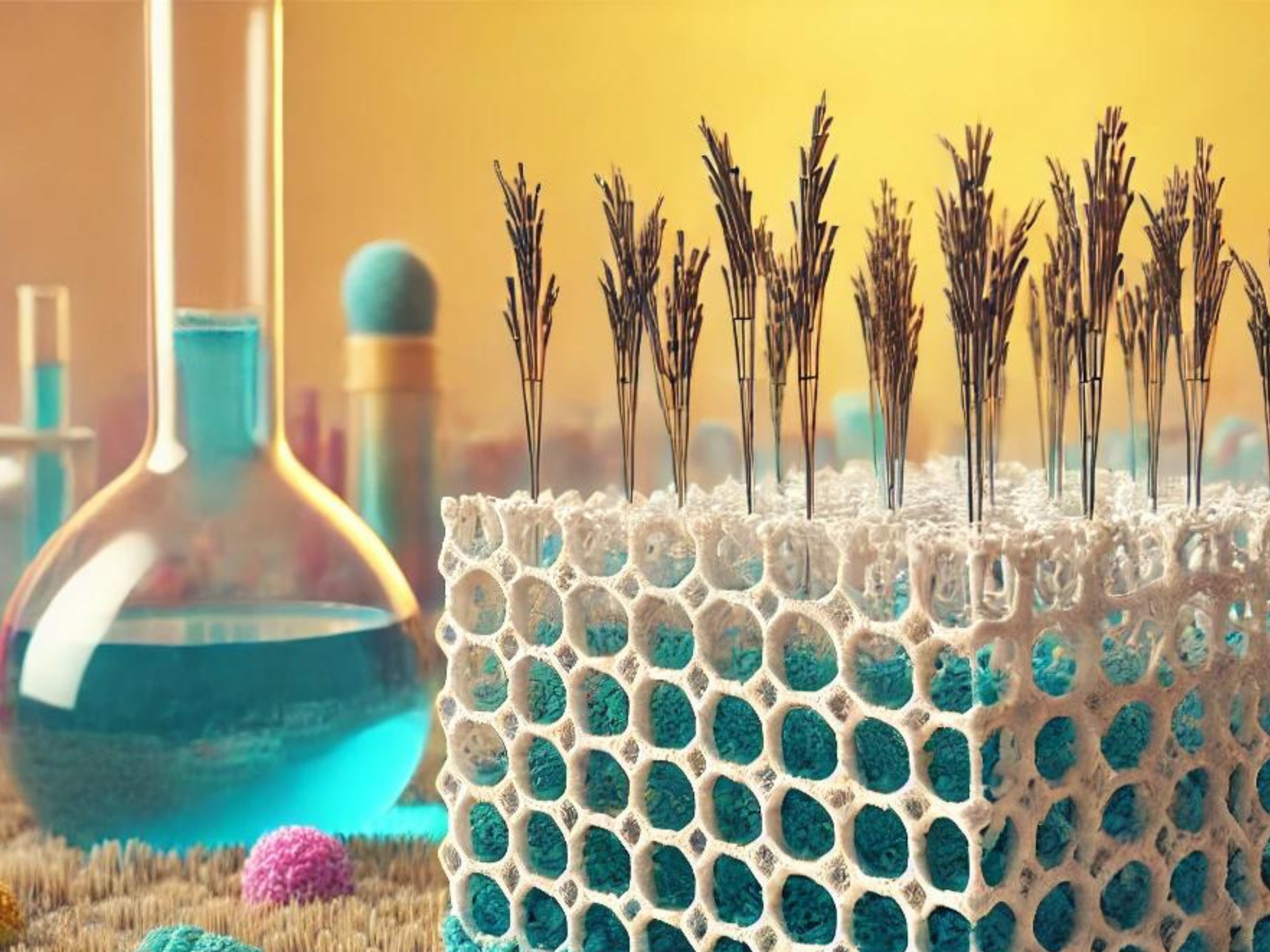

Assembly of 3D printed N-doped biocharBiochar is a carbon-rich material created from biomass decomposition in low-oxygen conditions. It has important applications in environmental remediation, soil improvement, agriculture, carbon sequestration, energy storage, and sustainable materials, promoting efficiency and reducing waste in various contexts while addressing climate change challenges. More as impeller with CaCO3 as sacrificial pore generator for enhanced dye adsorption. Chemical Engineering Journal. https://doi.org/10.1016/j.cej.2024.154661
A recent study published in Chemical Engineering Journal explores an innovative approach to improving dye adsorption in wastewater treatment using 3D-printed nitrogen-doped biochar. Derived from rice husks, the biochar was infused with nitrogen to boost its adsorption properties and 3D-printed into monolithic paddles. To enhance the material’s effectiveness, calcium carbonate (CaCO3) was used as a sacrificial pore generator, creating macroporous structures that expose more active sites.
The inclusion of CaCO3 significantly improved the mass transfer efficiency and overall adsorption performance. Computational fluid dynamics (CFD) simulations confirmed that the larger, more open channels facilitated better fluid flow and faster dye adsorption rates. The 3D-printed adsorbents, particularly those using micron-sized CaCO3, demonstrated exceptional performance, including high adsorption capacity for dyes like methylene blue and rhodamine B, as well as strong reusability—maintaining over 90% efficiency after ten cycles.
This research highlights the potential of 3D printing technology in environmental protection, specifically in creating highly efficient, cost-effective solutions for wastewater treatment. By utilizing agricultural waste like rice husks and incorporating advanced design features, such as nitrogen doping and CaCO3 pore generation, the study presents a promising path for sustainable and high-performance adsorbents.
This work underscores the future of integrating materials science, 3D printing, and environmental engineering for practical applications in pollution control.




Leave a Reply