
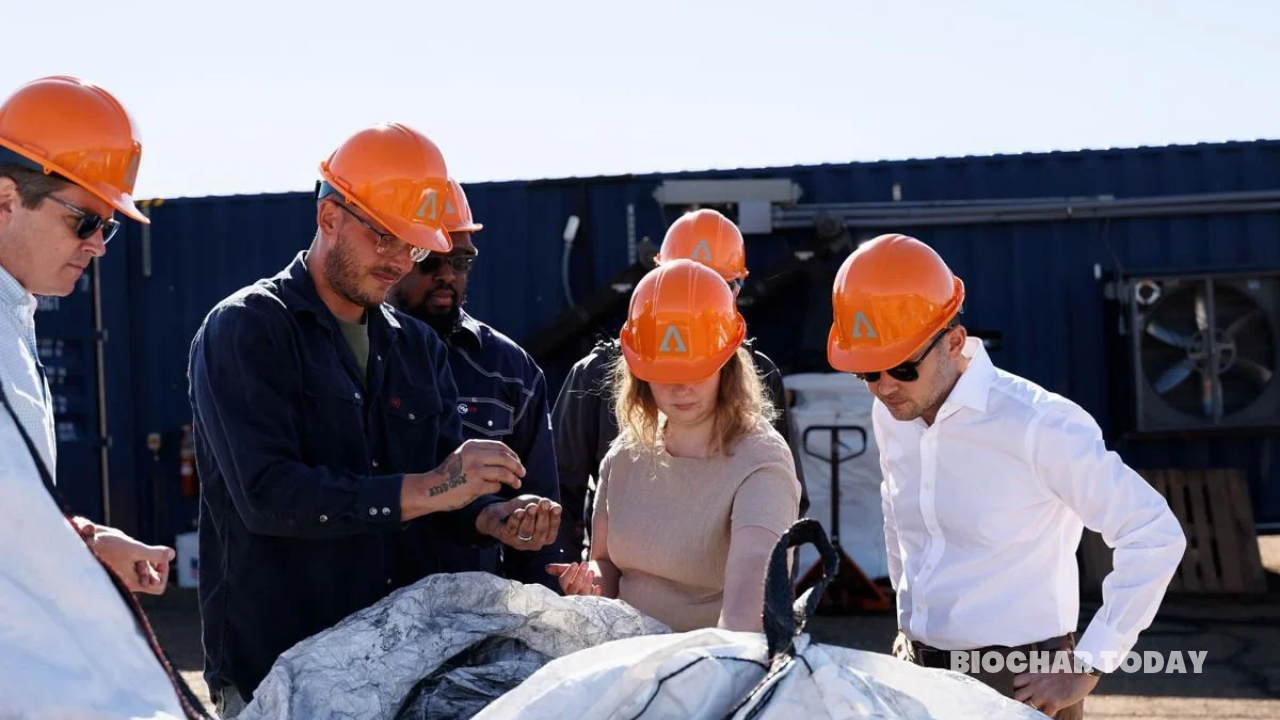
Robinson Carbon, a New Orleans-based enterprise, has announced a $16 million capital investment to construct its inaugural industrial-scale biocharBiochar is a carbon-rich material created from biomass decomposition in low-oxygen conditions. It has important applications in environmental remediation, soil improvement, agriculture, carbon sequestration, energy storage, and sustainable materials, promoting efficiency and reducing waste in various contexts while addressing climate change challenges. More production facility in central Louisiana. Located at the England Airpark near Alexandria, the project aims to leverage regional forestry and agricultural byproducts to produce stable carbon sequestering materials. The development represents a notable industrial-scale deployment of carbon removal infrastructure within the United States, linking local economic development with climate mitigation goals.
The primary challenge addressed by this initiative involves scaling durable carbon removal solutions while managing localized supply chain logistics and feedstockFeedstock refers to the raw organic material used to produce biochar. This can include a wide range of materials, such as wood chips, agricultural residues, and animal manure. More sourcing. Developing an industrial biochar facility requires a consistent, high-volume supply of biomassBiomass is a complex biological organic or non-organic solid product derived from living or recently living organism and available naturally. Various types of wastes such as animal manure, waste paper, sludge and many industrial wastes are also treated as biomass because like natural biomass these More residues without disrupting local ecological balances or competing with existing timber and agricultural uses. Furthermore, project developers must navigate rigorous technical standards to ensure that the carbon sequestered through pyrolysisPyrolysis is a thermochemical process that converts waste biomass into bio-char, bio-oil, and pyro-gas. It offers significant advantages in waste valorization, turning low-value materials into economically valuable resources. Its versatility allows for tailored products based on operational conditions, presenting itself as a cost-effective and efficient More remains permanently locked away rather than rapidly re-released into the atmosphere.
To resolve these hurdles, Robinson Carbon situated its facility at the England Airpark, capitalizing on central Louisiana’s robust forestry infrastructure and transportation networks to secure a steady, sustainable stream of woody biomass feedstock. The facility utilizes advanced pyrolysis technology to convert waste biomass into high-purity biochar under controlled thermal conditions. This operational design optimizes carbon retention efficiency while simultaneously creating useful co-products, such as renewable thermal energy or soil amendmentA soil amendment is any material added to the soil to enhance its physical or chemical properties, improving its suitability for plant growth. Biochar is considered a soil amendment as it can improve soil structure, water retention, nutrient availability, and microbial activity. More materials suited for regional agricultural applications.
The expected outcomes of the $16 million investment include the creation of local employment opportunities—projected to deliver over 100 direct and indirect jobs—and the establishment of a verifiable carbon removal pipeline. By permanently locking carbon into stable soil matrices, the facility will generate certified carbon removal credits while improving regional soil health and water retention. Ultimately, the project demonstrates how regional manufacturing investments can successfully integrate industrial decarbonization with local economic revitalization.




Leave a Reply