
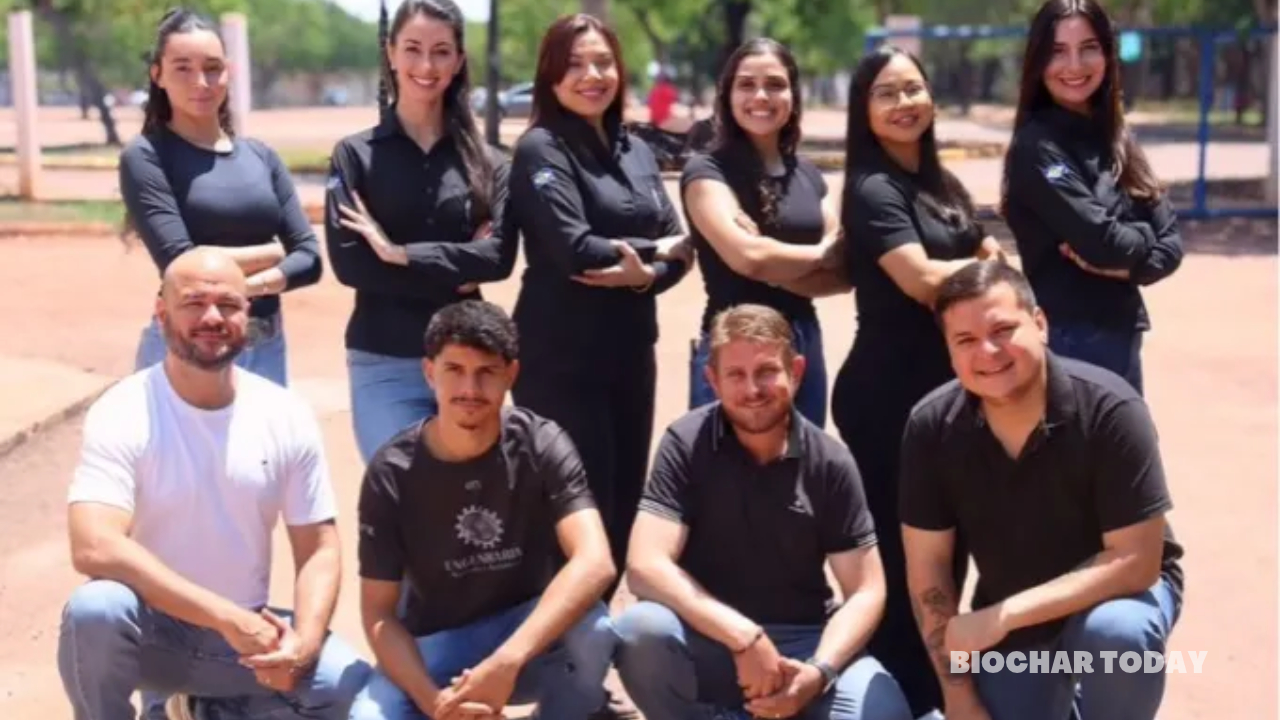
In Brazil, the Coordinated Research Network (CRN) on enhanced rock weathering (ERW) has launched its first field pilot at the Mato Grosso Cotton Institute (IMA). Led by researchers from the Federal University of Rondonópolis (UFR) in partnership with the SIPA Alliance, the trial operates under Cascade Climate’s Bedrock Initiative. The project aims to collect structured, independent, and scientifically rigorous evidence on ERW carbon dioxide removal (CDR) performance and agricultural soil impacts—a standardized field-trial framework directly parallel to the measurement, reporting, and verification (MRV) requirements governing soil-applied biocharBiochar is a carbon-rich material created from biomass decomposition in low-oxygen conditions. It has important applications in environmental remediation, soil improvement, agriculture, carbon sequestration, energy storage, and sustainable materials, promoting efficiency and reducing waste in various contexts while addressing climate change challenges. More deployments.
A central barrier to scaling terrestrial carbon removal pathways, including ERW and biochar, is the lack of uniform field data across diverse soil types, climates, and cropping systems. Without standardized plot designs, equipment protocols, and analytical methods, field measurements remain difficult to compare across regions. This inconsistency limits researchers’ ability to validate carbon removal rates, predict soil pHpH is a measure of how acidic or alkaline a substance is. A pH of 7 is neutral, while lower pH values indicate acidity and higher values indicate alkalinity. Biochars are normally alkaline and can influence soil pH, often increasing it, which can be beneficial More and nutrient responses, and build the empirical evidence base required by carbon market registries and agricultural stakeholders.
To resolve this data gap, the Mato Grosso pilot implements a standardized experimental protocol developed collaboratively by academic researchers, modelers, the Cascade Scientific Advisory Board, and private-sector ERW scientists. Forming the field-experiment arm of Cascade Climate’s three-part Bedrock Initiative—alongside the Model Acceleration and Large-Scale Studies components—the trial systematically tracks changes in soil chemistry, water, sequestered carbon dioxide, and crop productivity. All future CRN sites across different global soils and climates will replicate these identical plot distribution, instrumentation, and analytical methodologies.
The pilot will generate consistent, cross-comparable datasets evaluating both carbon sequestration efficiency and agronomic co-benefits, such as soil pH modulation, nutrient availability, and yield performance. Over time, data from the Brazil trial and subsequent global CRN sites will refine predictive biogeochemical models and establish a foundational empirical benchmark for terrestrial carbon removal research and commercial deployment.

Leave a Reply