

Key Takeaways
- A common agricultural waste, rice husk, can be turned into a highly effective material called biocharBiochar is a carbon-rich material created from biomass decomposition in low-oxygen conditions. It has important applications in environmental remediation, soil improvement, agriculture, carbon sequestration, energy storage, and sustainable materials, promoting efficiency and reducing waste in various contexts while addressing climate change challenges. More to clean up water contaminated with neonicotinoid pesticides.
- The best-performing material was created by heating the rice husks to a high temperature of 600∘C.
- This biochar, called RHB600, demonstrated a maximum dinotefuran removal capacity of nearly 50 milligrams of pesticide per gram of material, significantly better than common minerals.
- The biochar uses a combination of its tiny internal pores, its carbon structure’s ability to “stick” to the pesticide molecules, and weak chemical bonds to pull the pollutant out of the water.
- The biochar can be cleaned and reused multiple times using ethanol, making it an economically and environmentally sustainable option for water treatment.
The extensive use of neonicotinoid insecticides (NEOs) worldwide has unfortunately resulted in widespread contamination of our environment, posing risks to both nature and human health. Since crops only absorb a small fraction of the applied NEOs, the majority leaks into the environment, contaminating soils and critical water sources. Dinotefuran (DIN) is a specific type of neonicotinoid that is particularly worrisome because it is highly soluble in water and quite toxic. This situation creates an urgent need for efficient and affordable technologies to clean DIN from water. An article published in Agronomy by Longfei Liu, Xinyu Jiang, Tianyu Lu, and Jinzhao Ma investigates one very promising and sustainable solution: turning waste rice husks—an abundant agricultural byproduct—into an effective cleanup material called biochar (RHB).
This research focused on creating this biochar and they tested three different temperatures: 400°C, 500°C, and 600°C, yielding RHB400, RHB500, and RHB600, respectively. The temperature used to make the biochar turned out to be hugely important, fundamentally changing the material’s internal structure and chemical groups. As the temperature increased to 600°C, the material developed a larger internal surface area, more tiny internal channels (or micropores), and a more stable, ring-like carbon structure (known as aromaticity).
The RHB600 material, made at the highest temperature, showed the best cleaning ability, achieving a maximum capacity of 49.73 milligrams of DIN removed per gram of biochar. This is a standout result, far superior to common materials like montmorillonite clay or kaolinite, and even better than some engineered composites. The speed and total amount of removal suggest the process is spontaneous and involves a mix of physical and chemical interactions on a highly varied surface. The process fits a mathematical model that accounts for the material’s ability to stick to the pesticide and its heterogeneous surface.
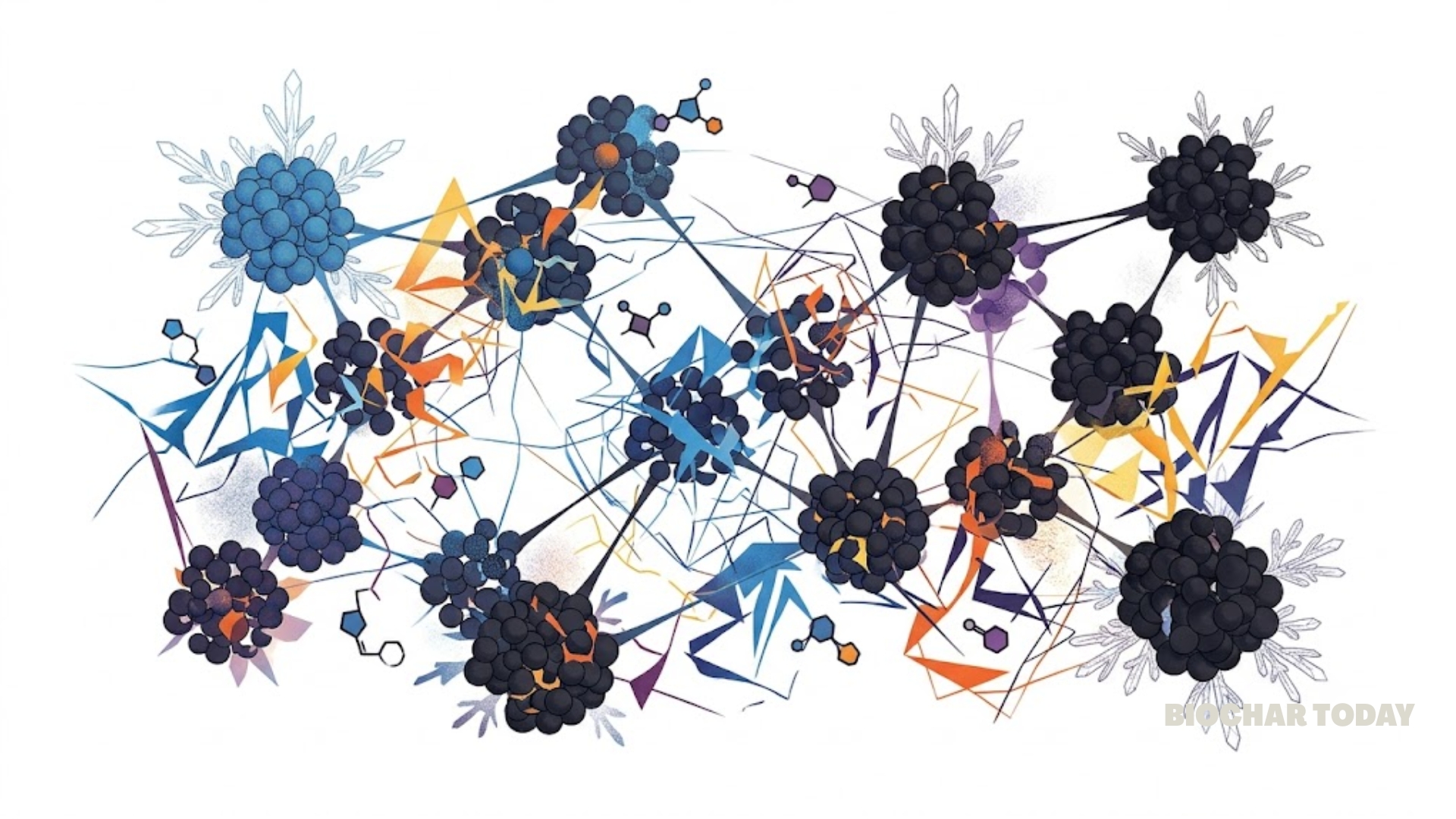
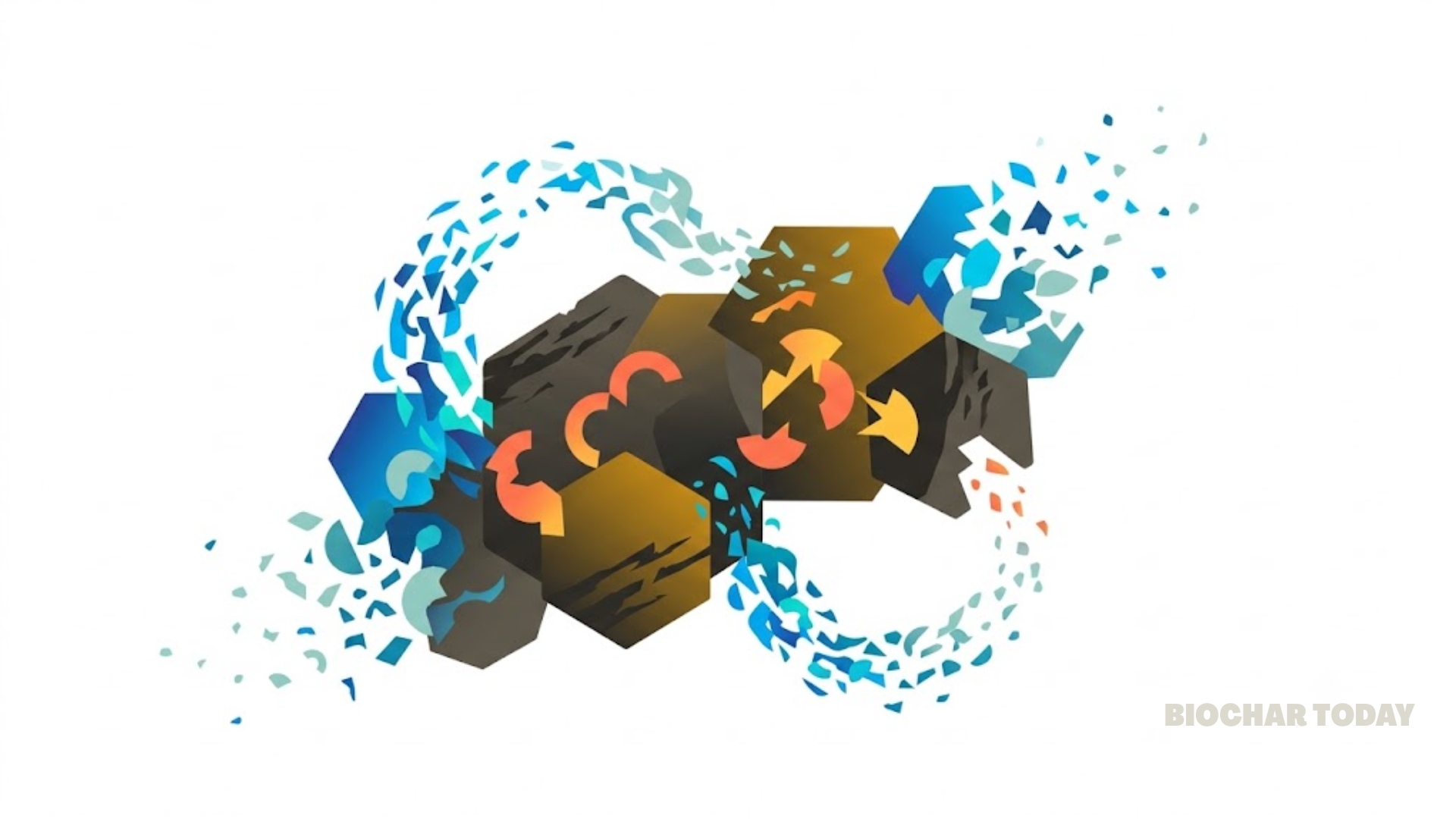
The scientific investigation revealed four main ways RHB600 cleans the water: Pore Filling, Aromatic Sticking ( π−π Interactions), Hydrogen Bonding, Lewis Acid-Base Interactions. When rice husk is heated at very high temperatures, it turns into a biochar filled with tiny pores—like a sponge—where DIN molecules can get trapped and held. The heat also creates stable, ring-shaped carbon structures in the biochar that naturally “stick” to the ring structure of DIN, much like two pieces of Velcro coming together. In addition, the surface of the biochar has oxygen-based groups that form gentle hydrogen bonds with parts of the DIN molecule, helping it stay attached. The minerals in the rice husk biochar, especially silica, act like small docking stations that give DIN molecules an extra place to anchor. Together, these physical and chemical attractions allow the biochar to effectively capture and hold DIN.
In practical water treatment, the presence of other substances can affect performance. The pHpH is a measure of how acidic or alkaline a substance is. A pH of 7 is neutral, while lower pH values indicate acidity and higher values indicate alkalinity. Biochars are normally alkaline and can influence soil pH, often increasing it, which can be beneficial More of the water and the concentration of humic acid (HA), a common type of natural organic matter, were found to be influential. Low levels of HA can actually improve removal by offering extra binding spots, but high levels of HA are detrimental because they coat the biochar, blocking access to the cleaning sites. Similarly, while most common salts have little effect, phosphate ions, a nutrient pollutant often found in wastewater, significantly inhibited DIN removal because they competed for the same key binding sites on the biochar surface. Conversely, the presence of metal ions like Ca2+ and Fe3+ actually enhanced DIN removal, likely by acting as bridges to link the pesticide molecule to the biochar surface.
Finally, the study confirmed that this rice husk biochar is an economically sustainable solution. It can be effectively cleaned using a common solvent, ethanol, to strip the adsorbed DIN away. After five rounds of cleaning and reuse, the RHB600 still maintained 55% of its original high cleaning capacity, making it a promising and renewable option for tackling pesticide pollution.
Source: Liu, L., Jiang, X., Lu, T., & Ma, J. (2025). Agricultural Waste for Remediation of Neonicotinoid Pollution: Mechanisms and Environmental Effects of Multi-Site Adsorption of Dinotefuran on Rice Husk Biochar. Agronomy, 15(12), 2746.

Leave a Reply