
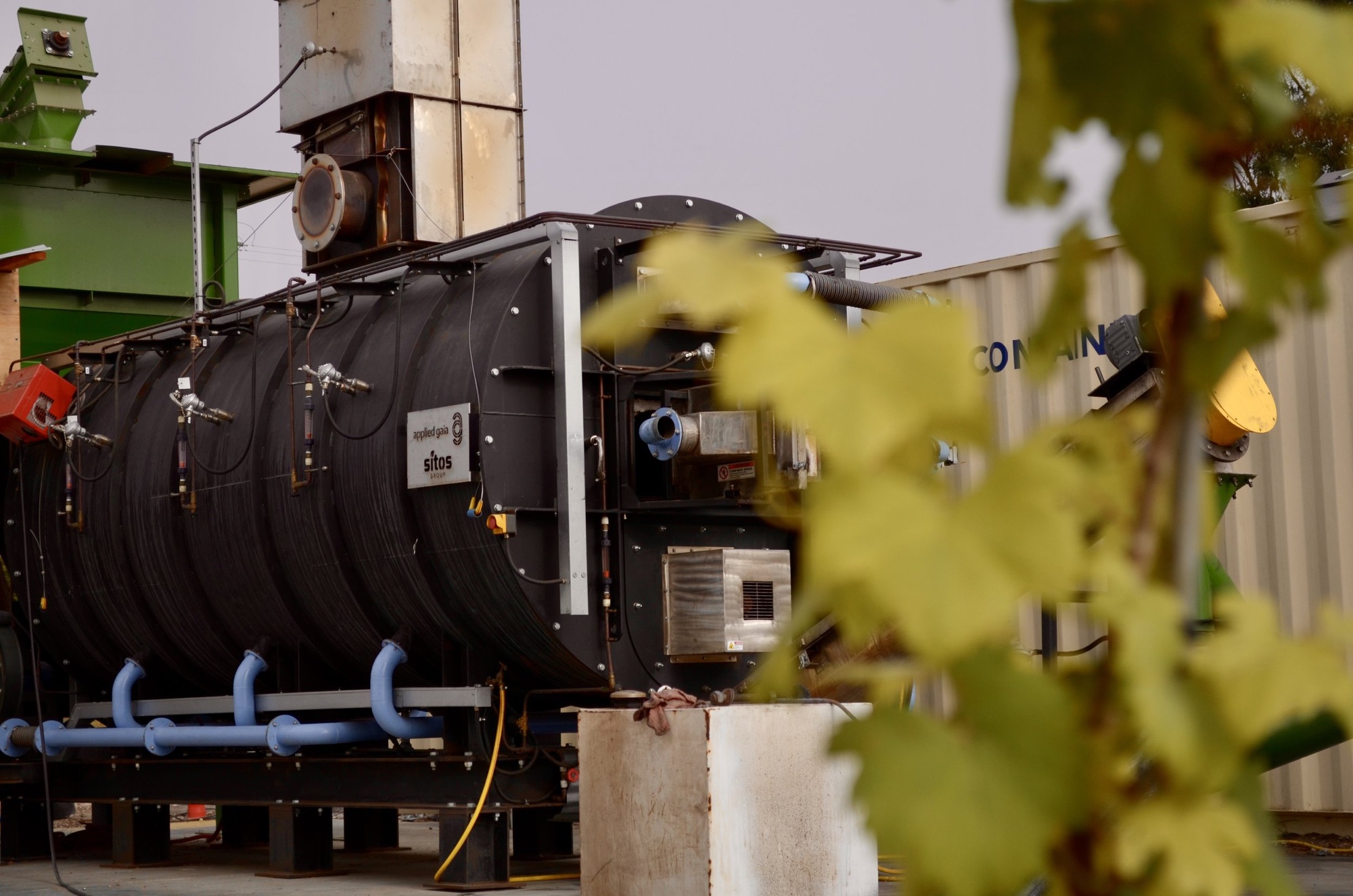
Sitos Group, a California-based company, has been running a pilot program at ReGen Monterey’s waste management facility in Marina for over a year, turning wood waste and organic materials into biocharBiochar is a carbon-rich material created from biomass decomposition in low-oxygen conditions. It has important applications in environmental remediation, soil improvement, agriculture, carbon sequestration, energy storage, and sustainable materials, promoting efficiency and reducing waste in various contexts while addressing climate change challenges. More. The product, created through slow pyrolysisPyrolysis is a thermochemical process that converts waste biomass into bio-char, bio-oil, and pyro-gas. It offers significant advantages in waste valorization, turning low-value materials into economically valuable resources. Its versatility allows for tailored products based on operational conditions, presenting itself as a cost-effective and efficient More, locks away carbon that would otherwise enter the atmosphere while offering benefits for soil health.
According to co-founder and CEO Mayo Ryan, the program has a dual focus: refining the pyrolysis process and proving its commercial potential. By the program’s conclusion in July 2025, it’s projected to sequester 20,000 tons of carbon.
Building on this success, Sitos Group has announced its first commercial biochar facility, a $9 million project in partnership with Treehouse California Almonds. Set to launch by the end of 2025 in Delano, the 25,000-square-foot facility will process 6,000 pounds of almond shell feedstockFeedstock refers to the raw organic material used to produce biochar. This can include a wide range of materials, such as wood chips, agricultural residues, and animal manure. More per hour. The company estimates that for every ton of biochar incorporated into soil, 2.5 tons of CO2 are prevented from entering the atmosphere.
Sitos Group was co-founded by Ryan, who has a background in agribusiness, and Steve McIntyre, owner of Monterey Pacific, which manages 20,000 acres of vineyards statewide. Reflecting on the ReGen pilot, Ryan highlights the progress made in enhancing biochar quality and the value of partnerships: “We’re very grateful for our collaboration with ReGen. We’ve learned so much.”


Leave a Reply