
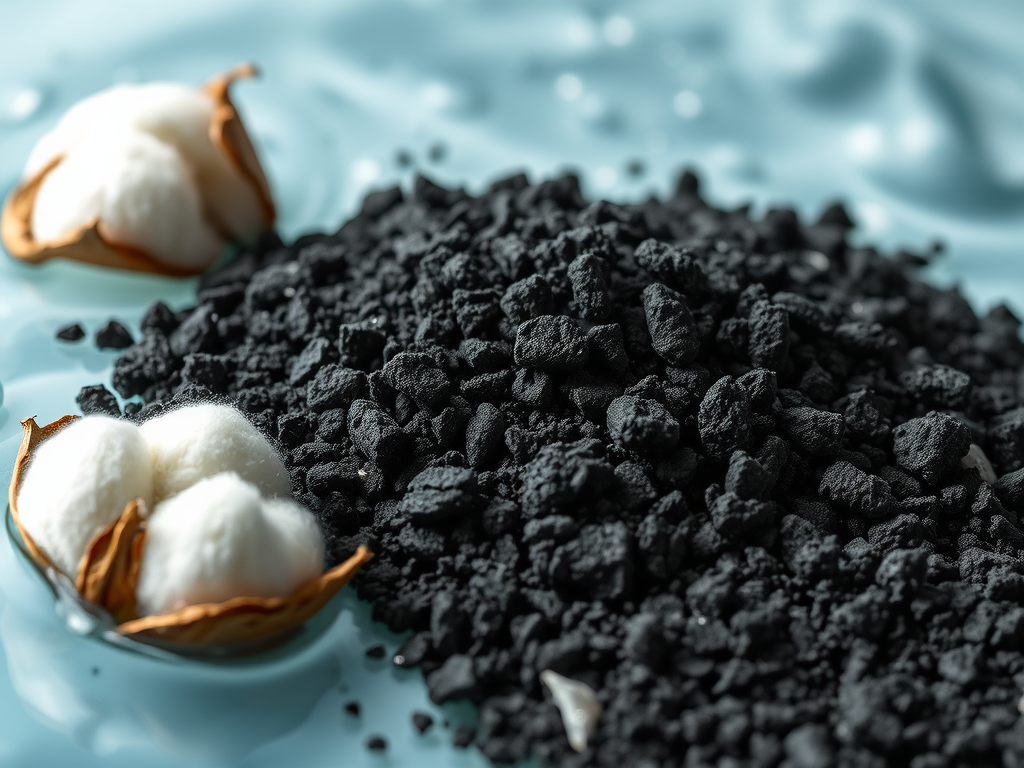
Du et al., in the journal Industrial Crops & Products, explored the use of phosphoric acid-modified biocharBiochar is a carbon-rich material created from biomass decomposition in low-oxygen conditions. It has important applications in environmental remediation, soil improvement, agriculture, carbon sequestration, energy storage, and sustainable materials, promoting efficiency and reducing waste in various contexts while addressing climate change challenges. More (PCH) for the removal of ciprofloxacin (CIP) from water. The study focused on addressing antibiotic contamination in water bodies, a growing environmental concern. The researchers developed a one-step process to synthesize PCH from cotton husk, an abundant agricultural waste product.
The PCH showed a significant increase in specific surface area and pore volume, enhancing its adsorption capacity for CIP. The maximum adsorption capacity of PCH at 25◦C was 572.8 mg/g, demonstrating its high efficiency in removing CIP. The study also revealed that PCH is a cost-effective alternative to commercial activated carbonActivated carbon is a form of carbon that has been processed to create a vast network of tiny pores, increasing its surface area significantly. This extensive surface area makes activated carbon exceptionally effective at trapping and holding impurities, like a molecular sponge. It is commonly More, with a production cost of 3.98 $/kg compared to 259.5 $/kg for commercial activated carbon. The main mechanisms of CIP adsorption on PCH were identified as pore filling, electrostatic forces, hydrogen bonding, and π-π conjugation. The study’s findings highlight the potential of phosphoric acid-modified biochar as a sustainable and cost-effective solution for the removal of ciprofloxacin from wastewater. The use of cotton husk as a feedstockFeedstock refers to the raw organic material used to produce biochar. This can include a wide range of materials, such as wood chips, agricultural residues, and animal manure. More for biochar production not only provides a valuable resource for water treatment but also contributes to a circular economy by utilizing a renewable and readily available biomassBiomass is a complex biological organic or non-organic solid product derived from living or recently living organism and available naturally. Various types of wastes such as animal manure, waste paper, sludge and many industrial wastes are also treated as biomass because like natural biomass these More.
SOURCE: Du, K.-Q., Li, J.-F., Farid, M. A., Wang, W.-H., & Yang, G. (2025). Preparation of high-efficient phosphoric acid modified biochar toward ciprofloxacin removal from wastewater. Industrial Crops & Products, 226, 120649. https://doi.org/10.1016/j.indcrop.2025.120649



Leave a Reply