
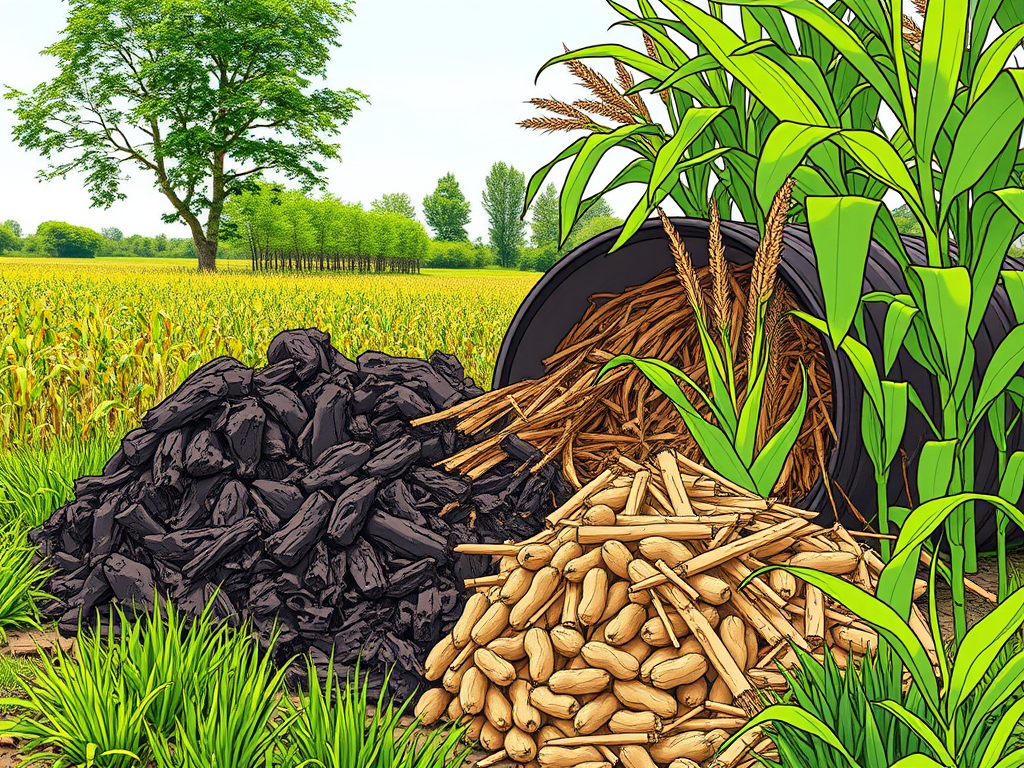
In a recent study published in the journal Processes, authored by Han et al., researchers explored the impact of peanut straw biocharBiochar is a carbon-rich material created from biomass decomposition in low-oxygen conditions. It has important applications in environmental remediation, soil improvement, agriculture, carbon sequestration, energy storage, and sustainable materials, promoting efficiency and reducing waste in various contexts while addressing climate change challenges. More on the anaerobic co-digestion of cattle manure and corn stover. The study revealed that adding peanut straw biochar, a byproduct of peanut farming, significantly enhances methane production and the breakdown of organic material in the co-digestion process. This finding suggests a promising avenue for sustainable agricultural waste management and clean energy production.
The accumulation of agricultural waste, such as cattle manure and corn stover, presents a significant environmental challenge. Improper management of this waste can lead to water eutrophication and the loss of valuable resources. Anaerobic digestion (AD) offers a promising solution by converting agricultural waste into clean energy, specifically methane. However, AD processes can be unstable and may suffer from low methane production. To overcome these limitations, researchers have explored various strategies, including anaerobic co-digestion (combining different organic wastes), feedstockFeedstock refers to the raw organic material used to produce biochar. This can include a wide range of materials, such as wood chips, agricultural residues, and animal manure. More pre-treatment, and the addition of exogenous additives.
Biochar has emerged as a promising additive. Its unique properties, including a porous structure and large surface area, facilitate microbial activity and enhance the anaerobic digestion process. Peanut straw, an abundant agricultural residue, is rich in cellulose, hemicellulose, and lignin, making it an ideal feedstock for biochar production. Han et al. focused their study on the use of peanut straw biochar to enhance the co-digestion of cattle manure and corn stover.
The results demonstrated that the addition of biochar significantly increased methane yield. Specifically, the optimal methane yield was achieved with an 8% biochar dosage, resulting in a 19.1% increase compared to the control group. Higher doses of biochar, however, did not further enhance methane production, suggesting that an excessive amount may hinder the digestion process. The study also found that biochar promotes the degradation of the digestion substrate. The highest substrate removal rate of 54.1% was observed with the 8% biochar addition.
Furthermore, biochar influenced the microbial community structure, increasing the abundance of beneficial microorganisms like Methanosarcina and Chloroflexota. This research highlights the potential of peanut straw biochar as a valuable additive for anaerobic co-digestion systems.
Source: Han, J.; Xu, Y.; Yang, H.; Wang, Z.; Xu, W.; Kang, X., Liu, H.; Liu, C. Effect of Peanut Straw Biochar on the Co-Digestion Process of Cattle Manure with Corn Stover. Processes 2025, 13, 1516.


![Eucalyptus Wood Waste-Derived Biochar Achieves a Ninety-Eight Percent Removal Efficiency for Benzo[ghi]perylene in Vehicle-Wash Wastewater](https://biochartoday.com/wp-content/uploads/2026/10/SCIENCE-BLOGS-2026-2026-10-19T160523.703.jpg)

Leave a Reply