
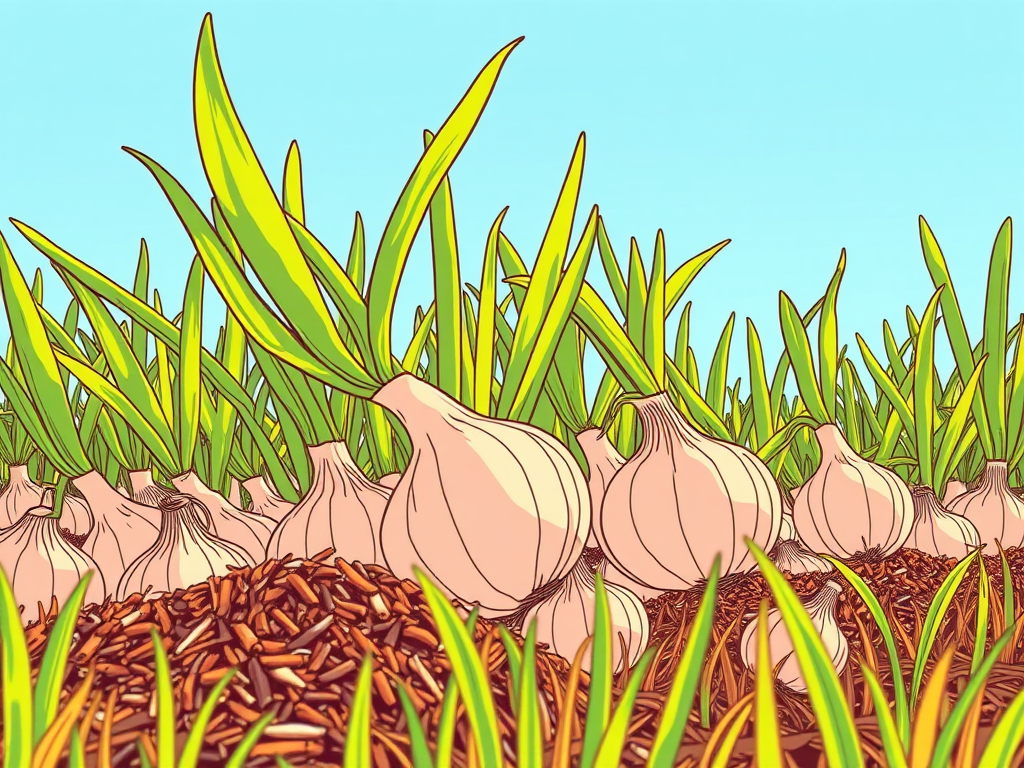
The excessive reliance on inorganic fertilizers in agriculture has led to various challenges, including soil degradation, reduced organic matter, and nutrient imbalances. To address these issues, researchers are exploring sustainable approaches that integrate organic and inorganic fertilizers. A recent study by Humayara Islam, Md. Mamunur Rashid, and their team, published in the Turkish Journal of Agriculture – Food Science and Technology, investigated the combined application of organic amendments like poultry litter-based compost (PLBC) and biocharBiochar is a carbon-rich material created from biomass decomposition in low-oxygen conditions. It has important applications in environmental remediation, soil improvement, agriculture, carbon sequestration, energy storage, and sustainable materials, promoting efficiency and reducing waste in various contexts while addressing climate change challenges. More with inorganic fertilizers for sustainable onion (Allium cepa L.) production in Bangladesh.
The field experiment, conducted from January to April 2022, aimed to assess how integrated fertilization affected onion growth and yield. The study utilized a two-factor experimental design with multiple replications, examining three different onion varieties and four distinct fertilization treatments. The results indicated that both the onion variety and the specific fertilization treatment had a considerable influence on the plants’ growth and yield characteristics. One particular onion variety consistently performed better than the others. Among the various fertilization approaches, a specific combination of recommended inorganic fertilizers and poultry litter-based compost was found to be the most effective for a wide range of growth and yield traits. Other treatments followed in effectiveness in a clear order.
Notably, the interaction between the highest-performing onion variety and the most effective fertilization treatment led to the greatest overall yield. This was a substantial improvement compared to the lowest yield observed, which occurred when a particular onion variety was combined with a biochar-only treatment. The beneficial effects of the top-performing fertilization treatment were also evident in plant height, with a specific variety and treatment combination resulting in the tallest plants across different measurement points after transplantation. In terms of leaf development, the leading variety and fertilization combination consistently produced the highest number of leaves at various stages. For bulb size, several variety and treatment combinations showed the largest diameters, with the top-performing integrated approach also demonstrating good results.
The study also used advanced statistical methods to analyze the data, including Principal Component Analysis (PCA) and regression analysis. PCA showed that various morphological attributes, including plant height, bulb diameter, average bulb weight, and yield, contributed significantly to the observed variation. Strong positive relationships were found between plant height and key growth features like bulb diameter, average bulb weight, and yield. Similarly, the number of leaves also showed positive associations with bulb diameter and yield. These findings highlight the critical role of vegetative growth parameters in determining onion bulb characteristics and overall productivity.
In conclusion, this research underscores the effectiveness of an integrated fertilization approach combining Recommended Doses of Fertilizer (RDF) with Poultry Litter-Based Compost (PLBC) for enhancing onion growth and yield. The synergistic effect observed with the Taherpuri variety and the T2 fertilization treatment offers a promising strategy for boosting onion production under similar agroecological factors. Future studies could investigate the long-term effects of these integrated approaches and their applicability across different soil types and locations.
Source: Islam, H., Rashid, M. M., Hasan, M. M., Hasan, M. M., Bahadur, M. M., & Chowdhury, A. K. M. M. B. (2025). Integrated Application of Organic (PLBC and Biochar) and Inorganic Fertilizers for Sustainable Onion (Allium cepa L.) Production. Turkish Journal of Agriculture – Food Science and Technology, 13(6), 1443–1452.


Leave a Reply