
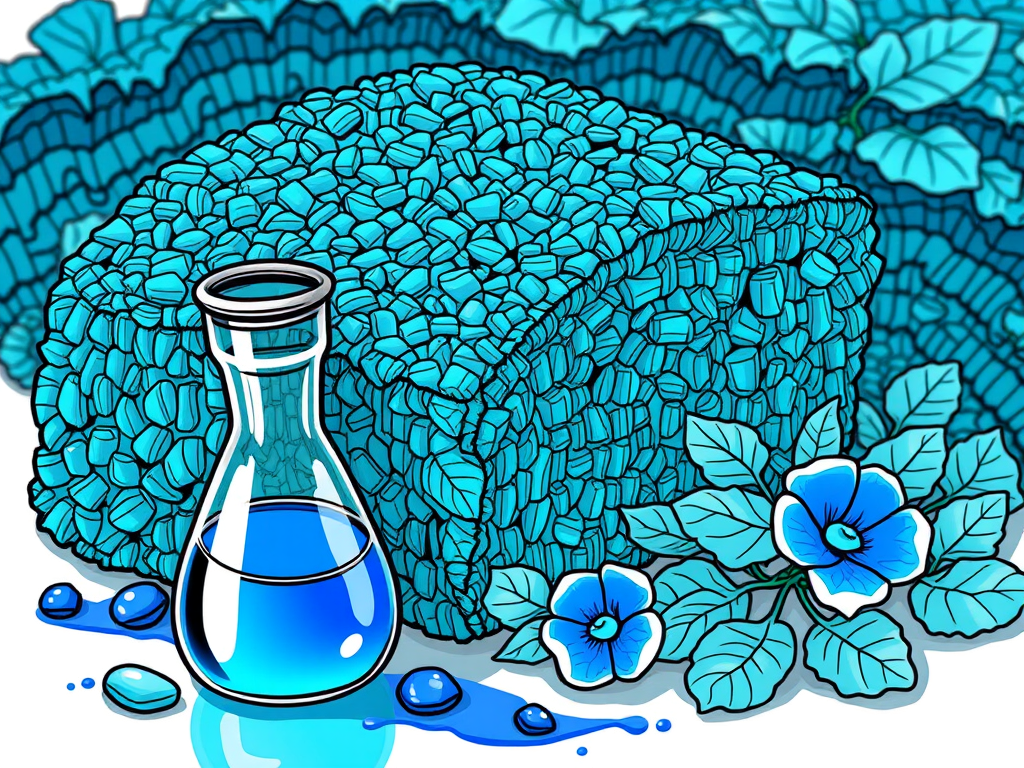
In a study published in Scientific Reports, Shoaib et al., explored the use of a novel biocharBiochar is a carbon-rich material created from biomass decomposition in low-oxygen conditions. It has important applications in environmental remediation, soil improvement, agriculture, carbon sequestration, energy storage, and sustainable materials, promoting efficiency and reducing waste in various contexts while addressing climate change challenges. More derived from green algae (Ulva lactuca) for removing methylene blue (MB) dye from wastewater. The authors produced nitrogen-doped Ulva lactuca biochar (NDULB) and thoroughly investigated its adsorption capabilities.
The study found that NDULB has a high surface area and effective porosityPorosity of biochar is a key factor in its effectiveness as a soil amendment and its ability to retain water and nutrients. Biochar’s porosity is influenced by feedstock type and pyrolysis temperature, and it plays a crucial role in microbial activity and overall soil health. Biochar More, making it suitable for dye adsorption. The effects of various factors, including initial MB dye concentration, solution pHpH is a measure of how acidic or alkaline a substance is. A pH of 7 is neutral, while lower pH values indicate acidity and higher values indicate alkalinity. Biochars are normally alkaline and can influence soil pH, often increasing it, which can be beneficial More, contact time, and biochar dosage, on the adsorption process were examined. The Freundlich model best described the adsorption data, indicating multilayer adsorption on a heterogeneous surface.
A key finding of the research is that NDULB achieved an adsorption capacity at equilibrium of 966.31 mg g, under specific conditions (200 ppm initial MB concentration and 1.25 g NDULB dosage). Kinetic analysis suggested that chemisorption was the primary adsorption mechanism. The study also employed artificial neural network (ANN) modeling to analyze the complex interactions of multiple variables influencing adsorption.
Overall, this research highlights the potential of NDULB as a promising and sustainable alternative for removing MB dye from wastewater, with significant implications for large-scale applications.
SOURCE: Shoaib, A. G. M., Yılmaz, M., El Sikaily, A., Hassaan, M. A., El-Nemr, M. A., & El Nemr, A. (2025). Isotherm, kinetics and ANN analysis of methylene blue adsorption onto nitrogen doped Ulva lactuca Biochar. Scientific Reports, 15(1), 10642.



Leave a Reply