
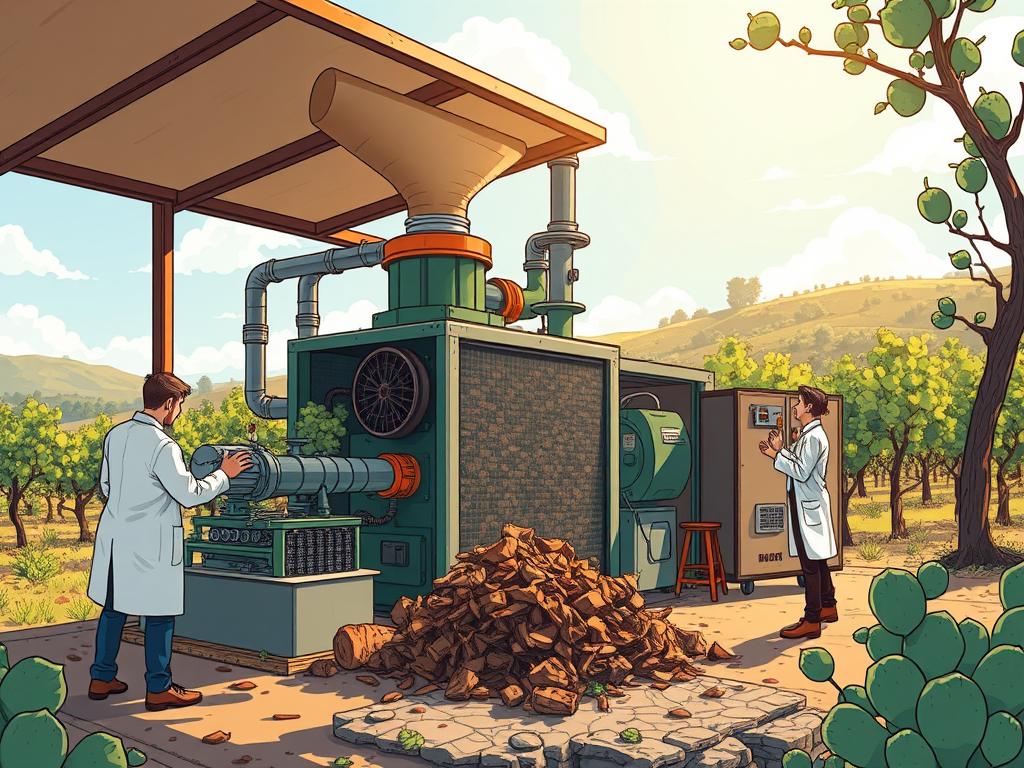
A collaborative research project, ‘Bio-BioWa: from BiomassBiomass is a complex biological organic or non-organic solid product derived from living or recently living organism and available naturally. Various types of wastes such as animal manure, waste paper, sludge and many industrial wastes are also treated as biomass because like natural biomass these More to Biochar’, is investigating the potential of converting agricultural waste into biocharBiochar is a carbon-rich material created from biomass decomposition in low-oxygen conditions. It has important applications in environmental remediation, soil improvement, agriculture, carbon sequestration, energy storage, and sustainable materials, promoting efficiency and reducing waste in various contexts while addressing climate change challenges. More. The initiative, led by Professor Adrian Mifsud of the University of Malta, aims to create a sustainable solution for managing crop by-products in the Mediterranean region.
This research focuses on two primary waste streams: grapevine prunings from Maltese vineyards and prickly pear cladodes. These materials are being processed into biochar using a custom-built, modular pyrolysisPyrolysis is a thermochemical process that converts waste biomass into bio-char, bio-oil, and pyro-gas. It offers significant advantages in waste valorization, turning low-value materials into economically valuable resources. Its versatility allows for tailored products based on operational conditions, presenting itself as a cost-effective and efficient More unit. Initial findings indicate that the resulting biochar has a high carbon content and a porous structure, making it suitable for both soil enrichment and water filtration applications. The project team, which includes researchers from both the University of Malta and the private sector, is currently conducting field trials to assess the biochar’s impact on soil health, water retention, and crop yield. The research aligns with key European Union policies, including the Farm to Fork Strategy and the EU Soil Strategy for 2030, by promoting a circular economy and sustainable land management practices.
The ultimate goal of the ‘Bio-BioWa’ project is to demonstrate the economic and environmental viability of small-scale, decentralised biochar production. The team plans to develop a comprehensive guide for farmers and policymakers, outlining the benefits of this technology and providing a roadmap for its wider adoption. They also intend to explore other potential feedstocks from the region to broaden the scope of their research. This project could help reduce the environmental impact of agricultural waste while creating a valuable product that supports the health of Mediterranean ecosystems.
SOURCE: Bio-BioWa: from Biomass to Biochar – Redefining Agricultural Waste in the Mediterranean



Leave a Reply