
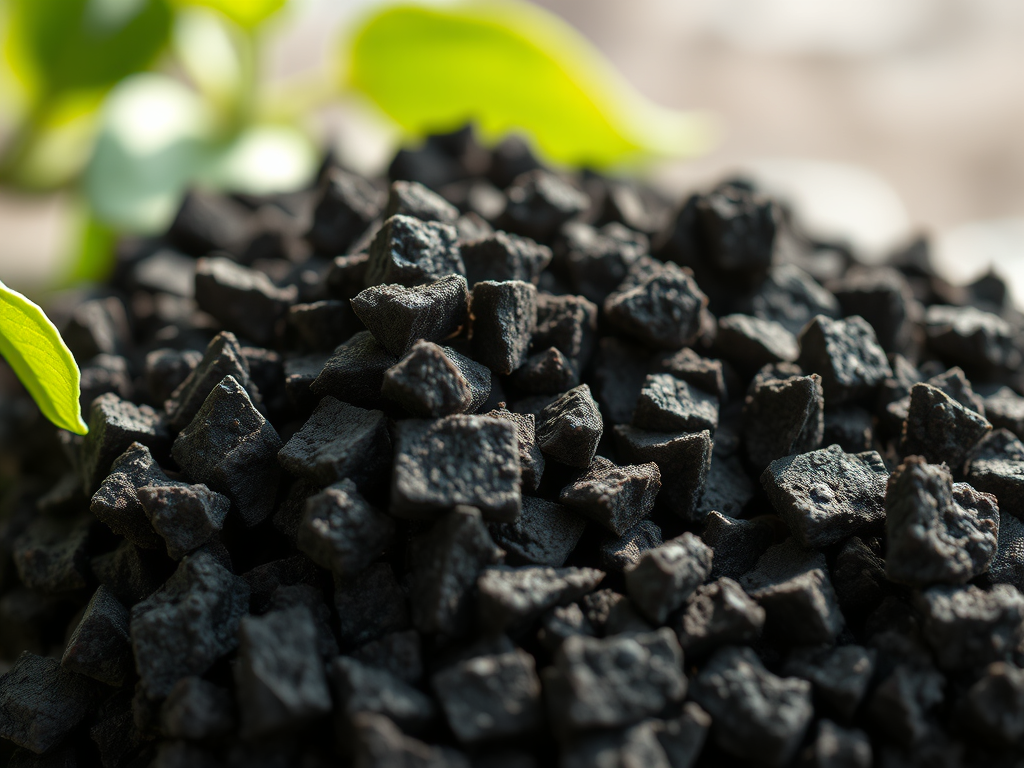
In a recent study published in Discover Sustainability, Freeman Madhau, Zhenjun Wu, and their team investigated the promising potential of municipal sludge biocharBiochar is a carbon-rich material created from biomass decomposition in low-oxygen conditions. It has important applications in environmental remediation, soil improvement, agriculture, carbon sequestration, energy storage, and sustainable materials, promoting efficiency and reducing waste in various contexts while addressing climate change challenges. More (MSBC) as a sustainable and cost-effective adsorbent for removing tetracycline (TC) from wastewater. Tetracycline, a widely used antibiotic, poses significant environmental and health risks due to its widespread application in medicine, livestock, and aquaculture, leading to substantial excretion into wastewater. Current methods for TC removal often face limitations such as high energy requirements, steep operational costs, and the risk of secondary pollution. This research highlights MSBC as an efficient, economical, and environmentally sustainable alternative.
The researchers prepared MSBC at different pyrolysisPyrolysis is a thermochemical process that converts waste biomass into bio-char, bio-oil, and pyro-gas. It offers significant advantages in waste valorization, turning low-value materials into economically valuable resources. Its versatility allows for tailored products based on operational conditions, presenting itself as a cost-effective and efficient More temperatures: 500°C (MSBC 500), 700°C (MSBC 700), and 900°C (MSBC 900). The municipal sludge, sourced from a wastewater treatment facility in Zhengzhou, China, underwent a meticulous preparation process including natural drying, oven drying, grinding into a fine powder, and then pyrolysis under a nitrogen atmosphere. This process converts municipal sludge, an environmental engineering challenge due to its increasing volume, into a valuable reusable resource.
Characterization of the MSBC samples revealed that pyrolysis temperature significantly influences their physicochemical properties. Raman spectroscopy showed that MSBC 900 had the lowest ID/IG ratio (0.96) compared to MSBC 500 (1.47) and MSBC 700 (1.18), indicating a higher degree of graphitization and a more ordered carbon structure at higher temperatures. Scanning electron microscopy (SEM) images further supported this, showing a greater abundance of fragmented and unevenly distributed flaky porous structures on the surface of MSBC 900, indicative of better porous structure development at higher pyrolysis temperatures.
The specific surface area and pore volume of the biochar samples also increased with higher pyrolysis temperatures. MSBC 900 exhibited a significantly larger specific surface area. This nearly three-fold increase in surface area for MSBC 900 is crucial, as a larger surface area provides more active sites for TC molecule attachment, directly enhancing adsorption capacity. Adsorption experiments evaluated performance under various parameters, including pHpH is a measure of how acidic or alkaline a substance is. A pH of 7 is neutral, while lower pH values indicate acidity and higher values indicate alkalinity. Biochars are normally alkaline and can influence soil pH, often increasing it, which can be beneficial More, contact time, dosage, initial TC concentration, temperature, and ionic strength. The optimal dosage for TC removal was determined to be 1.5 g/L. At this dosage, MSBC 900 achieved an impressive TC removal rate of 96.43%, while MSBC 500 and MSBC 700 had removal rates of 61.62% and 67.24% respectively. The maximum equilibrium removal capacities were highest for MSBC 900 at 48.33 mg/g, followed by MSBC 700 at 42.44 mg/g, and MSBC 500 at 31.31 mg/g.
The adsorption kinetics followed the pseudo-second-order model, indicating that chemisorption (chemical interactions between TC and MSBC) was the dominant mechanism. Thermodynamic analysis revealed that TC adsorption onto MSBC was a spontaneous process, becoming more favorable at higher temperatures, and was endothermic. This suggests that increasing the temperature generally enhances TC adsorption onto MSBC. The presence of certain coexisting ions significantly impacted TC adsorption. While monovalent cations like Na⁺ and K⁺ had negligible effects, divalent cations such as Ca²⁺ and especially Mg²⁺ significantly hindered TC adsorption.
Crucially, MSBC 900 demonstrated excellent regeneration performance, retaining over 90% of its removal capacity even after five regeneration cycles. This reusability highlights its potential for long-term, sustainable application in wastewater treatment. In conclusion, this study validates municipal sludge biochar, particularly MSBC 900, as an economical and environmentally sustainable adsorbent for effective tetracycline removal from polluted water sources. Its high adsorption capacity, robust reusability, and multi-mechanistic adsorption pathways make it a promising solution for addressing antibiotic contamination challenges globally.
Source: Madhau, F., Wu, Z., Wan, D., He, Z., Qin, Q., Li, Y., Moteletsana, R., Xin, C., & Lin, Z. (2025). Preparation of sludge-based biochar and its adsorption performance on tetracycline. Discover Sustainability, 6(1), 685.



Leave a Reply