

Key Takeaways
- Up to 95% Pollution Removal: Combining biocharBiochar is a carbon-rich material created from biomass decomposition in low-oxygen conditions. It has important applications in environmental remediation, soil improvement, agriculture, carbon sequestration, energy storage, and sustainable materials, promoting efficiency and reducing waste in various contexts while addressing climate change challenges. More with functional bacteria neutralizes up to 95% of heavy metals and 90% of organic contaminants in degraded farmland.
- Up to 53% Crop Yield Expansion: Field applications demonstrate significant boosts in harvest yields by improving root structure, nutrient delivery, and disease suppression.
- Enhanced Soil Fertility Metrics: Applying these composites elevates soil pHpH is a measure of how acidic or alkaline a substance is. A pH of 7 is neutral, while lower pH values indicate acidity and higher values indicate alkalinity. Biochars are normally alkaline and can influence soil pH, often increasing it, which can be beneficial More by up to 1.5 units and increases nutrient retention capacity by nearly 40%.
- Shielding Beneficial Bacteria: Encasing microbes in biochar protects them from harsh weather and environmental stress, solving major survival limits of raw bacterial sprays.
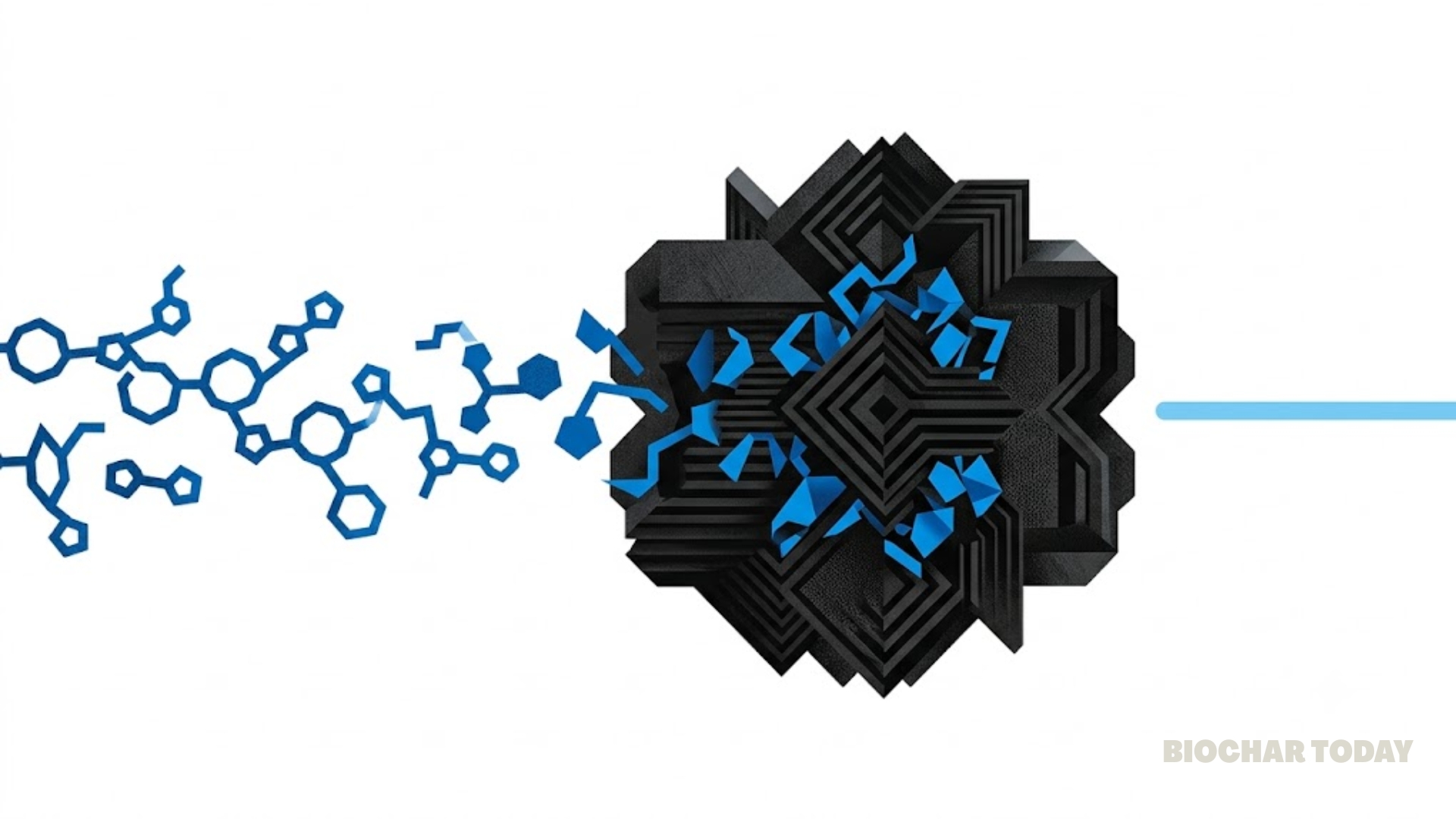
Healthy soil is essential for long-term food security and climate stability, yet global farmland faces increasing threats from contamination, over-farming, and changing weather patterns. Traditional methods to restore soil rely on chemical fertilizers or raw bacterial sprays. While bacterial inoculants can restore soil health and release plant nutrients, free-floating microbes frequently perish from drought, temperature swings, and chemical stress before establishing strong colonies. A comprehensive scientific review published in Biochar by Xinyi Li and colleagues explores a field-tested approach that pairs functional bacteria with biochar, a porous carbon material created by heating plant biomassBiomass is a complex biological organic or non-organic solid product derived from living or recently living organism and available naturally. Various types of wastes such as animal manure, waste paper, sludge and many industrial wastes are also treated as biomass because like natural biomass these More like crop straw. Known as biochar-immobilized microbes, these custom composites act as tiny armors that shelter beneficial bacteria while supplying plants with vital minerals.
By compiling data across dozens of pot experiments and field trials, researchers evaluated four primary methods used to bind bacteria to biochar: simple physical surface attachment, protective gel entrapment, direct chemical bonding, and crosslinking networks. Plain surface attachment remains the easiest and most cost-effective method to preserve microbial vitality, while chemical binding and entrapment techniques offer maximum stability against harsh environmental fluctuations. Once applied to agricultural plots, biochar acts as a stable house that shields bacteria from physical and chemical stresses, giving them the time required to multiply and colonize plant roots effectively.
The findings highlight dramatic improvements in overall soil quality. Adding these microbe-carrying carbon materials raises soil pH by 0.5 to 1.5 units in acidic fields and boosts cation exchange capacity by up to 39%, allowing soils to hold onto critical plant nutrients far more effectively. The dual action of carbon adsorption and bacterial degradation removes up to 95% of heavy metal pollution and 90% of organic contaminants, converting toxic farmlands back into safe growing environments. In real-world field settings, this combination enhances crop yields by up to 53% through accelerated root development, higher fertilizer efficiency, and natural suppression of plant diseases.
While lab tests and field trials clearly show the power of pairing biochar with functional microbes, bridging the gap to wide-scale farming requires solving practical logistical challenges. Large-scale farming demands standardized biochar creation, low-cost microbial cultivation, and consistent production methods to lower application costs. Developing user-friendly formulations, such as dry biochar-microbe pellets, can enable farmers to store, transport, and distribute these soil treatments using conventional farm equipment. Expanding long-term agricultural trials across varied soil types will further confirm safety, build farmer confidence, and help establish sustainable soil restoration methods worldwide.
Source: Li, X., Lyu, Q., Han, C., Duan, N., Liu, Z., Gao, M., & Zhao, X. (2026). Biochar immobilized microbes for sustainable soil remediation and agriculture enhancement: from lab to farmland. Biochar, 8, 107.



Leave a Reply