

Key Takeaways
- While basic biocharBiochar is a carbon-rich material created from biomass decomposition in low-oxygen conditions. It has important applications in environmental remediation, soil improvement, agriculture, carbon sequestration, energy storage, and sustainable materials, promoting efficiency and reducing waste in various contexts while addressing climate change challenges. More is a decent filter, “modifying” it with chemical or physical treatments transforms it into a super-adsorbent for cleaning wastewater.
- Physical activation (like with steam) can increase biochar’s internal surface area by over 190 times, creating vastly more space to trap pollutants.
- Chemically modified biochar from cow dung showed a massive capacity, removing over 1241mg/gof industrial dye and 1105mg/g of tetracycline antibiotics from water.
- This technology is highly effective at removing heavy metals (like mercury and lead) and organic pollutants (like pesticides and pharmaceuticals) from industrial, farm, and city wastewater.
Our water is under increasing stress from “pollutants of emerging concerns” (EPs)—a worrying mix of pharmaceuticals, pesticides, heavy metals, and industrial dyes that find their way into our wastewater. Traditional water treatment methods like chemical precipitation or membrane separation are often expensive, consume high amounts of energy, and can even create toxic secondary sludge. This has sent scientists searching for cheaper, greener, and more effective solutions. A comprehensive review by Zafran Ullah and colleagues, posted on Preprints.org, summarizes the immense potential of one such solution: biochar. The review details how this simple, carbon-rich material can be engineered to become a powerful tool for environmental remediation.
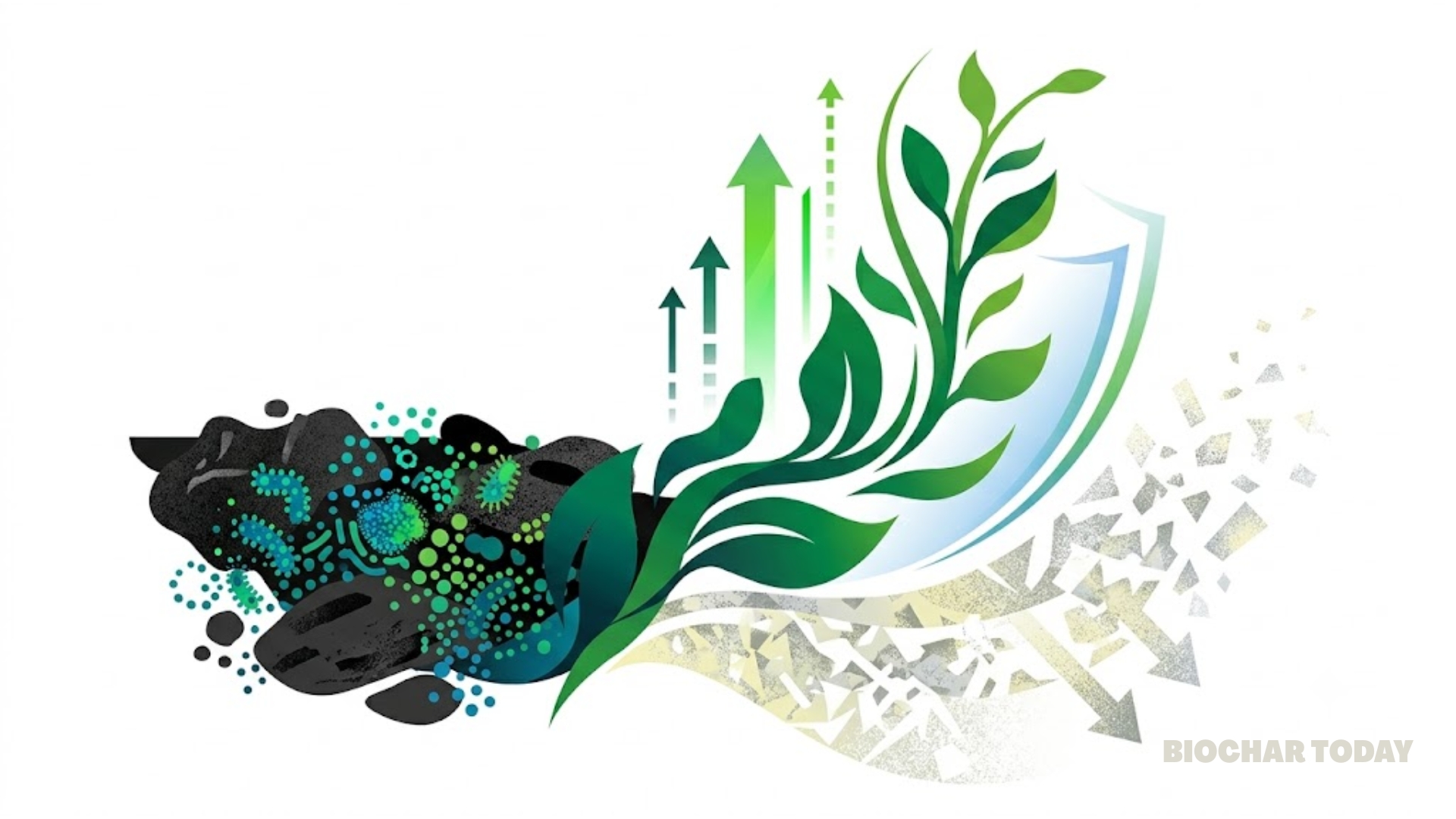
Biochar is a highly porous, stable, and carbon-rich material that is both cost-effective and environmentally friendly. In its basic, or “pristine,” form, biochar is a decent adsorbent, but its capacity for trapping pollutants can be limited. The real breakthrough, as the review highlights, lies in modification. By physically or chemically altering the biochar, its properties can be precisely tuned to target specific pollutants, turning a simple carbon sponge into a high-performance filter.
The review outlines several ways to “activate” biochar, with impressive results. Physical modifications, such as steam activation, can dramatically increase the biochar’s internal surface area. One study found this method increased the surface area by 122 to 197 times, creating a vast network of microscopic pores to capture contaminants. This steam-activated biochar was able to adsorb of the antibiotic sulfamethoxazole. Another method, CO2 activation, boosted a biochar’s surface area from 506m2/g to a massive 2185m2/g. Even ball-milling, a process of mechanically grinding the material, was found to make biochar 200 times more effective in some cases and enabled one biochar to remove ~99% of both tetracycline and mercury from a solution.
Chemical modifications show even more striking performance. Treating biochar with acids, alkalis, or metal oxides changes its surface chemistry, adding “functional groups” that act like chemical hooks for pollutants. The results are powerful. Biochar made from olive mill waste and activated with potassium hydroxide (KOH) could adsorb 599mg/gof indigo carmine dye. Another biochar modified with ZnCl2 achieved an adsorption capacity of 325.5mg/g for toxic hexavalent chromium. Perhaps the most stunning example cited comes from cow dung: when converted to biochar and modified with KOH and NaOH, it demonstrated a colossal adsorption capacity of 1241mg/g for Rhodamine B dye and 1105mg/g for the antibiotic tetracycline.
These modified biochars work their magic through a combination of mechanisms. On a physical level, they act like high-capacity sponges, trapping pollutants within their vast pore network (pore filling). Chemically, they are even more dynamic. Their surfaces often carry a negative charge, allowing them to electrostatically attract and capture positively charged pollutants like heavy metal ions. They also perform ion exchange, swapping out harmless ions for harmful ones, and can form strong chemical bonds with contaminants through surface complexation. This versatility allows a single biochar-based system to tackle a wide range of different pollutants simultaneously.
This review makes it clear that biochar is far more than just burnt waste. It represents a key technology in a “circular economy”—a way to valorize agricultural and industrial residues, turning a disposal problem into a sustainable solution. By engineering biochar, we can create low-cost, high-efficiency filters to remove the most persistent pollutants from our water. This research provides a roadmap for helping to achieve critical sustainable development goals, especially SDG 6 (Clean Water and Sanitation), by offering a practical way to clean our water and protect our environment.
Source: Ullah, Z., Joseph, C. G., Tian, Z.-Y., Yasin, M., Khan, M. N., Alshehri, A. S., Ali, S., Khan, A., Suazo-Hernández, J., Poblete-Grant, P., & Nabeel, M. I. (2025). The Production of Biochar and Its Impact on the Removal of Various Pollutants of Emerging Concerns from Wastewater: A Comprehensive Review. Preprints.org.



Leave a Reply