
Key Takeaways
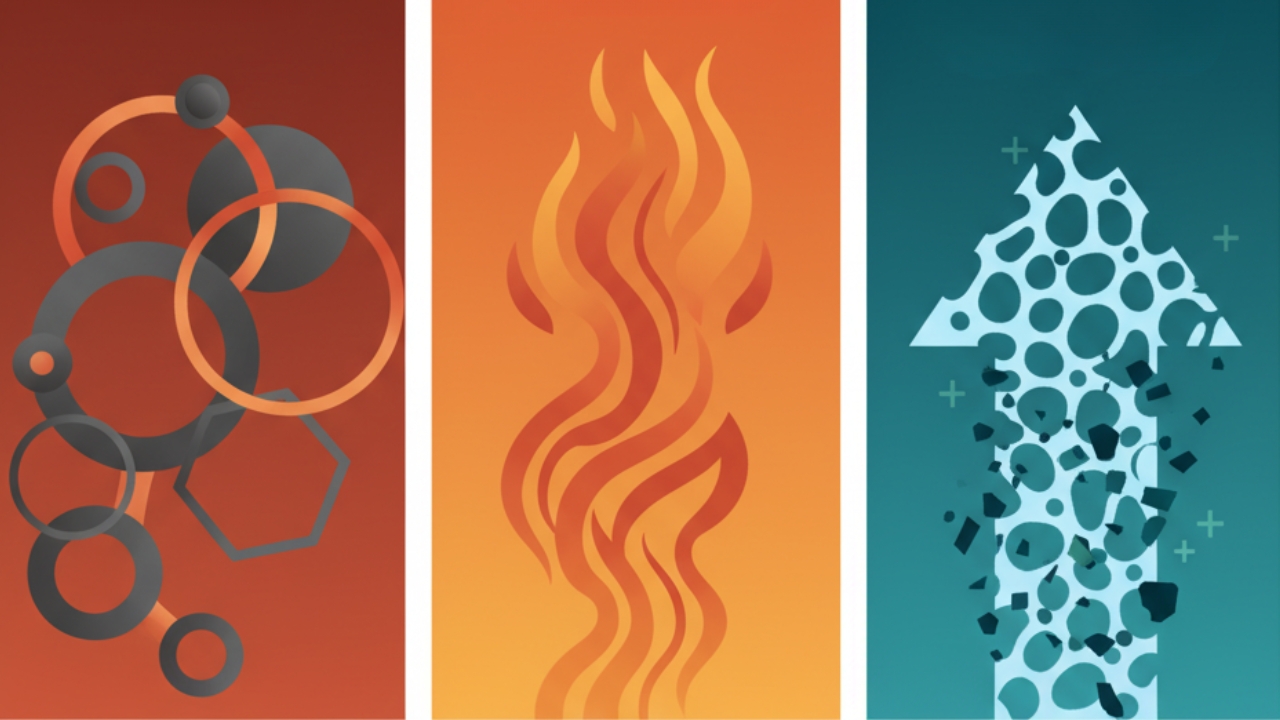
- Modification Matters: Treating biocharBiochar is a carbon-rich material created from biomass decomposition in low-oxygen conditions. It has important applications in environmental remediation, soil improvement, agriculture, carbon sequestration, energy storage, and sustainable materials, promoting efficiency and reducing waste in various contexts while addressing climate change challenges. More, especially with metal oxides, makes it significantly better (often over 60% improvement) at capturing heavy metals like lead, cadmium, and copper compared to plain biochar. Simple physical changes are often ineffective.
- Temperature Sweet Spot: How hot you make the biochar is critical. Heating organic waste to moderate temperatures (400–550°C) creates biochar that performs best for adsorbing these heavy metals. Too low or too high isn’t as good.
- Wood Works Well: The starting material counts. Biochar made from wood-based materials (like wood chips or bamboo) consistently showed the highest effectiveness in removing the studied heavy metals compared to biochar from straw, manure, or grasses.
- Copper Preference: In mixed pollution scenarios, modified biochars tend to grab onto copper more readily than cadmium, suggesting biochar might be particularly useful for copper cleanup in complex environments.
Heavy metal pollution from industry and agriculture is a serious global environmental threat, contaminating soil and water with toxic elements like cadmium (Cd), lead (Pb), and copper (Cu). Biochar is a promising tool for cleaning up these contaminants. It works by adsorbing the metals onto its surface, reducing their mobility and potential harm. However, results from different studies vary widely because researchers use different starting materials (feedstocks), heating temperatures, and modification methods to try and improve biochar’s performance. To bring clarity to these inconsistencies, Mohammad Ghorbani and Elnaz Amirahmadi from the University of Michigan conducted a meta-analysis, published in the journal Environments, synthesizing data from 173 previous studies. Their goal was to statistically determine which modification methods, pyrolysisPyrolysis is a thermochemical process that converts waste biomass into bio-char, bio-oil, and pyro-gas. It offers significant advantages in waste valorization, turning low-value materials into economically valuable resources. Its versatility allows for tailored products based on operational conditions, presenting itself as a cost-effective and efficient More temperatures, and feedstocks consistently create the best biochar for capturing Cd, Pb, and Cu.
The researchers analyzed six different ways biochars are modified: using metal oxides, bases, strong acids, weak acids, hydrogen peroxide (H2O2), or physical treatments (like aging or mixing with clay). They grouped pyrolysis temperatures into low (below 400°C), moderate (400–550°C), and high (above 550°C) ranges. Feedstocks were categorized as wood-based, straw-based, herbaceous (like grasses), or manure-based. By calculating “effect sizes,” they could quantitatively compare how much each modification improved metal adsorption compared to unmodified (pristine) biochar.
The results clearly showed that metal oxide modifications were the most effective, significantly boosting the adsorption of Cd by 63.8%, Pb by 66.7%, and Cu by 58.1% compared to pristine biochar. This superior performance is likely because metal oxides (like those of iron or manganese) increase the biochar’s surface area and create more active sites where metal ions can bind through processes like complexation or electrostatic attraction. In stark contrast, physical modifications were the least effective, even decreasing adsorption for Cd (-13.1%) and Cu (-9.4%), possibly by blocking pores or reducing active sites. Base, acid, and H2O2 treatments generally showed moderate improvements, enhancing adsorption by roughly 20-40% depending on the metal, likely by adding oxygen-containing functional groups to the biochar surface. The distribution coefficient (Kd), a measure of metal affinity for the biochar surface, confirmed these findings, with metal-oxide biochars showing the highest Kd values.
Pyrolysis temperature also played a crucial role. The analysis revealed a “sweet spot”: moderate temperatures (400–550°C) produced biochars with the highest adsorption improvements for all three metals (57.2% for Cd, 64.9% for Pb, and 92.3% for Cu). Lower temperatures (<400°C) might retain more helpful functional groups but result in lower surface area, while higher temperatures (>550°C) increase surface area but destroy many functional groups. Moderate temperatures appear to strike the best balance between surface area and surface chemistry for binding metals.
FeedstockFeedstock refers to the raw organic material used to produce biochar. This can include a wide range of materials, such as wood chips, agricultural residues, and animal manure. More choice mattered significantly as well. Wood-based biochars consistently performed best, showing the largest increases in adsorption for Cd (65.3%), Pb (42.4%), and Cu (61.7%). This is attributed to wood producing biochars with higher carbon content and more developed porous structures, offering plenty of sites for metal capture. Straw-based biochars were the next best, while herbaceous and manure-based biochars were generally less effective, possibly due to higher ashAsh is the non-combustible inorganic residue that remains after organic matter, like wood or biomass, is completely burned. It consists mainly of minerals and is different from biochar, which is produced through incomplete combustion. Ash Ash is the residue that remains after the complete More content or less favorable structures after pyrolysis.
Interestingly, when looking at solutions containing multiple metals, the study found that modified biochars showed a clear preference for adsorbing Cu over Cd. This selectivity could be due to copper’s specific chemical properties, like its smaller size, allowing it to interact more strongly with the modified biochar surface.
This meta-analysis cuts through the noise of conflicting studies to provide clear, data-driven guidance. By combining metal oxide modifications with moderate pyrolysis temperatures (400-550°C) and using wood-based feedstocks, we can design biochars optimized for removing Cd, Pb, and Cu from contaminated environments. These findings offer a practical roadmap for developing tailored biochar solutions for more effective and sustainable remediation.
Source: Ghorbani, M., & Amirahmadi, E. (2025). Optimizing Biochar for Heavy Metal Remediation: A Meta-Analysis of Modification Methods and Pyrolysis ConditionsThe conditions under which pyrolysis takes place, such as temperature, heating rate, and residence time, can significantly affect the properties of the biochar produced. More. Environments, 12(11), 399.



Leave a Reply