
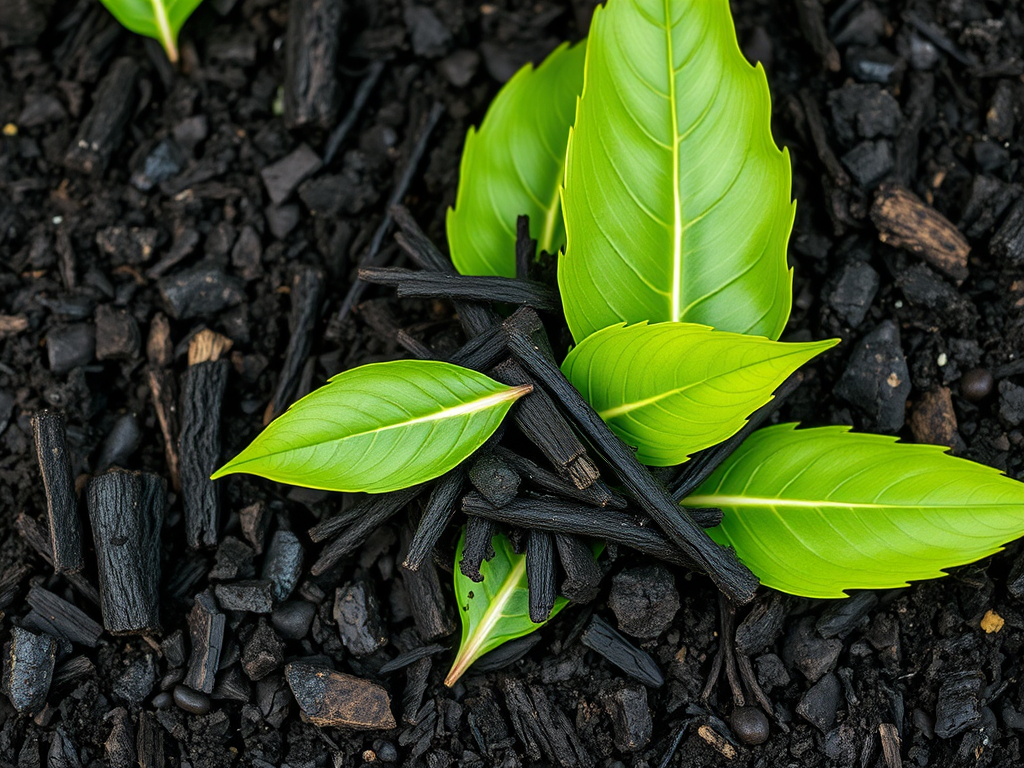
Forestry waste, often an underutilized resource, presents a valuable opportunity for enhancing soil quality through its conversion into biocharBiochar is a carbon-rich material created from biomass decomposition in low-oxygen conditions. It has important applications in environmental remediation, soil improvement, agriculture, carbon sequestration, energy storage, and sustainable materials, promoting efficiency and reducing waste in various contexts while addressing climate change challenges. More. A study published in Scientific Reports by Tiantong Wang, Liyue Kou, Qing Luo, and colleagues investigated the effects of biochar derived from two common Northeast China tree species—Populus alba x Populus berolinensis (poplar) and Pinus sylvestris var. mongolica (pine)—on soil physicochemical properties. The researchers examined biochar produced from both leaves and branches at varying pyrolysisPyrolysis is a thermochemical process that converts waste biomass into bio-char, bio-oil, and pyro-gas. It offers significant advantages in waste valorization, turning low-value materials into economically valuable resources. Its versatility allows for tailored products based on operational conditions, presenting itself as a cost-effective and efficient More temperatures (300, 500, and 700∘C) and application rates (1%, 3%, and 5% w/w) in a 60-day incubation experiment. The results clearly demonstrate that both the pyrolysis temperature and the original feedstockFeedstock refers to the raw organic material used to produce biochar. This can include a wide range of materials, such as wood chips, agricultural residues, and animal manure. More source significantly influence how biochar improves soil fertility.
The study found a clear distinction in effectiveness based on the pyrolysis temperature, with high-temperature biochar, specifically that produced at 700∘C, proving superior for boosting soil available potassium (AK) and pHpH is a measure of how acidic or alkaline a substance is. A pH of 7 is neutral, while lower pH values indicate acidity and higher values indicate alkalinity. Biochars are normally alkaline and can influence soil pH, often increasing it, which can be beneficial More. The most pronounced effect was observed with a 5% application rate of poplar leaf biochar pyrolyzed at 700∘C (YY700), which increased AK by a considerable 266.39% compared to the control. This strong increase is attributed to the high potassium content in the biochar’s ashAsh is the non-combustible inorganic residue that remains after organic matter, like wood or biomass, is completely burned. It consists mainly of minerals and is different from biochar, which is produced through incomplete combustion. Ash Ash is the residue that remains after the complete More, which increases as the pyrolysis temperature rises. Similarly, the YY700 at a 5% rate showed the largest increase in soil pH, raising it by 9.82% compared to the control. The application of biochar at 700∘C generally had a significantly greater impact on soil pH compared to other temperatures because, as the pyrolysis temperature increases, the number of alkaline functional groups in biochar rises, enabling a more effective improvement in soil pH.
In contrast, low-temperature biochar, particularly at 300∘C, demonstrated the greatest effect on soil organic matter (SOM), soil water content (SWC), and available phosphorus (AP). The 300∘C biochar also had the most notable impact on ammonium nitrogen (AN) content. The most significant increase in SOM came from the 5% application of poplar branch biochar pyrolyzed at 300∘C (YZ300), which raised SOM by 320.03%. This is likely because the low-temperature biochar retains more easily oxidized carbon and undecomposed lignin, which contributes to soil organic carbon and stability. This same treatment ( YZ300 at 5%) also caused the most significant increase in SWC, raising it by 30.61%. This superior effect of 300∘C biochar is due to it containing more hydrophilic functional groups compared to the higher hydrophobicity of biochars pyrolyzed at higher temperatures. Additionally, the 5% application of poplar leaf biochar pyrolyzed at 300∘C (YY300) provided the best improvement in AP at 141.68% and AN at 49.27% compared to the control. This low-temperature effectiveness is because biochars pyrolyzed at 300∘C possess suitable cation exchange capacity (CEC) and C/N ratios, which, along with strong adsorption capabilities, facilitate nutrient retention and mineralization. Finally, the choice between using leaves or branches significantly impacted soil aggregation; the 5% application of pine branch biochar pyrolyzed at 300∘C (ZZ300) performed best, increasing the macroaggregate fraction (0.25-2 mm) by 188.45% and reducing the silt-clay fractions (less than 0.053 mm) by 24.86%. Branch-based biochar, particularly at lower temperatures, is theorized to promote macro-aggregate formation due to the higher lignin content of the branches, which enhances the retention of organic matter and facilitates organo-mineral associations. In conclusion, forestry waste biochar is an effective soil amendmentA soil amendment is any material added to the soil to enhance its physical or chemical properties, improving its suitability for plant growth. Biochar is considered a soil amendment as it can improve soil structure, water retention, nutrient availability, and microbial activity. More, but its specific improvements are tied to production parameters: 700∘C biochar is best for potassium and pH, while 300∘C biochar is ideal for organic matter, water content, phosphorus, and structural stability.
Source: Wang, T., Kou, L., Luo, Q., Dai, W., He, Q., Deng, Y., & Wei, Z. (2025). Effects of biochar from Populus alba x Populus berolinensis and Pinus sylvestris var. mongolica application on soil physicochemical properties. Scientific Reports, 15:33434. Sources


![Eucalyptus Wood Waste-Derived Biochar Achieves a Ninety-Eight Percent Removal Efficiency for Benzo[ghi]perylene in Vehicle-Wash Wastewater](https://biochartoday.com/wp-content/uploads/2026/10/SCIENCE-BLOGS-2026-2026-10-19T160523.703.jpg)


Leave a Reply