
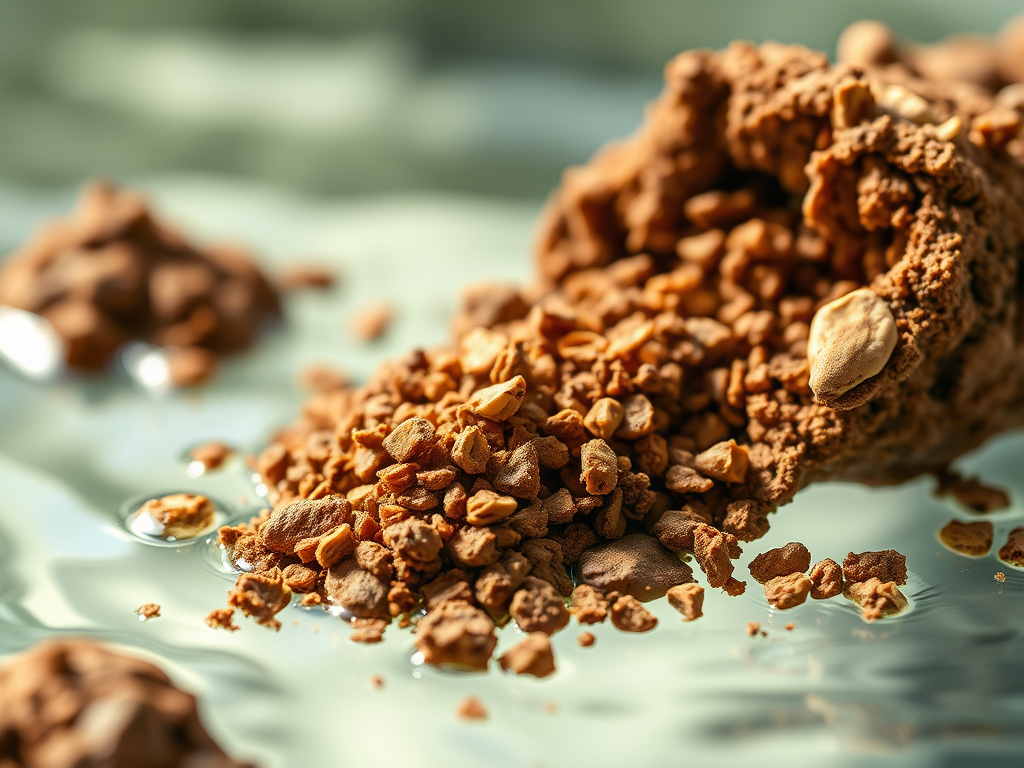
In a study published in Scientific Reports, a team of researchers including Xiaohui Zhao, Zi Liao, and Binguo Zheng detail a novel, low-cost magnetic biocharBiochar is a carbon-rich material created from biomass decomposition in low-oxygen conditions. It has important applications in environmental remediation, soil improvement, agriculture, carbon sequestration, energy storage, and sustainable materials, promoting efficiency and reducing waste in various contexts while addressing climate change challenges. More (MBC) created entirely from solid waste materials. The MBC, made from peanut shells and red mud using a one-step pyrolysisPyrolysis is a thermochemical process that converts waste biomass into bio-char, bio-oil, and pyro-gas. It offers significant advantages in waste valorization, turning low-value materials into economically valuable resources. Its versatility allows for tailored products based on operational conditions, presenting itself as a cost-effective and efficient More method, was developed to remove tetracycline (TC) from water without requiring any additional chemicals or producing wastewater. The material demonstrated a maximum tetracycline adsorption capacity of 87.39 mg/g and could be magnetically separated from water in under 30 seconds.
Tetracyclines are among the most widely used antibiotics globally, and their presence in water sources poses a significant environmental and health risk. Traditional methods for preparing adsorbents like magnetic biochar often involve complex processes, high costs, and the generation of large amounts of wastewater. The new one-step pyrolysis method avoids these drawbacks by using abundant and low-cost solid wastes. Peanut shells, a byproduct of the global peanut industry, are rich in microfibers and have low ashAsh is the non-combustible inorganic residue that remains after organic matter, like wood or biomass, is completely burned. It consists mainly of minerals and is different from biochar, which is produced through incomplete combustion. Ash Ash is the residue that remains after the complete More content, making them an excellent biochar precursor. Red mud, an iron-rich residue from alumina production, is a highly alkaline solid waste that can be used as a magnetic precursor instead of expensive commercial iron salts. The combination of these two wastes creates a material with a developed porous structure and rich surface functional groups that can effectively adsorb pollutants.
The researchers conducted a series of experiments to understand the material’s properties and its effectiveness in removing tetracycline. Scanning electron microscope (SEM) images showed that the MBC surface has a porous structure with uniformly distributed nano- Fe3O4 particles. The presence of iron was confirmed by energy dispersion spectroscopy (EDS), which found a mass ratio of 27.02%. X-ray diffraction (XRD) patterns further corroborated the presence of Fe3O4 crystals. Analysis of the material’s surface using Fourier transform infrared (FT-IR) spectroscopy and X-ray photoelectron spectroscopy (XPS) revealed functional groups such as hydroxyl, carboxyl, carbonyl, and Fe-O bonds that are crucial for chemical adsorption.
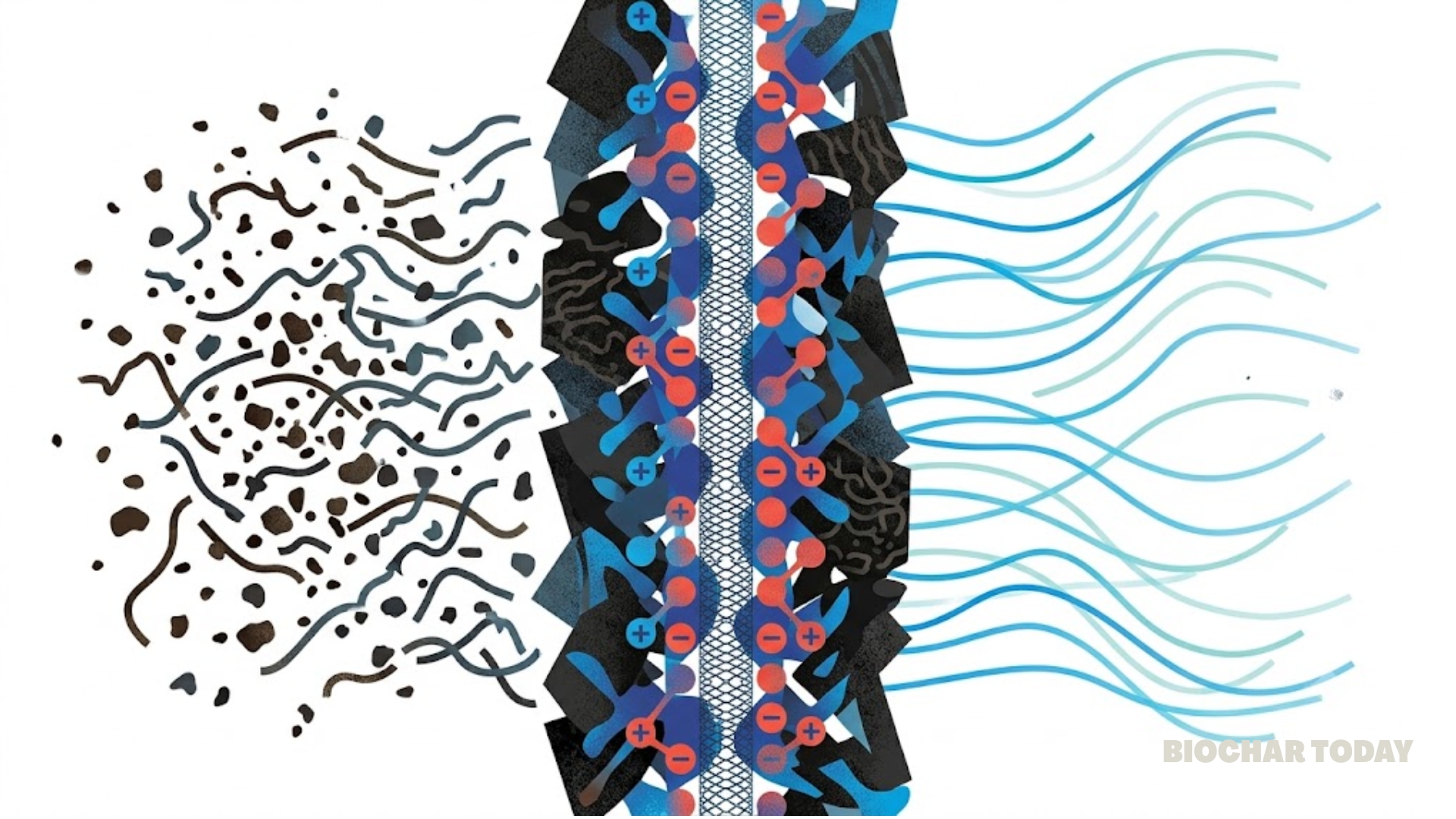
The study investigated how various factors influenced the adsorption performance. At a concentration of 30 mg/L, the MBC achieved an adsorption efficiency of 92.6% with a dosage of 30 mg. The adsorption capacity increased with rising initial TC concentration, reaching 81.7 mg/g at 100 mg/L. The material also showed stable adsorption performance across a wide pHpH is a measure of how acidic or alkaline a substance is. A pH of 7 is neutral, while lower pH values indicate acidity and higher values indicate alkalinity. Biochars are normally alkaline and can influence soil pH, often increasing it, which can be beneficial More range of 3–11, with the adsorption capacity at pH 11 remaining at 93% of the capacity at neutral conditions. This stability, despite electrostatic repulsion at higher pH levels, suggests that other mechanisms like charge-assisted hydrogen bonding play a significant role in the adsorption process. Kinetic and isotherm models indicated that the adsorption was a spontaneous, endothermic, and favorable process dominated by chemisorption.
In addition to tetracycline, the MBC proved effective in removing other pollutants, with a removal rate of over 95% for lead ions and a maximum adsorption capacity of 194.8 mg/g for the dye malachite green in real water samples. The material also demonstrated high reusability, retaining more than 70% of its original adsorption capacity after five regeneration cycles.
The authors also highlighted the low cost and generality of their one-step pyrolysis method. They estimated the total cost of material preparation to be 5.677/kg, which is lower than that of other methods even without considering the added costs of labor and capital investment in previous studies. They also successfully prepared magnetic biochar from other solid wastes, such as pepper and soybean straw, which demonstrated good adsorption effects, confirming the universal applicability of their method. This research offers a sustainable, cost-effective solution for water treatment using repurposed solid wastes.
Source: Zhao, X., Liao, Z., Zhao, Q., Yang, M., Li, D., Zhang, K., Wang, X., Zhang, H., & Zheng, B. (2025). A low cost magnetic biochar manufactured solely from solid wastes by one-step pyrolysis for removal of tetracycline. Scientific Reports, 15(30035).




Leave a Reply