

Key Takeaways
- Banana straw can be turned into a highly useful biocharBiochar is a carbon-rich material created from biomass decomposition in low-oxygen conditions. It has important applications in environmental remediation, soil improvement, agriculture, carbon sequestration, energy storage, and sustainable materials, promoting efficiency and reducing waste in various contexts while addressing climate change challenges. More.
- Scientists found that this material develops four distinct types of tiny holes, or pores, as it is made.
- The tiny holes are created by both the natural structure of the plant and added chemical treatments.
- Natural elements like silicon help keep the material strong, while potassium helps create more holes.
- This material is excellent for cleaning up pollution but can also be used to improve soil health and store carbon.
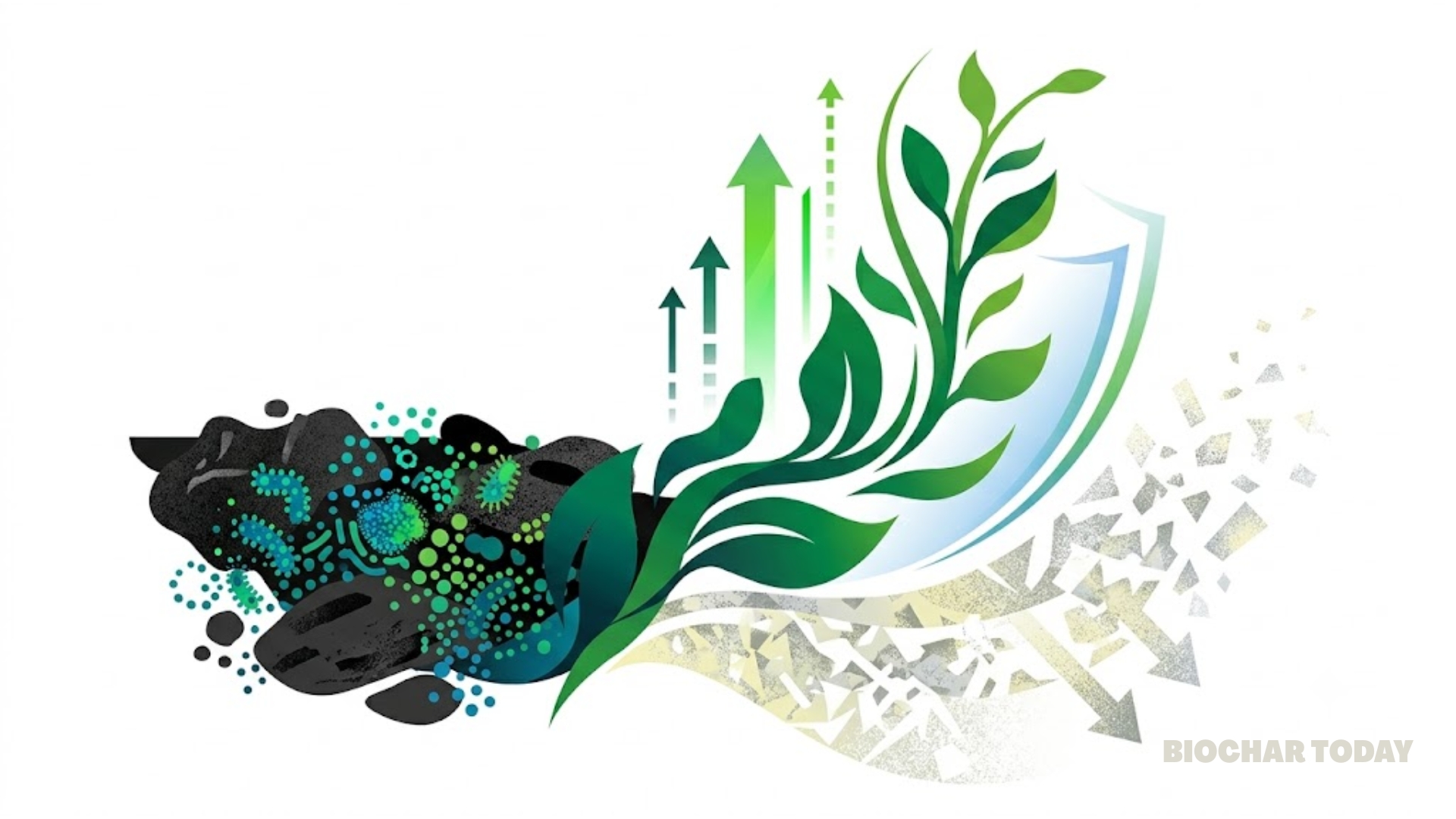
The research published in the journal Industrial Crops and Products by lead author Chengxiang Gao and a team of researchers investigates the sophisticated transition of banana straw into a highly functional, porous material. The team discovered that the formation of tiny holes within the biochar, which are essential for its performance in agriculture and environmental cleanup, follows a specific four-stage evolutionary path. This process moves from structures simply inherited from the plant’s biology to complex architectures rebuilt through chemical and thermal treatments. By understanding these mechanisms, the study provides a vital framework for designing better materials from agricultural waste.
The first type of pores identified are essentially biological hand-me-downs that preserve the original look of the banana straw tissues, such as its veins and cellular compartments. These initial structures are formed under mild heating conditions as water and unstable plant components evaporate, causing the material to shrink slightly while keeping its organic shape. Interestingly, the study found that the natural elements already present in the plant play a major role in how these holes develop. Silicon acts as a stabilizer that prevents the carbon frame from collapsing during heating, whereas natural potassium acts as a catalyst that helps etch out more space within the material.
As the heat increases to higher temperatures, a second category of pores begins to form as multilayered structures within the original plant tissues. These are particularly noticeable in the stomata, which are the tiny breathing holes of the plant. The researchers noted that this specific layered development was unique to banana straw and did not occur in biochar made from rice or maize straw. This difference is attributed to the fact that banana straw has less silicon to protect its framework, allowing for a more intense internal reconstruction that significantly increases the total volume of the tiny holes.
To push the material’s capabilities even further, the researchers introduced a chemical treatment using potassium hydroxide. This led to a third category of pores characterized by many small, hemispherical pits on the surface of the biochar. These tiny pits dramatically increased the total surface area of the material, making it much better at grabbing and holding onto pollutants. The study showed that even a moderate chemical treatment could boost the surface area by hundreds of units, transforming a simple charred stalk into a high-performance functional tool.
The final and most advanced stage of development occurs when high heat and strong chemical treatments work together in a synergistic fashion. This creates a fourth category of pores: an interconnected network of tiny tunnels that completely replaces the original look of the plant. At this stage, the biochar becomes a highly perforated material with the highest possible surface area and volume for its pores. This transformation is not just about making more holes, but a total reassembly of the carbon structure into a sophisticated hierarchical system.
While these high-surface-area materials are perfect for cleaning heavy metals like cadmium out of water, the researchers also pointed out that simpler versions of biochar have their own benefits. Biochar made at lower temperatures without heavy chemical use is actually more stable for long-term carbon storage in the soil. This means that the production process can be specifically tuned depending on whether the goal is to fight climate change by locking carbon away or to heal the environment by filtering out toxins. Ultimately, this research turns a problematic waste product into a valuable resource for a more sustainable future.
Source: Gao, C., Liu, Y., Liu, Y., Xu, H., Zhang, L., Ma, J., & Fan, X. (2026). Structure-tailored hierarchical porous biochar from banana straw: Pore evolution and formation mechanisms. Industrial Crops and Products, 246, 123382.



Leave a Reply