
Key Takeaways
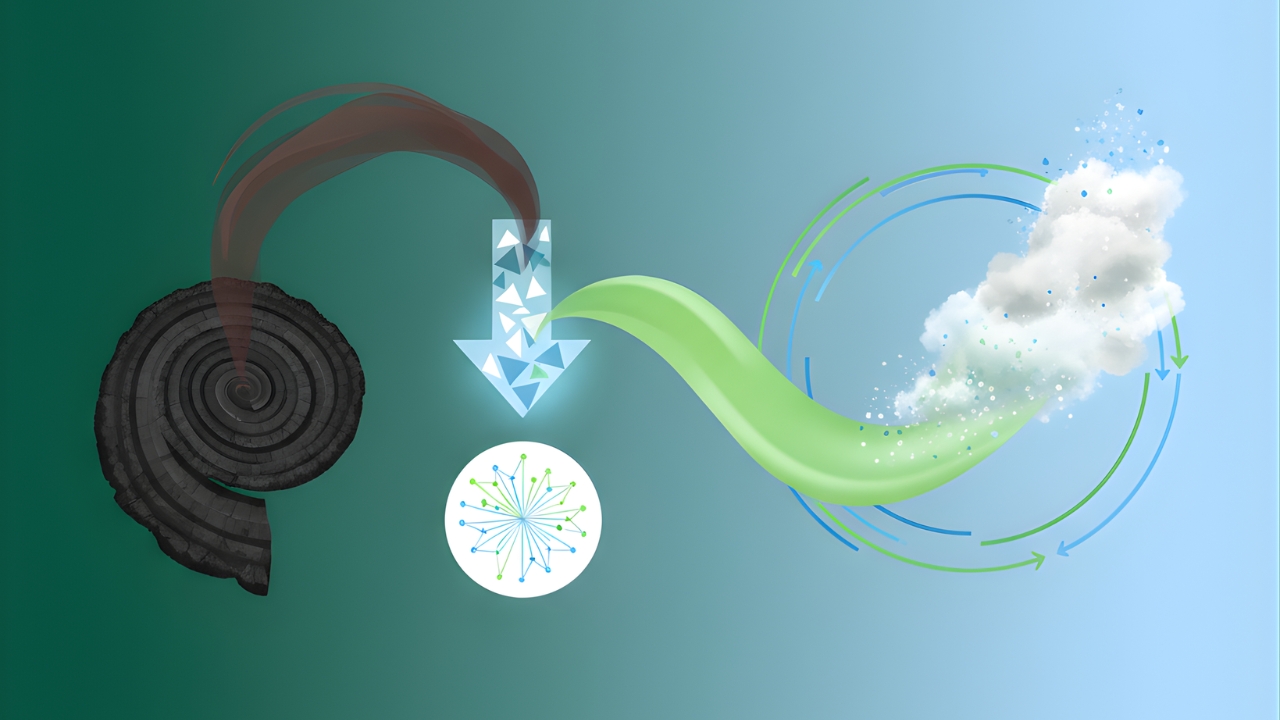
- Tree stump waste can be turned into biocharBiochar is a carbon-rich material created from biomass decomposition in low-oxygen conditions. It has important applications in environmental remediation, soil improvement, agriculture, carbon sequestration, energy storage, and sustainable materials, promoting efficiency and reducing waste in various contexts while addressing climate change challenges. More, a product that helps fight climate change by locking carbon away in a stable form.
- Despite the emissions from production, the long-term carbon storage (sequestration) in the biochar results in a large net negative Global Warming Potential (GWP), meaning the process removes more CO2 than it releases.
- The BIO-KILN-1 (SC-2) pyrolysisPyrolysis is a thermochemical process that converts waste biomass into bio-char, bio-oil, and pyro-gas. It offers significant advantages in waste valorization, turning low-value materials into economically valuable resources. Its versatility allows for tailored products based on operational conditions, presenting itself as a cost-effective and efficient More reactor proved to be the more environmentally friendly option, showing an 8.51% lower impact on abiotic depletion of fossil fuels (ADff) and lower overall impacts in all assessed categories compared to the UMT-3 PLUS EcoTeploOtbor (SC-1).
- The most environmentally damaging step in the process for both reactors is the preparation and processing of the tree stumps (SBP), which is the largest contributor to both Human Toxicity (HT) and Marine Aquatic Ecotoxicity (MAE).
- The biochar produced is safe for environmental use, as chemical analysis confirmed that heavy metal concentrations are within permissible European Biochar Certificate (EBC-Agro) limits.
In the study”Evaluating biochar extraction from waste tree stumps in different pyrolysis systems using life cycle analysis,” published in Scientific Reports, Kristina Lekavičienė and co-authors evaluated the environmental impacts of producing biochar from wood waste, specifically oak stumps, using two different pyrolysis reactors: UMT-3 PLUS EcoTeploOtbor (SC-1) and BIO-KILN-1 (SC-2). The central hypothesis was that recycling wood waste into biochar would mitigate the negative environmental impacts and yield a valuable, eco-friendly product. To make a meaningful comparison, the functional unit for the Life Cycle Assessment (LCA) was defined as 1 ton of biochar.
The study found that both technologies show a net negative Global Warming Potential (GWP) when accounting for carbon sequestration. For one ton of biochar, SC-1 achieved a GWP of −2,036.98 kg CO2eq and SC-2 achieved −1,866.31 kg CO2eq with sequestration. However, when considering only the direct emissions from production, the total GWP was 643.02 kg CO2eq for SC-1 and 585.65 kg CO2eq for SC-2.
The key difference in performance across the multiple impact categories stemmed from the two pyrolysis scenarios. SC-2 (BIO-KILN-1) generally demonstrated lower environmental impacts than SC-1 (UMT-3 PLUS EcoTeploOtbor) across all categories. This includes an approximately 9% lower GWP without sequestration , an 8.51% lower impact on abiotic depletion due to fossil fuels (ADff) , and an 8.81% lower Eutrophication (ET) impact. This superior performance of SC-2 is mainly attributed to its better design and operational efficiency, particularly its integrated heat recovery system which reduced electricity consumption to 320.22 kWh t−1 compared to 350 kWh t−1 for SC-1.
Despite the net climate benefit, the LCA identified the preparation and processing of tree stumps (SBP) as the largest contributor to most environmental burdens. SBP alone accounted for 324.87 kg CO2eq of GWP for SC-1 and 297.23 kg CO2eq for SC-2. Furthermore, SBP contributed the most significantly to Human Toxicity (HT) and Marine Aquatic Ecotoxicity (MAE). For SC-1, SBP contributed 134.47 kg 1,4−DBeq to HT and 347,097.03 kg 1,4−DBeq to MAE. The authors suggest that this stage’s large footprint comes from the high energy use in mechanical processing and associated emissions from fuels, as well as the release of chemicals like lubricants from machinery.
The biochar itself was analyzed for suitability as an environmentally friendly product. Chemical analysis of the biochar (SC-1) showed a slightly alkaline pHpH is a measure of how acidic or alkaline a substance is. A pH of 7 is neutral, while lower pH values indicate acidity and higher values indicate alkalinity. Biochars are normally alkaline and can influence soil pH, often increasing it, which can be beneficial More of 7.3 and an organic carbon content of 31.29%. Crucially, the concentrations of heavy metals, including cadmium (0.17 mg kg−1), lead (8.70 mg kg−1), and zinc (86 mg kg−1), were all found to be within the permissible limits set by the European Biochar Certificate (EBC-Agro). The particle size distribution also indicated that most of the material accumulated on the 2 mm sieve (42.1% for SC-1 and 35.8% for SC-2), confirming the biochar’s suitability for further use like granulation and soil amendmentA soil amendment is any material added to the soil to enhance its physical or chemical properties, improving its suitability for plant growth. Biochar is considered a soil amendment as it can improve soil structure, water retention, nutrient availability, and microbial activity. More.
The study concludes that, despite the necessary emissions from feedstockFeedstock refers to the raw organic material used to produce biochar. This can include a wide range of materials, such as wood chips, agricultural residues, and animal manure. More preparation, the overall process of converting waste tree stumps into biochar with SC-2 is a more environmentally sound choice due to its better energy efficiency and lower toxic impacts. The significant carbon sequestration potential of the resulting biochar confirms its value as a genuine climate change mitigation strategy. Future efforts should focus on optimizing the energy use in stump preparation and adopting cleaner technologies to further reduce the environmental footprint.
Source: Valentin, M. T., Kosiorowska, K. E., Siedlecka, A., Świechowski, K., Demeshkant, V., Wiercik, P., Ashikhmina, S., Strzała, T., & Białowiec, A. (2025). The Influence of Biodegradability and Inoculum-to-Substrate Ratio on the Anaerobic Digestion Performance and Microbial Diversity. GCB Bioenergy, 17(e70090).




Leave a Reply