

Researchers at the Korea Institute of Geoscience and Mineral Resources (KIGAM) have successfully engineered a drying-free thermochemical method to convert wet spent coffee grounds into high-calorific biocharBiochar is a carbon-rich material created from biomass decomposition in low-oxygen conditions. It has important applications in environmental remediation, soil improvement, agriculture, carbon sequestration, energy storage, and sustainable materials, promoting efficiency and reducing waste in various contexts while addressing climate change challenges. More fuel. Published in the Chemical Engineering Journal, the study details a flame plasma pyrolysisPyrolysis is a thermochemical process that converts waste biomass into bio-char, bio-oil, and pyro-gas. It offers significant advantages in waste valorization, turning low-value materials into economically valuable resources. Its versatility allows for tailored products based on operational conditions, presenting itself as a cost-effective and efficient More technique that processes organic waste at atmospheric pressure. The system completes the carbonization reaction in 90 seconds without requiring a preliminary step to separate oils or remove water from the feedstockFeedstock refers to the raw organic material used to produce biochar. This can include a wide range of materials, such as wood chips, agricultural residues, and animal manure. More. By utilizing a high-temperature plasma flame generated by burning liquefied petroleum gas with compressed air, the system achieves a rapid conversion that presents a new operational model for the waste-to-energy sector.
The primary market challenge addressed by the KIGAM research team centers on the high moisture content and material density of organic waste streams, which historically complicate thermochemical processing. Global coffee consumption generates more than 22 billion pounds of spent coffee grounds annually, most of which are landfilled or incinerated. Because conventional thermochemical conversion methods like torrefaction or hydrothermal carbonization require energy-intensive drying phases or prolonged reaction times ranging from 30 minutes to six hours, processing wet organic residues has remained economically and logistically burdensome. These constraints reduce the efficiency of converting wet municipal or food processing wastes into stable carbon resources.
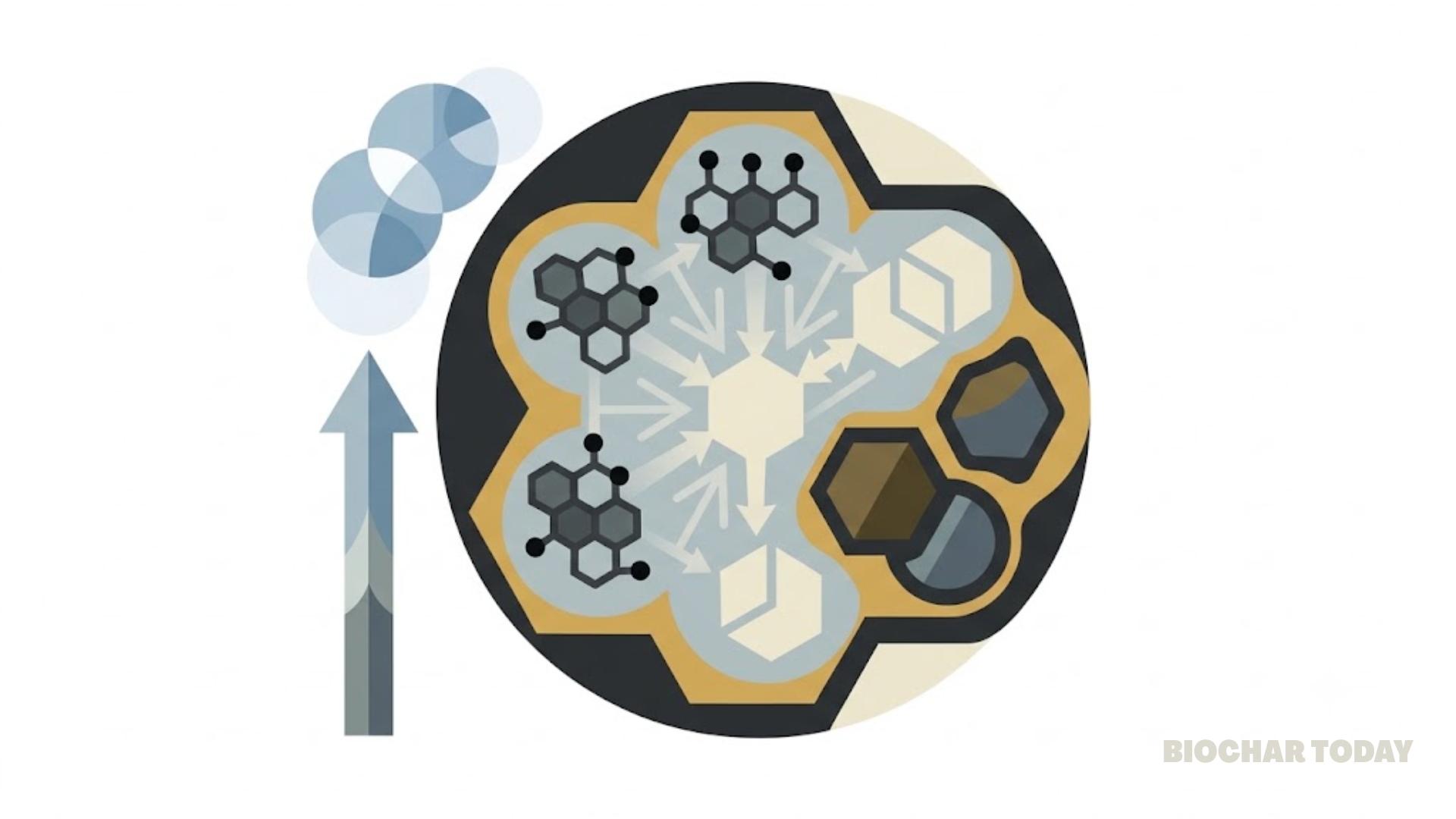
To bypass these processing bottlenecks, the KIGAM team developed an atmospheric-pressure flame plasma pyrolysis system that leverages feedstock moisture directly within the reaction. The process subjects spent coffee grounds containing approximately 55% moisture to temperatures ranging from 1,472 to 1,652 degrees Fahrenheit. This extreme thermal environment induces a rapid phase change, flashing the internal moisture of the coffee particles into vapor almost instantly. This rapid vaporization creates an internal pressure surge—described by the researchers as the “popcorn effect”—which simultaneously carbonizes the material and generates an extensive network of microscopic pores, turning the trapped water into an architectural asset during processing.
The outcomes of this technological development include an 83.3% mass reduction of the input material and the complete conversion of wet coffee grounds into fuel in 90 seconds. The resulting biochar achieved a heating value of 12,500 British thermal units per pound, marking a 33% increase over raw coffee grounds and matching the energy density of anthracite coal. Analytically, fixed carbon content tripled from 15.6% to 46.2%, sulfur compounds were entirely eliminated to prevent downstream emissions, and the specific surface area expanded from 7,300 to more than 563,000 square feet per pound. These parameters establish the biochar as both a high-potency renewable fuel and an effective precursor for advanced adsorbent materials.



Leave a Reply