
Key Takeaways
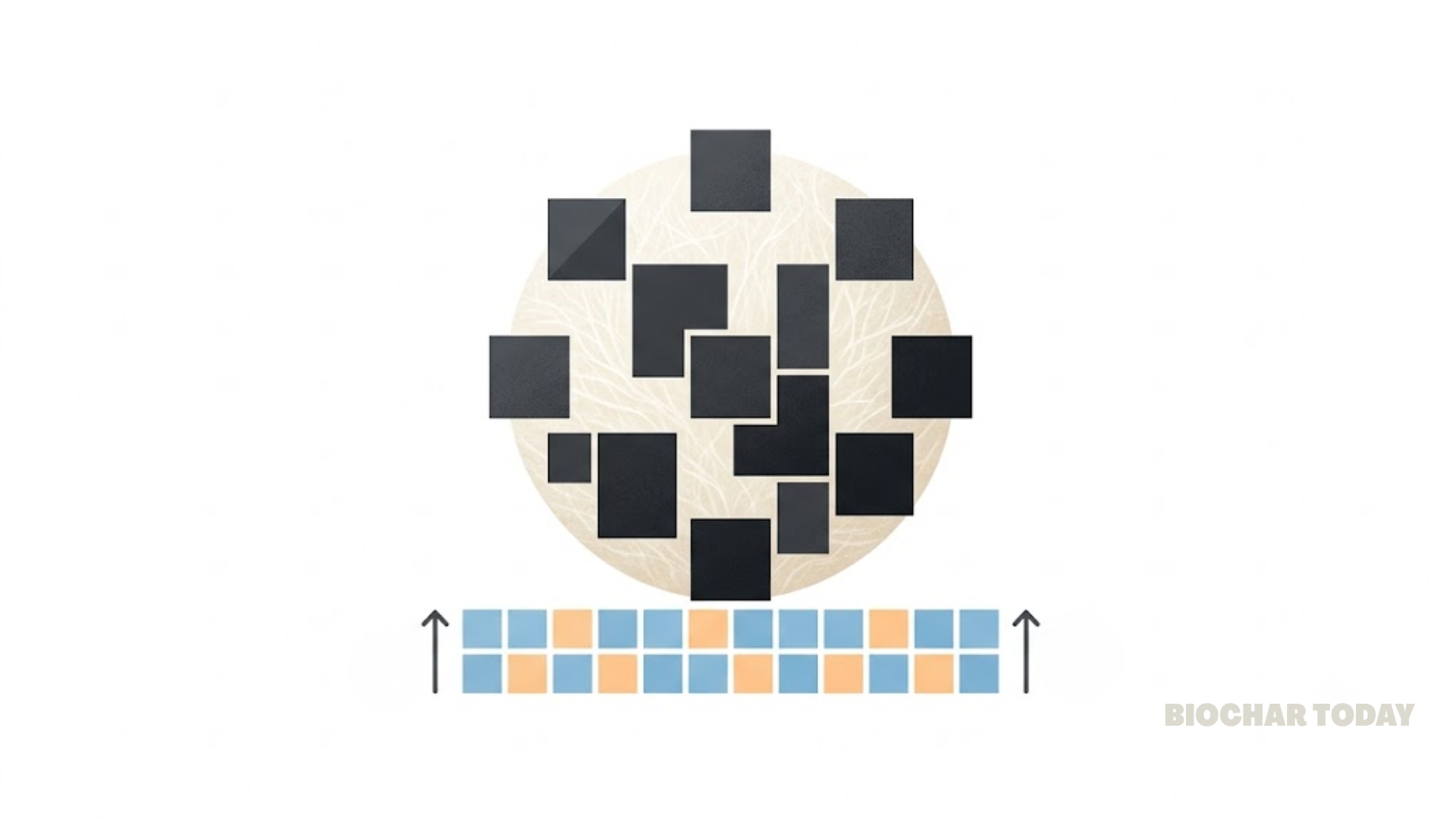
- Mixing biocharBiochar is a carbon-rich material created from biomass decomposition in low-oxygen conditions. It has important applications in environmental remediation, soil improvement, agriculture, carbon sequestration, energy storage, and sustainable materials, promoting efficiency and reducing waste in various contexts while addressing climate change challenges. More into living fungal materials creates a more stable mixture that easily holds its shape during three dimensional printing.
- The addition of biochar drastically controls material warping, keeping vertical shrinkage during the drying phase exceptionally low compared to standard plant-based mixtures.
- The engineered material can be successfully printed in separate segments and then fused together naturally by letting the living fungus grow across the seams.
- Using specific natural flours like rice flour as a nutrient source helps the helpful fungus grow rapidly while keeping unwanted mold and bacterial contamination away.
- This green material enables a future where modular building components can be grown from regional waste products and naturally degrade at the end of their lifespan.
In a recent study published in the journal Architectural Intelligence, researchers Raffaele Errichiello and Julio C. Diarte Almada from Umeå University explored an innovative approach to sustainable manufacturing by combining biochar with living fungal networks. The construction sector urgently requires low-carbon, circular alternatives to energy-intensive building materials. Mycelium-based composites, which are formed when fungal hyphae colonize organic substrates, offer a lightweight, insulating, and biodegradable solution. However, utilizing these materials in additive manufacturing has historically been restricted by high drying shrinkage and low mechanical stability. To resolve these limitations, the authors integrated stable, carbon-rich biochar into liquid deposition modeling pastes, establishing a predictable prefabrication process for next-generation architectural components.
The findings demonstrate that the inclusion of biochar establishes an effective defense against the severe dimensional deformation that typically ruins printed fungal elements. While conventional mycelium materials made from traditional agricultural waste exhibit high shrinkage rates ranging from 9 to 20 percent, the newly engineered biochar-cellulose-fiber blend restricted vertical shrinkage to a minor 3 to 5 percent in specific specimen tests. The porous, capillary matrix of the biochar behaves as an internal water reservoir, moderating the speed of moisture loss during the critical incubation and drying phases. This balanced water retention prevents the material from warping or cracking as it transitions from a wet paste into a solid structural component.
Beyond dimensional stability, the research revealed promising mechanical results and an unique structural response. Uniaxial compression tests on the biochar-infused samples recorded maximum compressive strength values reaching up to 2.13 Megapascals and an elastic modulus of up to 37.11 Megapascals. The material displayed a progressive, energy-dissipating collapse mechanism similar to structural foam, rather than failing via sudden, brittle fracture. This favorable mechanical behavior is heavily supported by the design of the printing paths. By utilizing a biomimetic toolpath pattern modeled after the reaction-diffusion geometries found in brain corals, the researchers established highly dense material regions that function like structural ribs, balancing physical load-bearing requirements with open corridors that provide essential airflow for the living organism.
The study also achieved a major milestone in scaling up bio-fabricated components through modular assembly and biological welding. Attempting to print large, complex shapes in a single run often causes the wet, heavy composite to collapse under its own weight. To overcome this barrier, the authors developed a prefabrication workflow where a large, double-curved demonstrator measuring 400 millimeters in height was divided and printed as three separate segments. After a two-week growth period, a thin layer of fresh composite paste was applied to the matching faces of the partially dried blocks. The living fungal threads naturally reactivated and grew across the interfaces, knitting the distinct segments into a singular, continuous architectural element with structurally sound, fully fused seams.
Nutrient optimization played a vital role in ensuring rapid, uniform colonization while protecting the living elements from external threats. The team discovered that utilizing rice flour as a primary nutrient source significantly enhanced mycelial growth and antimicrobial resistance compared to alternative flours like tapioca or wheat. This allowed for successful open-air printing and handling without the strict requirement of expensive sterile-room laboratory infrastructure. Ultimately, this research provides a practical blueprint for localized, regenerative construction. By utilizing regional waste products like biogas residues, sawdust, and recycled cardboard, this technology allows future buildings to function as temporary carbon sinks before safely biodegrading at the end of their useful service life.
Source: Errichiello, R., & Diarte Almada, J. C. (2026). Experimental study of 3D printed biochar-mycelium composites via liquid deposition modeling for sustainable building components: compatibility, shrinkage control, structural integrity and prefabrication. Architectural Intelligence, 5(16), 1-22.



Leave a Reply