
Key Takeaways
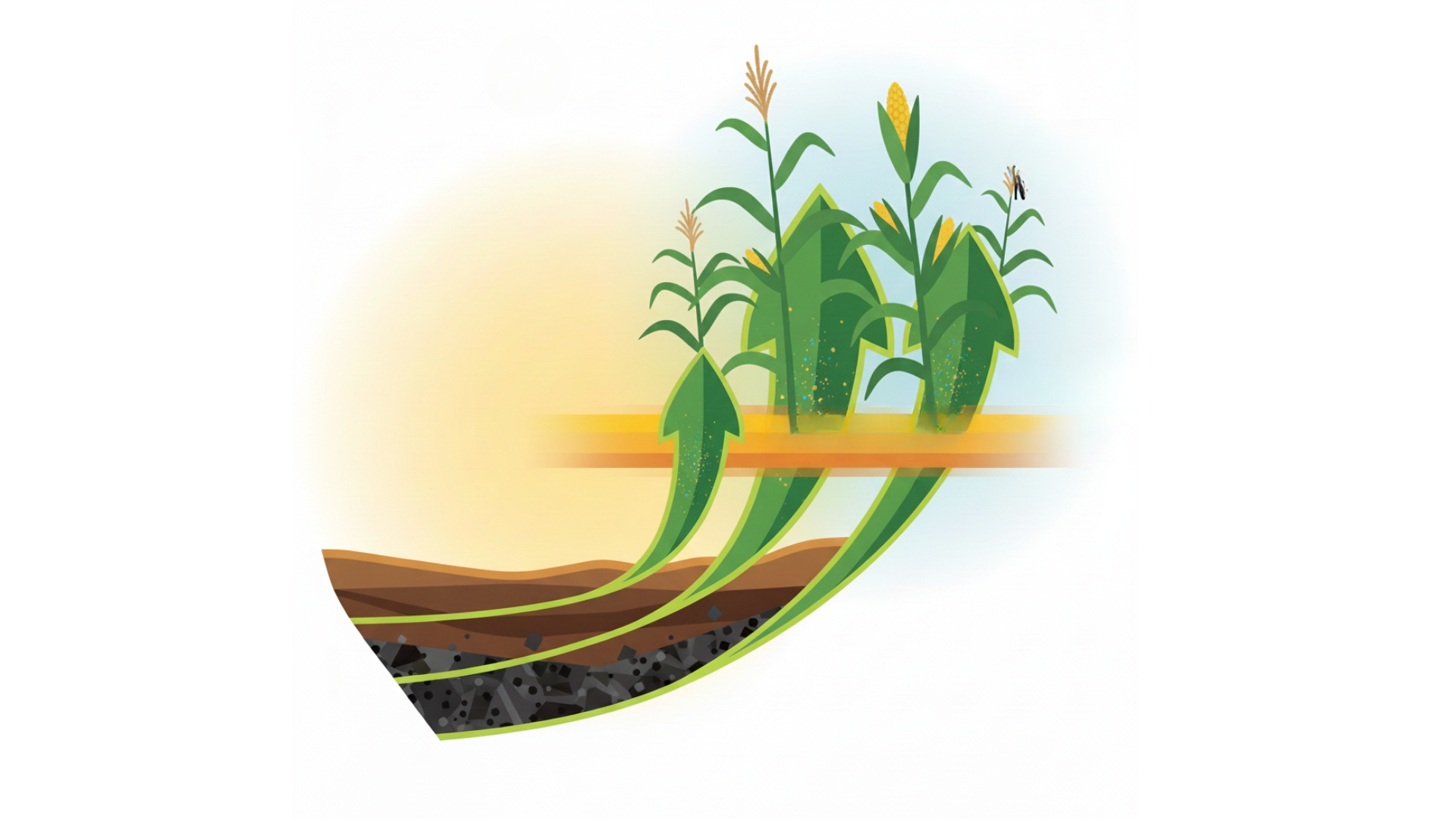
- Integrating biocharBiochar is a carbon-rich material created from biomass decomposition in low-oxygen conditions. It has important applications in environmental remediation, soil improvement, agriculture, carbon sequestration, energy storage, and sustainable materials, promoting efficiency and reducing waste in various contexts while addressing climate change challenges. More and compost with mineral fertilizers is more effective for increasing maize productivity than applying any single amendment alone.
- The combined use of biochar, compost, and chemical fertilizer increased maize grain yields
- This integrated approach significantly restores soil health by improving organic carbon levels and total nitrogen.
- Biochar acts as a stable carbon sink, enhancing long-term soil carbon storage in semi-arid environments while reducing reliance on expensive synthetic inputs.
- Smallholder farmers can achieve resilient yields and better food security by combining locally available organic resources with reduced rates of mineral fertilizers.
A multi-season study published in Scientific Reports by Abdul-Latif Abdul-Aziz and colleagues demonstrates that the strategic integration of biochar, compost, and chemical fertilizers offers a robust solution to the declining soil fertility plaguing smallholder farmers in sub-Saharan Africa. Conducted over the 2023 and 2024 cropping seasons in the Guinea Savanna zone of Northern Ghana, the research highlights how Integrated Soil Fertility Management (ISFM) can overcome the limitations of traditional, low-input farming. By combining organic and inorganic sources, the study provides evidence that these practices significantly boost maize growth and restore the fragile health of highly weathered tropical soils.
The soils in Northern Ghana, predominantly Ferric Lixisols, are characterized by low organic matter and poor nutrient retention. While mineral fertilizers provide a quick nutrient boost, their exclusive use often leads to soil acidification and high production costs. The researchers tested a fully integrated treatment that combined half-rates of biochar (produced from rice husks), aerobic compost (made from cattle manure and crop residues), and mineral fertilizer. This synergy proved vital: biochar improved soil structure and carbon storage, compost enriched organic matter and stimulated microbial activity, and chemical fertilizer supplied immediate nutrients for plant uptake.
The quantitative findings from the two-year trial are striking. The integrated application of biochar, compost, and fertilizer led to a grain yield increase of 105.7% in 2023 and a massive 127.4% in 2024 compared to the control plots. Grain yields reached up to 2.82 tonnes per hectare in the second season under the fully integrated model. Furthermore, soil health indicators showed dramatic improvements. Soil organic carbon rose by 115.8%, total nitrogen surged by 685%, and available phosphorus improved by 40.2%. These improvements were closely linked to maize productivity, as grain yield correlated strongly with soil pHpH is a measure of how acidic or alkaline a substance is. A pH of 7 is neutral, while lower pH values indicate acidity and higher values indicate alkalinity. Biochars are normally alkaline and can influence soil pH, often increasing it, which can be beneficial More, organic carbon, and phosphorus levels.
Growth and physiological indicators also reflected the benefits of this integrated approach. Chlorophyll content, measured by SPAD index values, was consistently higher in plants receiving integrated treatments, indicating better nitrogen assimilation and photosynthetic efficiency. Harvest index values, which measure the ratio of grain yield to total biomassBiomass is a complex biological organic or non-organic solid product derived from living or recently living organism and available naturally. Various types of wastes such as animal manure, waste paper, sludge and many industrial wastes are also treated as biomass because like natural biomass these More, improved by up to 84.6% in the second season, proving that the plants were more efficient at converting nutrients into food. While seasonal differences like erratic rainfall distribution in 2024 led to generally lower growth than in 2023, the integrated plots remained the most resilient and productive.
The results of this study advocate for a shift toward regenerative agriculture in West Africa. By substituting a portion of expensive mineral fertilizers with locally produced biochar and compost, farmers can achieve higher input efficiency and more stable yields amid a changing climate. The study concludes that the integration of biochar, compost, and mineral fertilizers enhances the ecological foundation of maize production, supporting sustainable livelihoods and national food security in the region.
Source: Abdul-Aziz, A., Haruna, A., & Baako, A. Y. (2025). Integrating biochar, compost, and chemical fertilizer improves maize yield and soil health in the guinea savannah: evidence from two cropping seasons in Northern Ghana. Scientific Reports.


Leave a Reply