
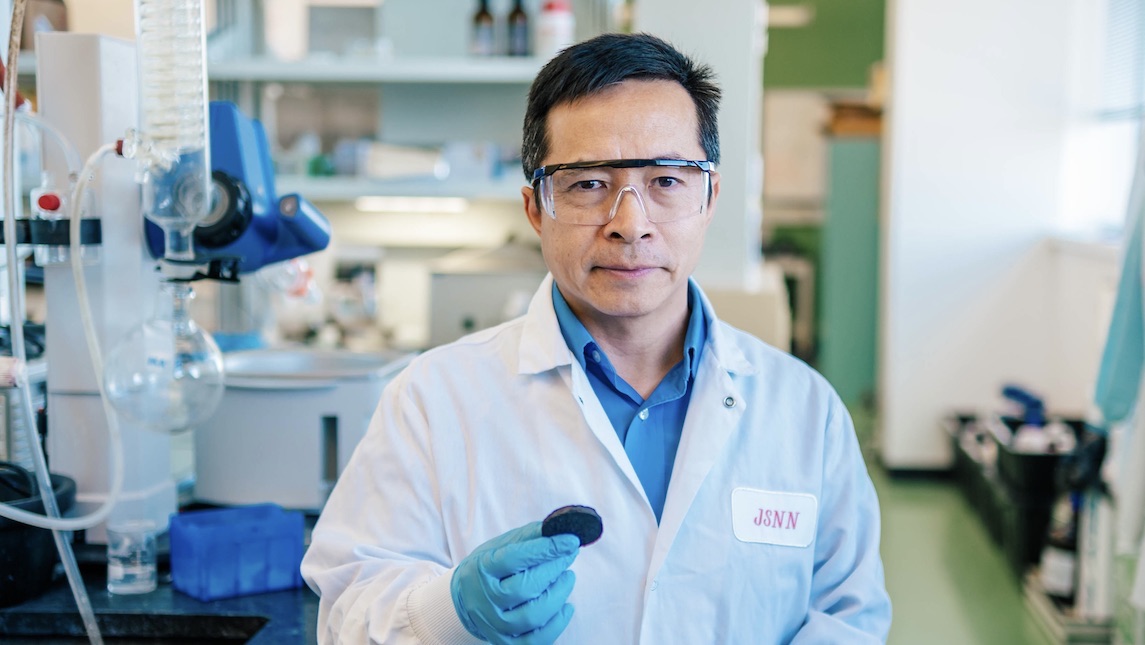
UNC Greensboro (UNCG) researchers are improving biochar—a porous charcoalCharcoal is a black, brittle, and porous material produced by heating wood or other organic substances in a low-oxygen environment. It is primarily used as a fuel source for cooking and heating. More made from organic waste—to address water contamination. Jianjun Wei, a chemist at the Joint School of Nanoscience and Nanoengineering (JSNN), leads efforts to modify biocharBiochar is a carbon-rich material created from biomass decomposition in low-oxygen conditions. It has important applications in environmental remediation, soil improvement, agriculture, carbon sequestration, energy storage, and sustainable materials, promoting efficiency and reducing waste in various contexts while addressing climate change challenges. More for better removal of heavy metals and PFAS (persistent “forever chemicals”) from water.
Funded by a $2 million USDA Forest Service grant, the project builds on over a decade of Forest Service work in biochar production. Wei and his team aim to boost biochar’s effectiveness by enhancing its ability to bind pollutants, a necessary step since unmodified biochar has limited affinity for such contaminants.
PFAS, used since the 1940s in products like non-stick cookware and firefighting foams, and heavy metals pose severe environmental and health risks, including cancer and organ damage. These pollutants are notoriously difficult to remove due to their stability and non-biodegradable nature. Wei’s approach involves studying how biochar interacts with these substances and developing surface modifications to improve adsorption.
Unlike powdered biochar, Wei’s team is exploring panel-based biochar systems, which allow for easier regeneration and reuse. Contaminants cling to the panel surfaces as water flows through, and the panels can be treated to remove pollutants for repeated use.
The research reflects Wei’s broader mission to advance environmental quality through nanoscience while training future scientists. Wei envisions commercializing the work to provide scalable, cost-effective solutions for global water challenges.
LEARN MORE: UNCG STUDIES BETTER BIOCHAR FOR CLEANER WATER



Leave a Reply