
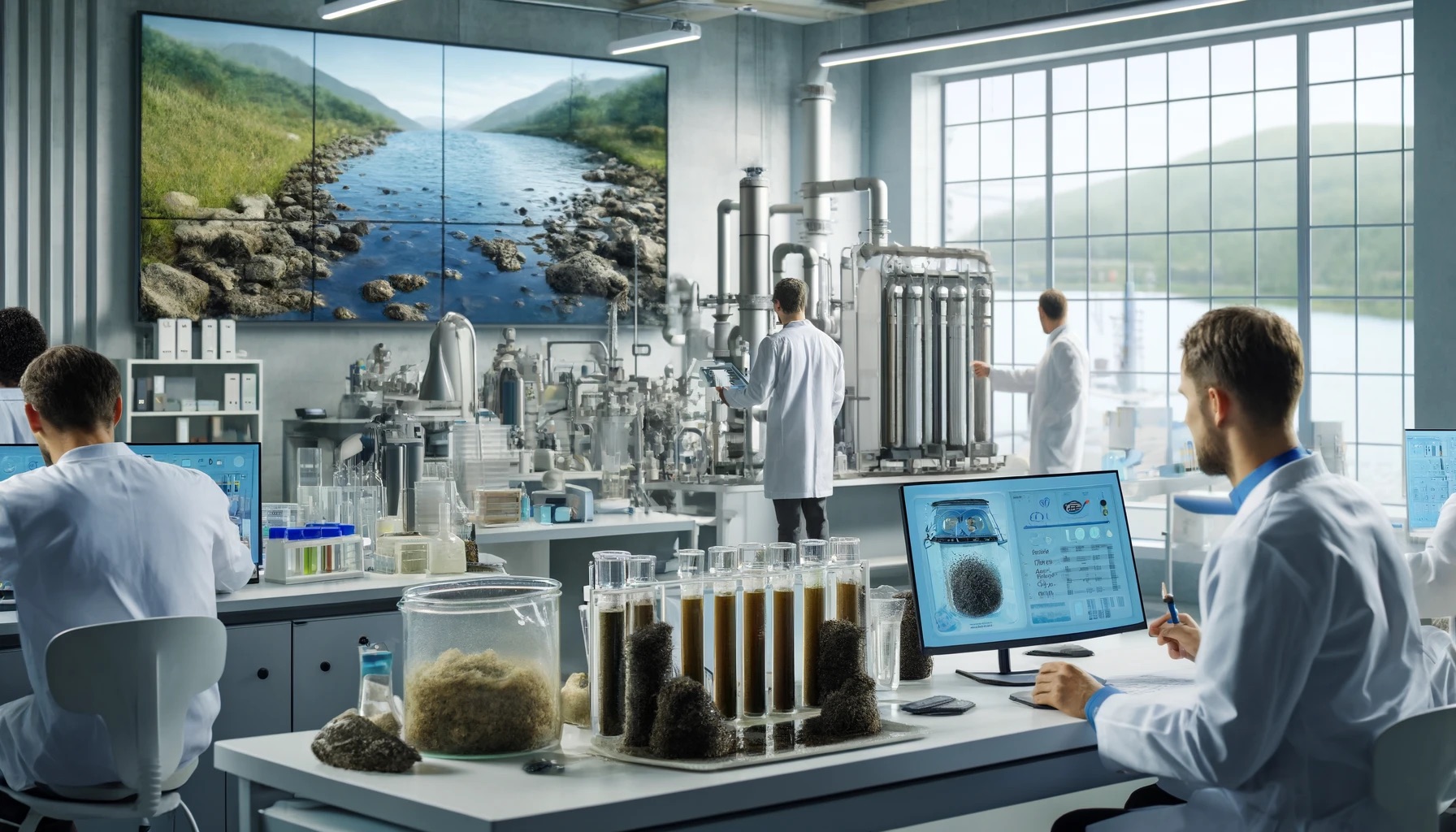
Researchers in Scotland are exploring the potential of converting sewage sludge into biocharBiochar is a carbon-rich material created from biomass decomposition in low-oxygen conditions. It has important applications in environmental remediation, soil improvement, agriculture, carbon sequestration, energy storage, and sustainable materials, promoting efficiency and reducing waste in various contexts while addressing climate change challenges. More, a mineral-rich material, to address water pollution caused by eutrophication and algal blooms, phenomena exacerbated by climate change. Funded by the Industrial Biotechnology Innovation Centre (IBioIC) and Scottish Water, the project aims to develop a biochar-based water filter.
Scottish Water supplies the raw sewage sludge, which is processed into biochar at high temperatures and without oxygen. This biochar is tested at the Scottish Water Horizons Waste Water Development Centre in Bo’ness, with insights provided by the Environmental Research Institute at UHI North, West, and Hebrides and water treatment specialist AL-2 Teknik.
Scotland disposes of approximately 130,000 tonnes of human waste annually, costing around £6 million. With potential regulatory changes on the horizon, alternative methods of waste treatment are being considered. Early tests indicate that biochar filters effectively remove phosphorus, a key contributor to algal blooms, from wastewater. This not only helps prevent environmental damage but also addresses the depletion of natural phosphorus reserves, essential for various household products and fertilizers.
The biochar production process, reaching temperatures up to 500°C, ensures safety by eliminating residual toxins, pharmaceuticals, and pesticides. The next phase involves on-site tests at smaller treatment works and discussions about commercializing biochar in Scotland. The project could lead to new supply chains for phosphorus recovery and broader applications for biochar, marking significant progress in waste reduction and sustainable practices.
By transforming waste into valuable resources, this initiative showcases the potential for innovative solutions to environmental challenges, paving the way for a sustainable future in water treatment and resource management.



Leave a Reply