
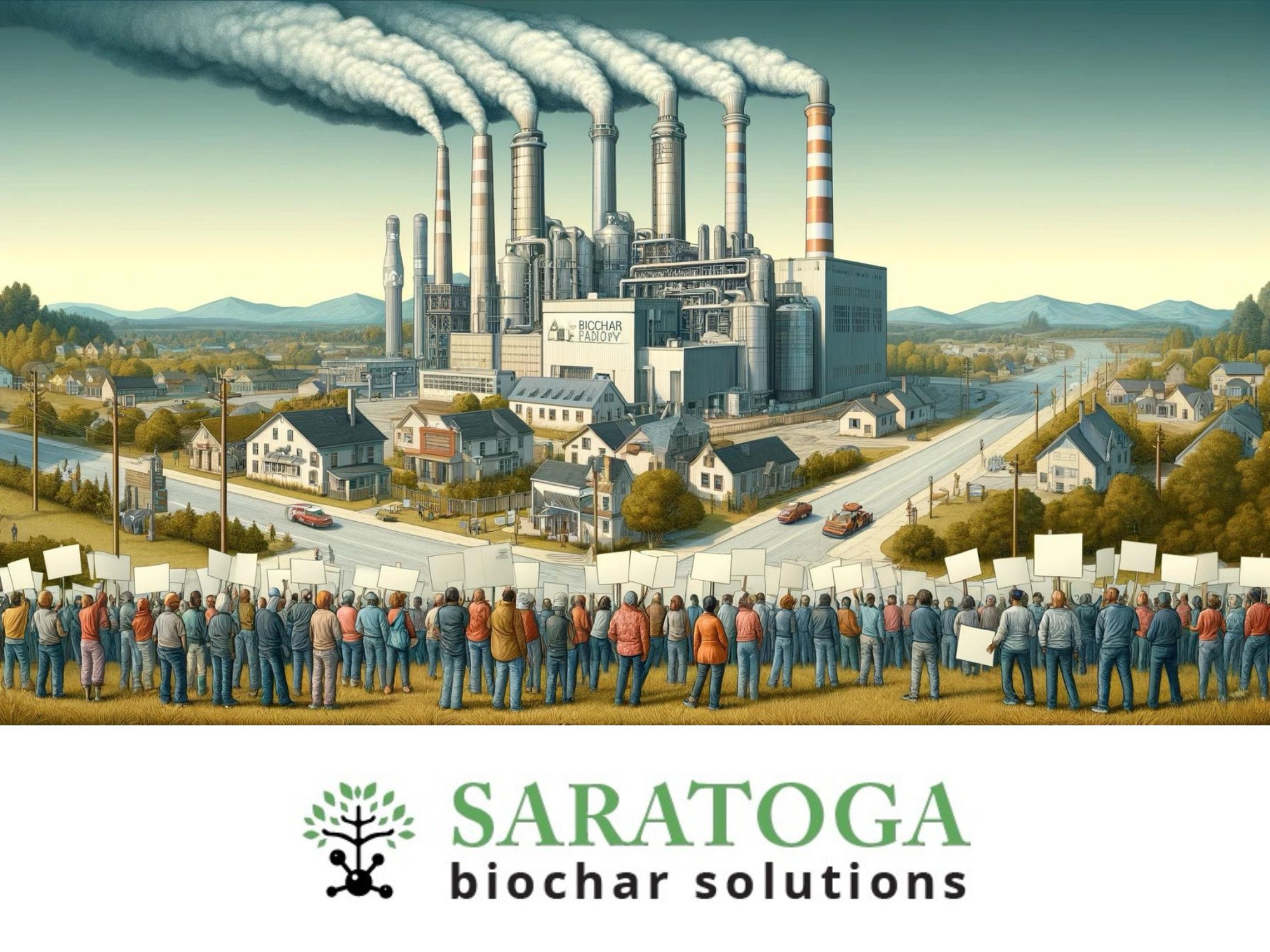
In the town of Moreau, a proposed biocharBiochar is a carbon-rich material created from biomass decomposition in low-oxygen conditions. It has important applications in environmental remediation, soil improvement, agriculture, carbon sequestration, energy storage, and sustainable materials, promoting efficiency and reducing waste in various contexts while addressing climate change challenges. More factory by Saratoga Biochar Solutions has encountered both regulatory setbacks and scientific validation, reflecting a complex narrative of environmental management and local activism. The project, aimed at transforming biosolids into carbon fertilizer through thermal oxidation, promises an eco-friendly solution to New York’s waste problem, but faces staunch opposition from local residents and environmental groups.
Despite a moratorium halting development in the Industrial Park to allow for zoning review, the Environmental Protection Agency (EPA) recently bolstered the company’s position. The EPA’s latest guidelines on PFAs—harmful “forever chemicals”—have validated the company’s technology, which purportedly eliminates PFAS from both the final product and emissions without detectable levels. This development comes after a contentious period marked by public hearings, litigation, and a rigorous approval process that began over two years ago.
The factory, if operational, would utilize high-temperature pyrolysisPyrolysis is a thermochemical process that converts waste biomass into bio-char, bio-oil, and pyro-gas. It offers significant advantages in waste valorization, turning low-value materials into economically valuable resources. Its versatility allows for tailored products based on operational conditions, presenting itself as a cost-effective and efficient More to break down PFAS compounds effectively, a method now supported by federal findings. Saratoga Biochar’s CEO, Raymond Apy, highlights that the EPA’s focus on pyrolysis techniques underscores the inadequacies of current biosolids disposal methods, which pose risks to human health and the environment. Meanwhile, Bryce Meeker, the company’s president, notes that the proposed temperatures for the Moreau plant would exceed those recommended by the EPA, ensuring the efficacy and safety of the process.
However, the project continues to face opposition spearheaded by the group ‘Not Moreau’, which argues that the facility would be detrimental to the town. This group has successfully extended public comment periods and remains active in voicing concerns and mobilizing local sentiment against the development. Their efforts underscore the ongoing debate between technological advancement and community environmental interests.
As the situation evolves, Saratoga Biochar Solutions stands at the crossroads of scientific support and community scrutiny, highlighting the broader challenges of adopting new technologies in the face of public opposition and regulatory landscapes. The resolution of this conflict will be pivotal in determining the practicality of innovative waste management solutions in New York and potentially setting a precedent for other regions grappling with similar issues.
READ MORE
- Controversial biochar factory stalled in Moreau, but claims an EPA win
- Newly-released US EPA Findings Support Saratoga Biochar Solutions’ Approach to Destroying PFAS in Biosolids




Leave a Reply