
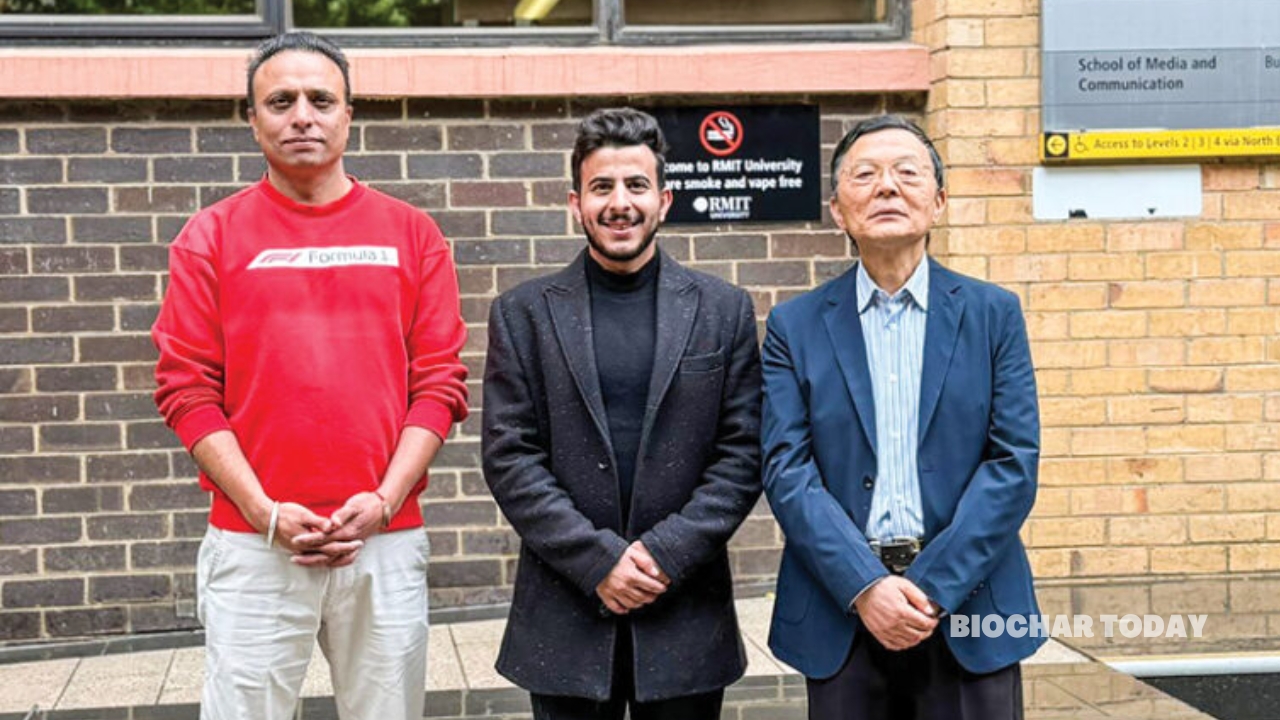
An international research team led by an Omani doctoral candidate at RMIT University in Australia has successfully engineered an innovative concrete mix utilizing agricultural waste. The study, published in the Journal of Building Engineering, explores the viability of converting discarded banana peels into an effective building material. By processing the organic waste into biocharBiochar is a carbon-rich material created from biomass decomposition in low-oxygen conditions. It has important applications in environmental remediation, soil improvement, agriculture, carbon sequestration, energy storage, and sustainable materials, promoting efficiency and reducing waste in various contexts while addressing climate change challenges. More, the researchers established a viable methodology for substituting a portion of the natural sand traditionally required in concrete manufacturing. This initiative represents a strategic advancement within the framework of circular economy practices, addressing both agricultural waste management and resource conservation in construction.
The construction sector currently faces critical sustainability challenges, primarily driven by the escalating environmental impacts of organic waste disposal and the depletion of natural aggregates. Banana peels are generated globally in massive volumes and are routinely sent to landfills, where they contribute to environmental degradation. Concurrently, the unsustainable extraction of natural sand to meet global infrastructure demands severely depletes natural resources. Furthermore, utilizing organic waste materials in industrial applications introduces technical obstacles, as variations in initial moisture levels and distinct chemical compositions make the production of biochar with consistent quality a highly complex process.
To address these compounding issues, the RMIT University research team conducted extensive laboratory testing to stabilize the organic waste and produce a uniform biochar. This banana peel biochar was then integrated into the concrete production process as a partial replacement for natural sand. The implementation of this solution effectively transforms a prevalent food waste stream into a functional construction component. By optimizing the pyrolytic transformation of the peels, the team mitigated the challenges associated with material variability, establishing a replicable process that diminishes the construction industry’s reliance on finite natural sand reserves.
The integration of banana peel biochar yielded measurable performance improvements, notably accelerating early-age strength development. The experimental concrete mix demonstrated a 24.7% increase in compressive strength after seven days compared to conventional concrete, allowing for faster formwork removal and accelerated project timelines. While the biochar concrete achieved performance levels comparable to standard mixtures at the 28-day mark, long-term durability assessments remain ongoing. This application successfully demonstrates a dual benefit: it reduces landfill volumes by recycling agricultural waste and lowers the demand for traditional construction materials.



Leave a Reply