
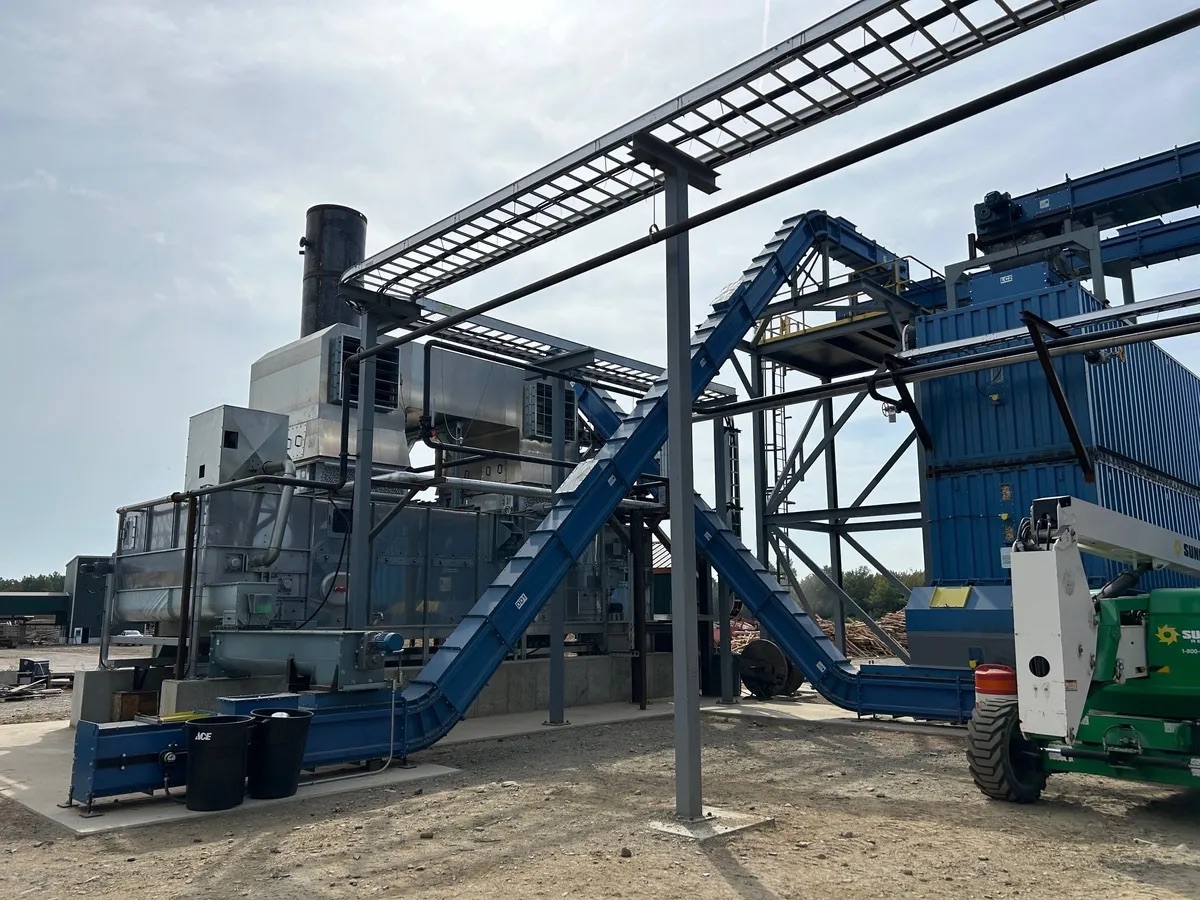
BiocharBiochar is a carbon-rich material created from biomass decomposition in low-oxygen conditions. It has important applications in environmental remediation, soil improvement, agriculture, carbon sequestration, energy storage, and sustainable materials, promoting efficiency and reducing waste in various contexts while addressing climate change challenges. More, a charcoal-like material made from organic biomassBiomass is a complex biological organic or non-organic solid product derived from living or recently living organism and available naturally. Various types of wastes such as animal manure, waste paper, sludge and many industrial wastes are also treated as biomass because like natural biomass these More, is gaining attention in Maine as a potential solution for improving soil health and combating contamination from per- and polyfluoroalkyl substances (PFAS). Two Maine companies—Standard Biocarbon in Enfield and Clean Maine Carbon in Greenville—are leading efforts to produce biochar for agricultural use.
Produced through pyrolysisPyrolysis is a thermochemical process that converts waste biomass into bio-char, bio-oil, and pyro-gas. It offers significant advantages in waste valorization, turning low-value materials into economically valuable resources. Its versatility allows for tailored products based on operational conditions, presenting itself as a cost-effective and efficient More, a high-temperature process in the absence of oxygen, biochar can sequester harmful chemicals like PFAS, improve water retention, and increase soil nutrient levels. PFAS, linked to cancers and other health issues, have contaminated Maine farmland through sludge applications in the 1980s and 1990s. Unlike some biochar byproducts from power plants, Standard Biocarbon uses quality-controlled wood sourced from Pleasant River Lumber to ensure a cleaner product.
Standard Biocarbon’s plant, which became operational in October 2024, produces 50 cubic yards of biochar daily, while Clean Maine Carbon outputs 20 cubic yards. Despite these advancements, challenges remain. Research is needed to confirm biochar’s effectiveness in long-term PFAS containment and soil health. Additionally, high production costs and limited farmer incentives make market growth uncertain.
A USDA subsidy program supports biochar use, but co-owner Fred Horton notes the cost must remain low for farmers to adopt it. As Maine continues to explore biochar’s potential, the industry faces a delicate balance between proving efficacy and scaling production.
LEARN MORE: A Maine factory is selling a new product to get PFAS out of crops



Leave a Reply