
Key Takeaways
- Integrating alternative, halogen-free protective particles into lightweight insulation plastics successfully prevents rapid melting and shortens vertical burning times.
- Combining agricultural biocharBiochar is a carbon-rich material created from biomass decomposition in low-oxygen conditions. It has important applications in environmental remediation, soil improvement, agriculture, carbon sequestration, energy storage, and sustainable materials, promoting efficiency and reducing waste in various contexts while addressing climate change challenges. More with expandable graphite and melamine components creates a durable charred layer that blocks oxygen and heat during fire exposure.
- Modifying structural formulas with ten percent recycled material maintains excellent structural strength, achieving a solid compressive resistance under high pressure.
- Adding engineered carbon particles creates a highly dense cellular grid with thousands of tiny, uniform air pockets that maintain strong thermal barrier performance.
A recent study in Polymer International by Apurv Gaidhani and a team of Canadian engineers demonstrated how blending alternative additives into polystyrene insulation can drastically improve fire safety. Published in the journal Polymer International, the pioneering materials research by Apurv Gaidhani, Harasavardanan Velumani Jayaraman, Stephan Edwards, Lauren Tribe, and Paul Charpentier addresses a major safety dilemma within the modern construction sector. Conventional expanded or extruded plastics are widely utilized for thermal insulation in buildings due to their exceptional ability to trap heat, yet their petroleum-derived chemical foundation makes them highly flammable. Historically, manufacturers mixed toxic halogenated compounds into the plastic to delay burning, but rising environmental regulations and strict human health guidelines have forced a massive shift toward sustainable alternatives. To engineer a safer solution, the research team used a specialized pilot-scale gas extrusion system to melt down and combine recycled styrenes with non-toxic, eco-friendly mineral barriers.
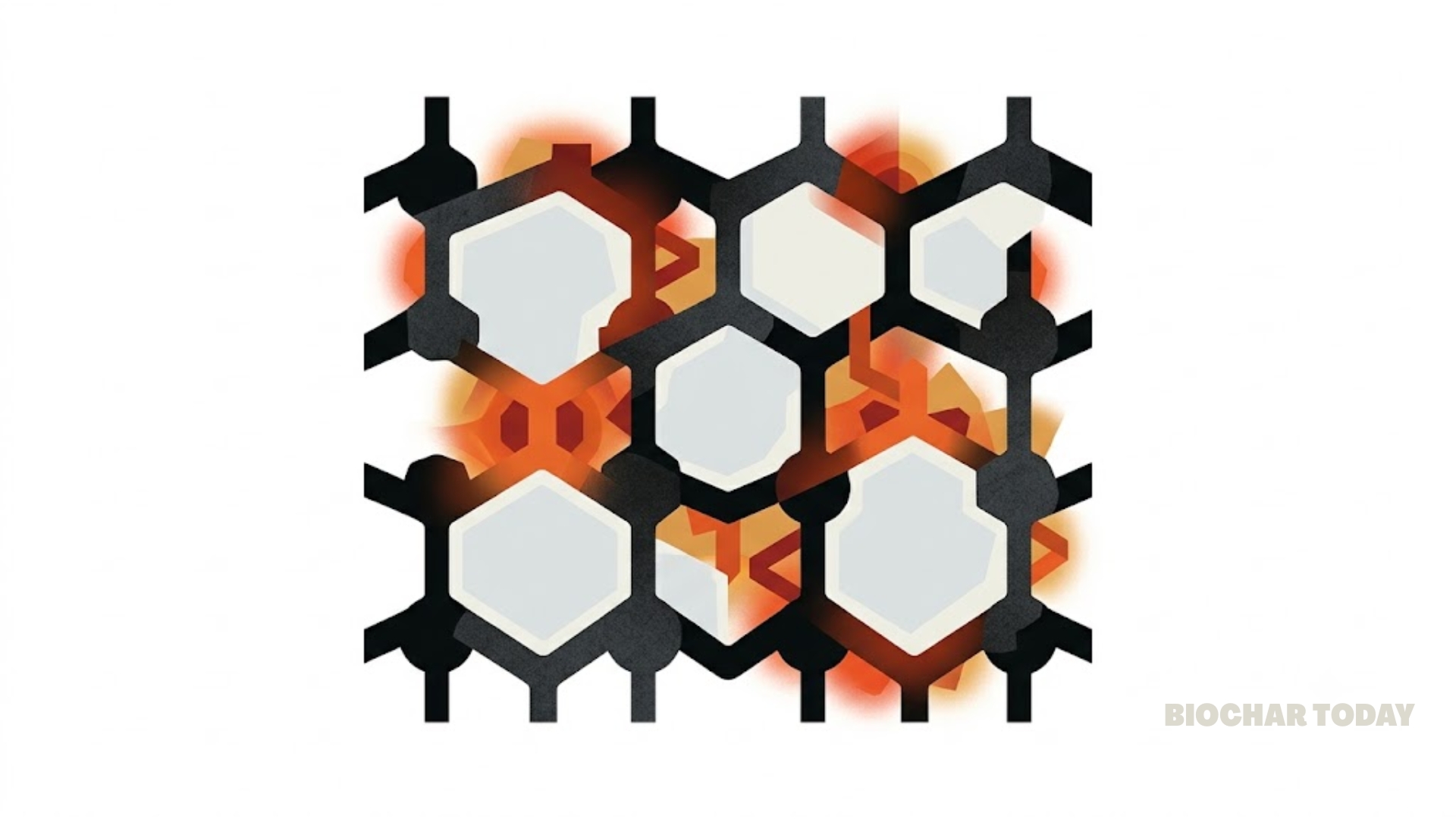
The findings reveal that substituting traditional flame retardants with a multi-layered mixture of biochar, expandable graphite, and melamine polyphosphate alters how the plastic reacts under extreme thermal duress, extending fire extinction times by eleven to twenty-four seconds. In standardized vertical burn testing, standard insulating foams ignited instantly and dripped melting, flaming droplets that rapidly consumed the entire material within seconds. In contrast, the engineered formulas containing the biochar and mineral matrix showed an immediate resistance to open flames by developing a thick, structural carbon shield upon ignition. This expanding outer crust acts as a physical boundary that chokes off oxygen supply and stops heat from penetrating deeper into the underlying polymer layer. Quantitative laboratory analysis confirmed that this cooperative protection model completely stopped the dangerous dripping of molten plastic, drastically slowing down total heat release rates and minimizing fire spread risks.
Beyond enhanced fire prevention, the study details how incorporating these carbon-based particles modifies the physical microstructure of the foam, producing an ideal internal grid pattern without sacrificing insulating performance. Adding finely milled biochar provides millions of tiny microscopic nucleation points during the manufacturing phase, causing the expanding carbon dioxide gas to split into a hyper-dense network of uniform air cells. This structural shift allowed the composite to achieve an incredibly tight cell count while minimizing individual pocket sizes to roughly fifty micrometers. Because the solid particles are distributed uniformly throughout the cell walls, the composite successfully registered a low thermal conductivity measurement of thirty-nine milliwatts per meter-kelvin. This confirms that the final material retains its primary function as a reliable climate-control barrier for green buildings while relying on safe, earth-friendly internal ingredients.
Real-world physical stress assessments and structural compressions recorded by the authors illustrate that these sustainable modifications yield exceptional load-bearing capacities suitable for commercial construction requirements. Mechanical testing indicated that the optimized biochar formulation delivered a specific compressive modulus of seventy-four megapascals grams per cubic centimeter, which matches or exceeds the rigorous standards of modern commercial insulation boards. Even when mixing in ten weight percent of recycled plastic waste, the composite resisted crushing under heavy weight loads, demonstrating that recycling initiatives can be successfully paired with structural safety enhancements. Furthermore, adding these biochar composites lowered the total financial cost of production by replacing a portion of expensive synthetic chemical additives with abundant, low-cost plant waste. By delivering an eco-friendly material that offers strong mechanical strength and high fire protection, this study establishes a clear blueprint for manufacturing safer, circular-economy insulation foams globally.
Source: Gaidhani, A., Jayaraman, H. V. M., Edwards, S., Tribe, L., & Charpentier, P. (2026). Mechanically robust biochar-modified polystyrene foam with enhanced flame retardancy using halogen-free additives. Polymer International, 75(1), e70155.




Leave a Reply