
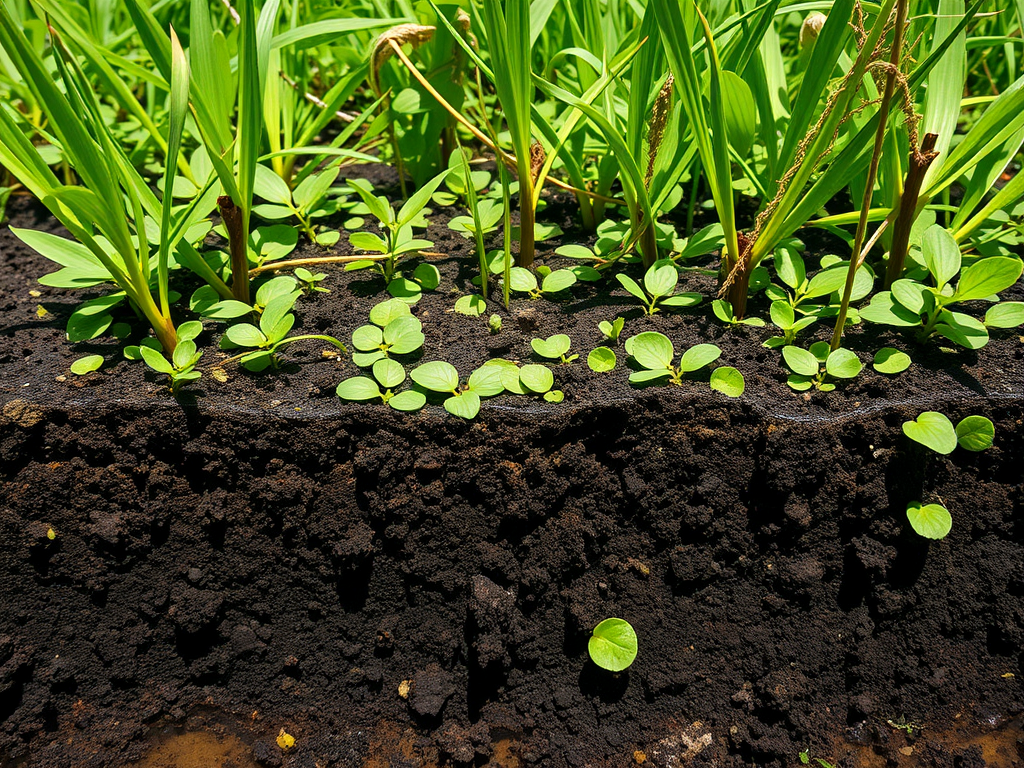
Draining peatlands for agriculture has released vast amounts of carbon, contributing to greenhouse gas emissions and global climate change. A new study in the journal BiocharBiochar is a carbon-rich material created from biomass decomposition in low-oxygen conditions. It has important applications in environmental remediation, soil improvement, agriculture, carbon sequestration, energy storage, and sustainable materials, promoting efficiency and reducing waste in various contexts while addressing climate change challenges. More investigates a promising solution: combining rewetting with specific soil amendments to accelerate carbon storage. Authors Peduruhewa H. Jeewani, Robert W. Brown, Jennifer M. Rhymes, Chris D. Evans, Dave R. Chadwick, and Davey L. Jones show that a high-water table combined with biochar and iron sulfate (FeSO4) is an effective strategy for restoring carbon storage capacity in agricultural peatlands.
The study, which used outdoor agricultural peat mesocosms over one year, found that different organic materials had varying levels of effectiveness in preserving peat carbon. Miscanthus biochar was the most effective, preserving 18.9 tC ha−1 based on a C addition rate of 20 tC ha−1. This outperformed Miscanthus residues ( 17.3 tC ha−1), biosolids (17.2 tC ha−1), cereal straw (14.5 tC ha−1), and paper waste (13.3 tC ha−1). The most effective overall treatment, which included a high-water table, biochar, and FeSO4, suppressed microbial activity and significantly preserved soil carbon. The total carbon retention for this treatment was 190 tC ha−1 yr−1, a substantial improvement over the low water table control which retained 164 tC ha−1 yr−1.
The positive effects of the biochar and FeSO4 treatment are attributed to changes in the microbial community and a suppression of enzyme activity. Raising the water table prevents the dominance of decomposers like Actinobacteria and Ascomycota. The addition of biochar, in particular, was found to suppress key hydrolytic enzymes, such as β-glucosidase and cellobiase, which are responsible for breaking down organic matter. The study found that phenol oxidase activity, which helps break down phenolic compounds, was 2-fold lower in the biochar plus high-water table plus FeSO4 treatment compared to the high-water table control. In fact, the biochar and FeSO4 treatment was the most effective at suppressing enzyme activity and peat mineralization rates.
Beyond inhibiting decomposition, the researchers observed a synergistic effect between the amendments and the soil’s geochemistry. The addition of FeSO4 increased the amount of iron-bound carbon in the non-rewetted treatment, supporting the “iron gate” mechanism for carbon preservation. Under well-aerated, low water table conditions, soluble Fe(II) is oxidized to less soluble Fe(III), which then forms complexes with soil organic matter, chemically stabilizing the carbon and protecting it from decomposition. This process, along with the “enzyme latch” mechanism, which is also influenced by oxygen levels, helps explain how these treatments work together to preserve carbon.
The findings offer a scalable and practical strategy for restoring degraded peatlands. The combination of water table management, biochar, and FeSO4 not only preserves peat carbon but also reduces greenhouse gas emissions. For instance, the high-water table with biochar treatment suppressed methane emissions by 20.7 tCO2e ha−1yr−1. This multi-pronged approach restructures the soil’s microbial networks and biogeochemical processes, leading to reduced organic matter decomposition and a more resilient ecosystem. The study’s results highlight a clear path forward for landowners, policymakers, and researchers to effectively address the challenges of peatland degradation and contribute to climate change mitigation.
Source: Jeewani, P. H., Brown, R. W., Rhymes, J. M., Evans, C. D., Chadwick, D. R., & Jones, D. L. (2025). Restoring degraded agricultural peatlands: how rewetting, biochar, and iron sulphate synergistically modify microbial hotspots and carbon storage. Biochar, 7(1), 108.





Leave a Reply