
Key Takeaways
- Scientists created a highly effective filter material by treating wood-based charcoalCharcoal is a black, brittle, and porous material produced by heating wood or other organic substances in a low-oxygen environment. It is primarily used as a fuel source for cooking and heating. More with a special phosphorus-rich salt.
- This enhanced material can trap over eighteen times more toxic cadmium than regular untreated charcoal.
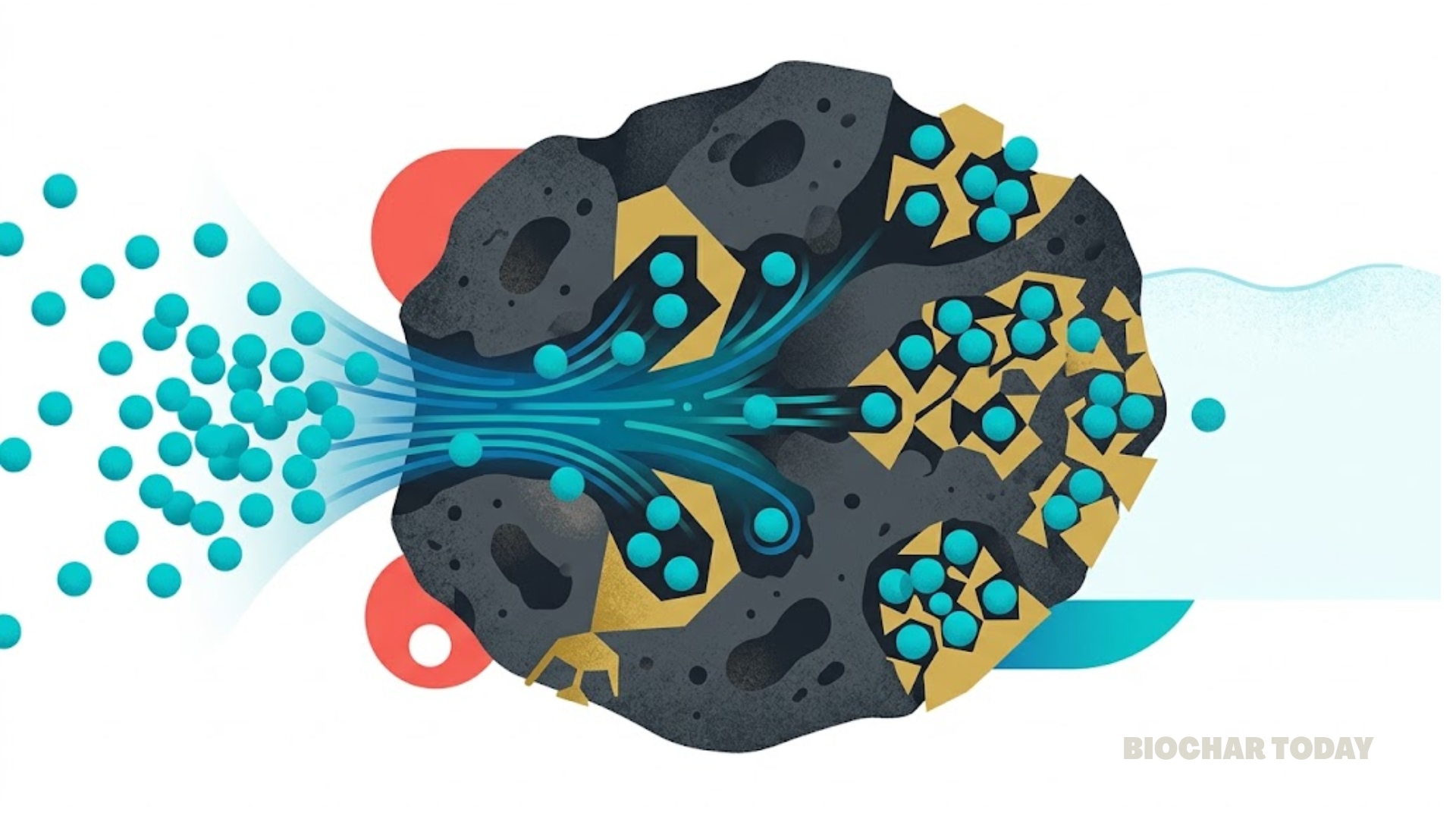
- The filter works by using chemical reactions to turn dissolved metals into solid minerals that stay stuck to the charcoal surface.
- This new treatment method is environmentally friendly because it uses an invasive plant as the starting material.
- The modified charcoal stays effective across a wide range of water conditions, making it a reliable tool for cleaning industrial wastewater.
The study, published in the Journal of Hazardous Materials Advances by Yun Chen, Xueying Li, and their research team, explores a sustainable solution for treating water contaminated with cadmium. Cadmium is a heavy metal often found in industrial wastewater that is highly toxic to humans and ecosystems, potentially causing kidney damage and cancer after long-term exposure. To address this, the researchers turned to biocharBiochar is a carbon-rich material created from biomass decomposition in low-oxygen conditions. It has important applications in environmental remediation, soil improvement, agriculture, carbon sequestration, energy storage, and sustainable materials, promoting efficiency and reducing waste in various contexts while addressing climate change challenges. More. While biochar is already known for its ability to soak up pollutants, its natural capacity is often too low for large-scale industrial use. The team focused on enhancing biochar derived from Tamarix chinensis, an invasive woody plant that often disrupts local biodiversity in wetland areas.
The researchers tested three different types of phosphorus-based treatments to see which would create the most effective filter. They discovered that using a specific precursor known as tripotassium phosphate produced the most powerful results. This modification process fundamentally changed the charcoal’s surface, making it much rougher and significantly increasing the number of available sites where cadmium could be trapped. The resulting material showed a remarkably high performance, with a theoretical maximum capacity to hold 206.94 milligrams of cadmium for every gram of biochar used. This represents a massive improvement over the untreated version, which only managed to capture approximately 11.17 milligrams per gram.
A key finding of the research was how the modified biochar actually removes the metal from the water. Instead of just acting like a sponge, the material uses complex chemical processes to immobilize the cadmium. Mechanistic investigations revealed that two main processes were at work: mineral precipitation and ion exchange. Mineral precipitation, which accounted for more than half of the total removal, involves the phosphorus on the biochar surface reacting with dissolved cadmium to form new, stable mineral solids. Meanwhile, ion exchange allowed the cadmium to swap places with other elements on the biochar surface, effectively locking the toxic metal in place. These processes were so efficient that the concentration of phosphorus left in the water after treatment was nearly zero, ensuring that the cleanup process itself did not add new pollutants to the environment.
The study also highlighted the versatility of this new material. The phosphorus-modified biochar remained highly effective across a wide pHpH is a measure of how acidic or alkaline a substance is. A pH of 7 is neutral, while lower pH values indicate acidity and higher values indicate alkalinity. Biochars are normally alkaline and can influence soil pH, often increasing it, which can be beneficial More range, specifically from very acidic conditions at pH 2 to more neutral environments at pH 8. This is particularly important for real-world applications, as industrial wastewater often varies in acidity. The researchers noted that the material’s strong negative surface charge helps pull the positively charged cadmium ions toward it, further boosting its cleaning power. By transforming an invasive plant into a high-value environmental tool, this research offers a dual benefit: managing problematic plant species while providing a cost-effective and highly efficient method for protecting water resources from heavy metal pollution.
Source: Chen, Y., Li, X., Wang, W., Feng, Y., Liu, S., Aryee, A. A., Shao, Y., & Yuan, Z. (2026). High-performance orthophosphate-modified biochar for removal of Cd (II) from aqueous solutions: Mechanisms and efficiency. Journal of Hazardous Materials Advances, 22, 101149.




Leave a Reply