
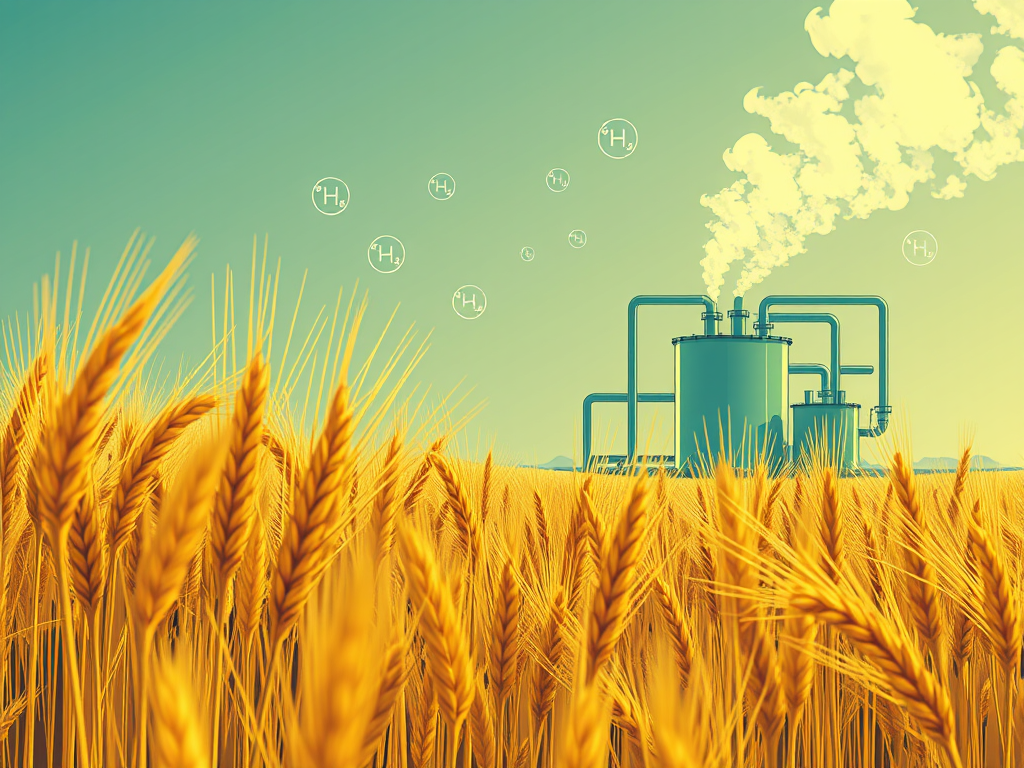
In a recent study published in Fuel, Tawanda Matamba and colleagues explored an innovative approach to producing and storing hydrogen (H2), a promising clean energy source. The research focused on converting waste wheat straw into H2-rich biogas through pyrolysisPyrolysis is a thermochemical process that converts waste biomass into bio-char, bio-oil, and pyro-gas. It offers significant advantages in waste valorization, turning low-value materials into economically valuable resources. Its versatility allows for tailored products based on operational conditions, presenting itself as a cost-effective and efficient More, a thermal decomposition process. The study further investigated the potential of the biocharBiochar is a carbon-rich material created from biomass decomposition in low-oxygen conditions. It has important applications in environmental remediation, soil improvement, agriculture, carbon sequestration, energy storage, and sustainable materials, promoting efficiency and reducing waste in various contexts while addressing climate change challenges. More, a byproduct of this process, for H2 storage.
The authors systematically examined the impact of temperature and pressure on H2 production. Higher temperatures proved more influential in promoting H2 formation. Increased temperature and pressure boosted H2 production, peaking at 86.07 vol% at 800°C and 30 bar. The biochar’s surface area and pore volume increased with temperature, enhancing its H2 storage capacity. Maximum H2 adsorption capacity at ambient temperature was 2.50 mol/kg, which significantly increased to 15.29 mol/kg under cryogenic conditions.
The study highlights a dual benefit: producing clean energy and capturing it. Pyrolysis of wheat straw yields H2-rich syngasSyngas, or synthesis gas, is a fuel gas mixture consisting primarily of hydrogen and carbon monoxide. It is produced during gasification and can be used as a fuel source or as a feedstock for producing other chemicals and fuels. More and biochar, which efficiently stores H2 under specific conditions. This process presents a promising avenue for a sustainable hydrogen economy, addressing both the production and storage challenges of this clean fuel. The research offers valuable data and methods for advancing the use of hydrogen as a key player in the transition from fossil fuels.
SOURCE: Matamba, T., Abid, H. R., Keshavarz, A., & Iglauer, S. (2025). H2-rich biogas production from fixed bed wheat straw pyrolysis and the potential of produced biochar as H2 storage material. Fuel, 392, 134926.





Leave a Reply