
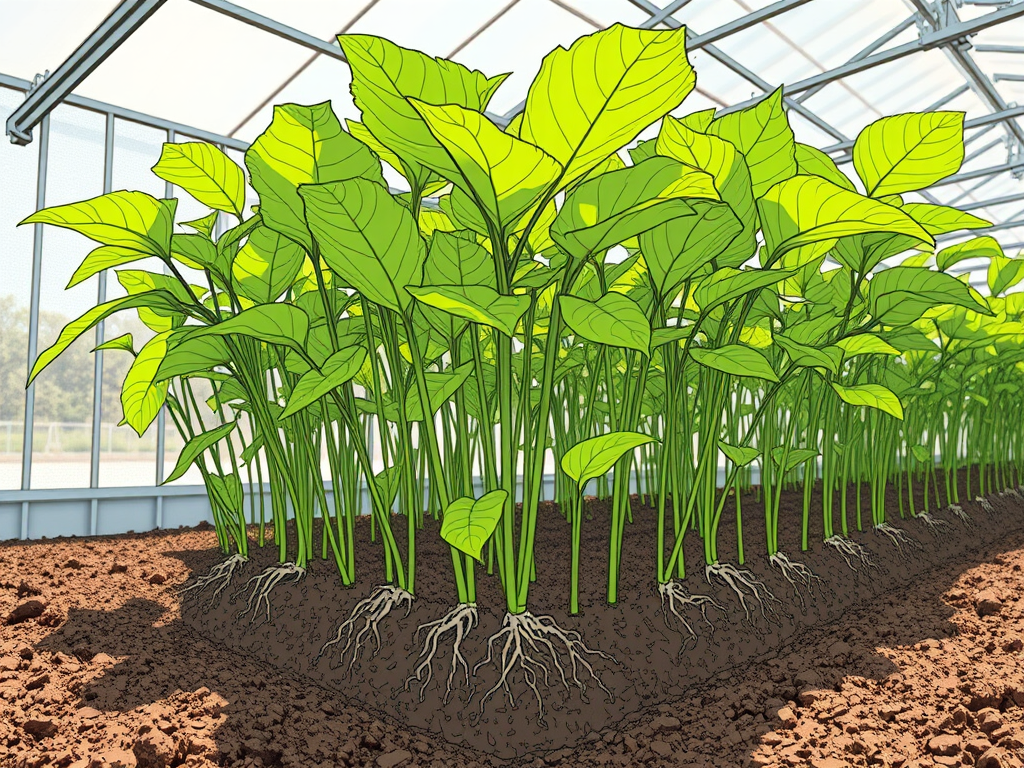
A recent study published in BMC Plant Biology by Vedat Beyyavaş highlights the significant potential of Gyttja biocharBiochar is a carbon-rich material created from biomass decomposition in low-oxygen conditions. It has important applications in environmental remediation, soil improvement, agriculture, carbon sequestration, energy storage, and sustainable materials, promoting efficiency and reducing waste in various contexts while addressing climate change challenges. More as a sustainable soil amendmentA soil amendment is any material added to the soil to enhance its physical or chemical properties, improving its suitability for plant growth. Biochar is considered a soil amendment as it can improve soil structure, water retention, nutrient availability, and microbial activity. More for improving soybean growth and soil health. The study investigated the effects of different concentrations of this biochar on soybean plants (Glycine max (L.) Merr.) in a greenhouse setting. The results showed that Gyttja biochar significantly improved both plant growth and soil chemical properties, with a key finding being the dramatic increase in biomassBiomass is a complex biological organic or non-organic solid product derived from living or recently living organism and available naturally. Various types of wastes such as animal manure, waste paper, sludge and many industrial wastes are also treated as biomass because like natural biomass these More and soil enzyme activity. The research indicates that converting Gyttja sediment—an organic-rich material from lakes and wetlands—into biochar is an environmentally friendly and effective strategy for boosting agricultural productivity and soil fertility.
Gyttja biochar, derived from organic-rich sediment found in aquatic environments, is an innovative soil amendment with a balanced nutrient content. This type of biochar has unique physicochemical characteristics, including a high calcium carbonate content, which gives it a superior ability to adjust soil pHpH is a measure of how acidic or alkaline a substance is. A pH of 7 is neutral, while lower pH values indicate acidity and higher values indicate alkalinity. Biochars are normally alkaline and can influence soil pH, often increasing it, which can be beneficial More and increase nutrient availability compared to plant-based biochar. The biochar used in the study had a fixed carbon content of 55.45%, suggesting a significant potential for long-term carbon sequestration. It also contained essential macronutrients like phosphorus (0.9%), potassium (2.32%), and calcium (2.11%), as well as trace minerals like zinc (141.12 mg/kg), copper (15.28 mg/kg), and manganese (21.75 mg/kg), highlighting its potential to improve soil nutrient profiles.
The study’s results demonstrated a strong dose-dependent effect on plant growth traits. The most significant improvements were observed at the highest concentration of Gyttja biochar (4.5%). At this concentration, plant height increased by 20.9% and plant weight (biomass) increased by an impressive 84.9% compared to the control group. Root length also saw a substantial increase, reaching its peak at the 3.0% concentration with a 29.2% improvement. The plants treated with biochar also showed increased stomatal conductance, with the 4.5% concentration leading to a 91.2% improvement over the control.
In addition to enhancing physical growth, Gyttja biochar improved the biochemical attributes of the soybean plants. Treated plants showed increased antioxidant enzyme activities and lower levels of oxidative stress indicators like malondialdehyde (MDA). The 4.5% biochar concentration led to a significant increase in catalase (CAT) activity in the plants, with a 50.08% improvement over the control. This indicates a more beneficial, less oxidative environment for the plants, which supports their improved growth and overall health.
The benefits of the biochar extended to the soil itself, with significant improvements in its chemical and biological properties. The application of 4.5% Gyttja biochar increased soil pH by 5.9% and electrical conductivity (EC) by 33.2%. The study found a particularly remarkable effect on soil enzyme activities. Urease activity, which is crucial for nitrogen mineralization, nearly doubled with the 4.5% concentration, showing a 97.01% increase compared to the control. Soil dehydrogenase activity, which indicates microbial respiration, also increased by 34.71% at the 4.5% concentration. These improvements in soil enzymatic activity, along with positive correlations between soil health indicators and plant growth traits, demonstrate that Gyttja biochar acts as a catalyst for a healthier soil ecosystem.
SOURCE: Beyyavaş, V. (2025). Improving soybean (Glycine max (L.) Merr.) growth and soil health with Gyttja biochar: insights into plant biochemical attributes and soil chemical properties. BMC Plant Biology, 25(974), 1–14.





Leave a Reply