
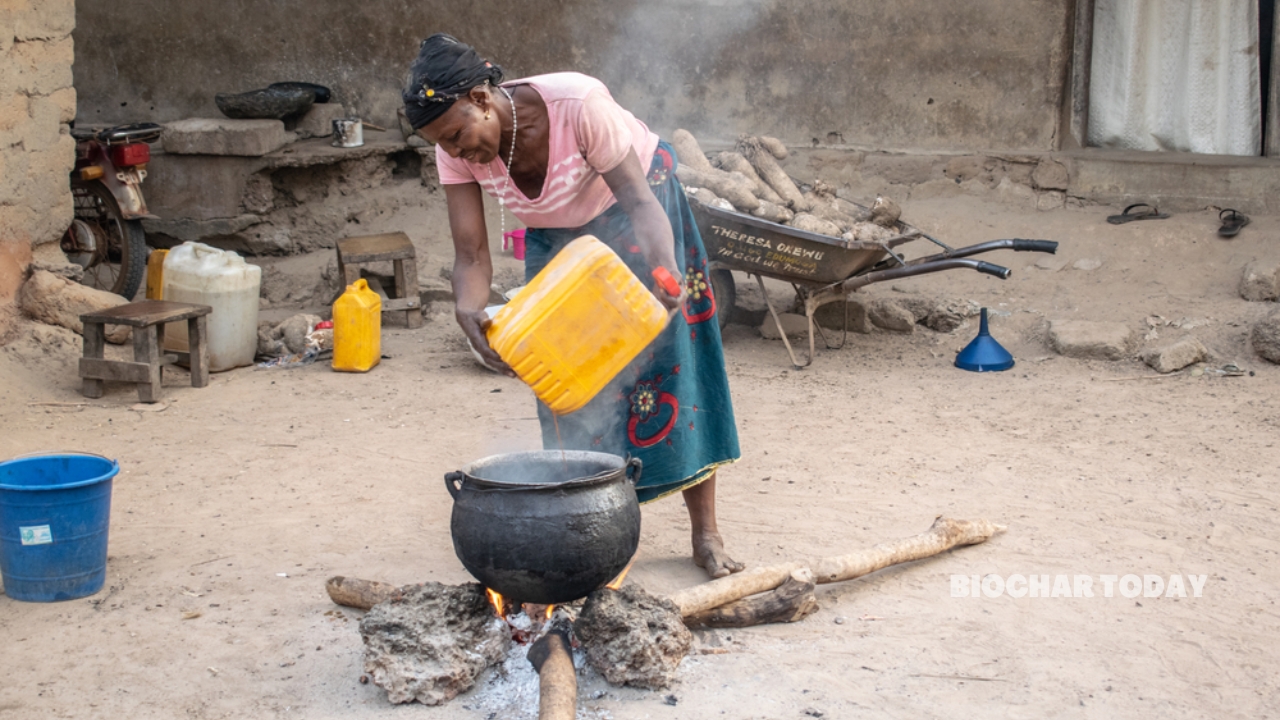
Nigeria is embarking on a large-scale clean cooking initiative that aims to distribute 80 million efficient cookstoves to households across the country. Project developer GreenPlinth Africa, along with the Federal Government, projects that the initiative could eventually generate up to $5 billion annually from verified carbon credit revenues at full implementation. Lagos State has positioned itself as an early anchor for the rollout, committing to provide 6 million of these stoves completely free of charge. The nationwide program is structured to transform household energy use and integrate regional emission reductions directly into international carbon markets.
The initiative directly addresses a severe public health and environmental challenge in Nigeria, where a vast majority of the population lacks access to clean cooking technologies. According to official data from 2023, more than 167 million individuals—approximately 73.8 percent of the country—rely on traditional solid fuels like firewood and charcoalCharcoal is a black, brittle, and porous material produced by heating wood or other organic substances in a low-oxygen environment. It is primarily used as a fuel source for cooking and heating. More. This dependence is particularly severe in rural areas, where clean cooking access stands at less than 10 percent. Traditional cooking methods produce heavy, toxic indoor smoke that damages respiratory health and accelerates regional deforestation due to the constant harvesting of fuelwood.
To mitigate these issues, the program deploys advanced, efficient cookstoves to eliminate reliance on open fires and basic biomassBiomass is a complex biological organic or non-organic solid product derived from living or recently living organism and available naturally. Various types of wastes such as animal manure, waste paper, sludge and many industrial wastes are also treated as biomass because like natural biomass these More combustion. The physical distribution of the free stoves began in June 2025 within the Makoko community of Lagos State, establishing a scalable model for the remaining states. The technical framework aligns with modern carbon market requirements, including the rigorous methodologies developed under the United Nations Article 6.4 mechanism. By systematically tracking real-world stove usage and long-term adoption, the project ensures that the resulting emission reductions are transparently monitored and verified.
The expected outcomes of this massive infrastructure deployment involve both public health improvements and climate finance monetization. Delivering 80 million stoves will significantly lower daily smoke exposure for women and young children, reducing the domestic incidence of heart and lung diseases. Environmentally, the shift away from wood fuel will substantially lower biomass consumption and curb national greenhouse gas emissions. Economically, the resulting verified carbon credits will create a major capital pipeline, allowing the nation to secure substantial revenues through compliance and voluntary carbon trading channels.


Leave a Reply