

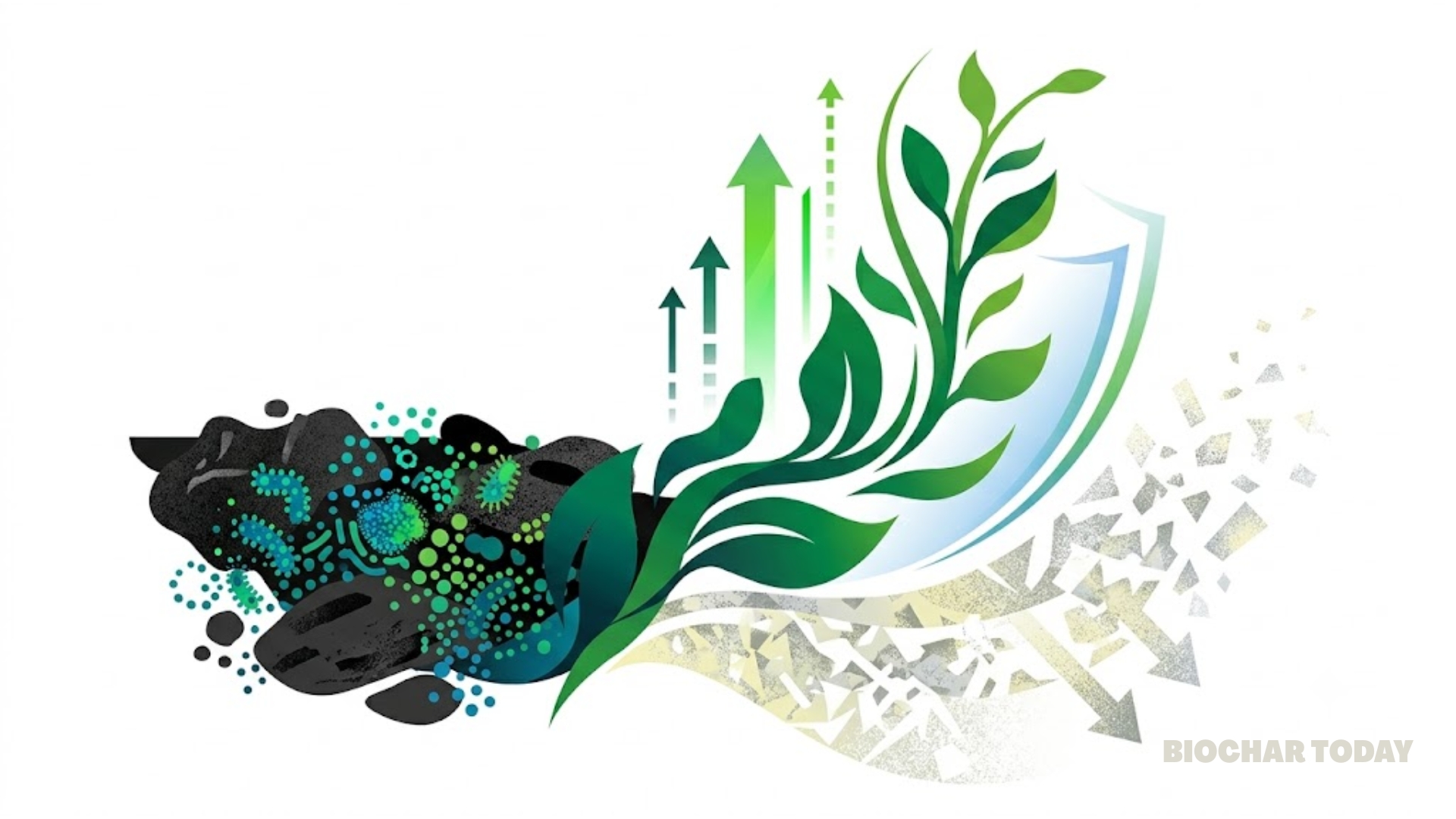
Nasrollahpour et al., in a comprehensive review published in iScience, delve into the potential of functionalized biocharBiochar is a carbon-rich material created from biomass decomposition in low-oxygen conditions. It has important applications in environmental remediation, soil improvement, agriculture, carbon sequestration, energy storage, and sustainable materials, promoting efficiency and reducing waste in various contexts while addressing climate change challenges. More for removing poly- and perfluoroalkyl substances (PFAS) from aqueous environments. PFAS, notorious for their persistence and bioaccumulation potential, pose significant environmental and health risks. Biochar, a carbon-rich material derived from biomassBiomass is a complex biological organic or non-organic solid product derived from living or recently living organism and available naturally. Various types of wastes such as animal manure, waste paper, sludge and many industrial wastes are also treated as biomass because like natural biomass these More pyrolysisPyrolysis is a thermochemical process that converts waste biomass into bio-char, bio-oil, and pyro-gas. It offers significant advantages in waste valorization, turning low-value materials into economically valuable resources. Its versatility allows for tailored products based on operational conditions, presenting itself as a cost-effective and efficient More, has emerged as a cost-effective and eco-friendly adsorbent for various pollutants.
The authors emphasize the importance of functionalizing biochar to enhance its adsorption capacity for PFAS. Functionalization techniques, such as impregnation with metal oxides, steam activation, and acid-base treatments, increase the surface area and introduce more active sites on the biochar. This modification improves the biochar’s ability to remove PFAS through mechanisms like hydrophobic interactions, electrostatic attraction, and π-π bonding.
The review also highlights various factors influencing PFAS removal, including pHpH is a measure of how acidic or alkaline a substance is. A pH of 7 is neutral, while lower pH values indicate acidity and higher values indicate alkalinity. Biochars are normally alkaline and can influence soil pH, often increasing it, which can be beneficial More, PFAS chain length, and biochar characteristics like pyrolysis temperature and particle size. The authors note that long-chain PFAS are more effectively adsorbed than short-chain PFAS, and competitive sorption effects can occur in mixed solutions. This work provide a comprehensive overview of biochar functionalization techniques and their effectiveness in PFAS removal. Their insights contribute to the growing body of knowledge on biochar-based PFAS remediation, paving the way for sustainable and efficient water treatment solutions.
Source: Nasrollahpour, S., Pulicharla, R., & Brar, S. K. (2025). Functionalized Biochar for the Removal of Poly- and Perfluoroalkyl Substances in Aqueous Media. iScience, 112113. https://doi.org/10.1016/j.isci.2025.112113



Leave a Reply