
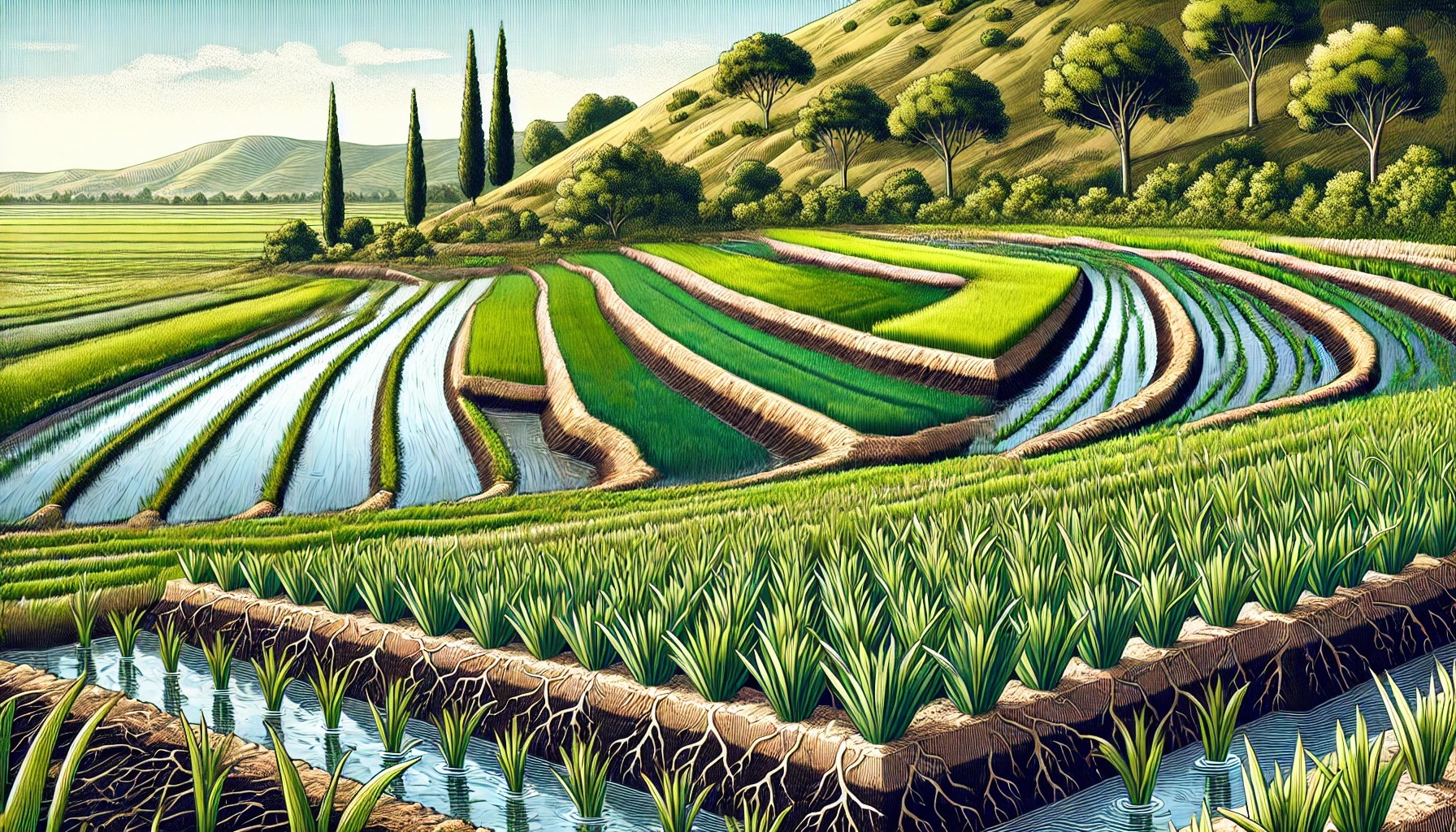
A new study published in Agronomy for Sustainable Development by Luis Vicente and colleagues explores how alternate wetting and drying (AWD) irrigation, combined with biocharBiochar is a carbon-rich material created from biomass decomposition in low-oxygen conditions. It has important applications in environmental remediation, soil improvement, agriculture, carbon sequestration, energy storage, and sustainable materials, promoting efficiency and reducing waste in various contexts while addressing climate change challenges. More application, can enhance water and rice productivity in Mediterranean climates. With global rice farming consuming approximately 40% of freshwater resources, innovative solutions are needed to sustain yields while conserving water.
Conducted over three years in southwest Spain, the study compared traditional flooded irrigation with AWD systems at two severity thresholds (-20 kPa and -70 kPa soil matric potential). Field-aged biochar, derived from holm oak, was incorporated into some plots to assess its impact on soil health and crop performance.
The results were striking: under severe AWD (-70 kPa), biochar-amended plots showed a 25% increase in grain yield compared to non-amended counterparts. Water productivity also improved significantly, with biochar boosting water-use efficiency by up to 44% under AWD conditions. These gains are attributed to biochar’s ability to enhance soil organic carbon, water retention, and microbial activity, even after 30 months of aging.
This research highlights AWD with biochar as a sustainable farming practice, particularly for water-scarce regions. While moderate AWD conditions (-20 kPa) provided higher overall yields, severe AWD coupled with biochar offered a compelling tradeoff between water savings and productivity. Future studies are needed to evaluate long-term effects and economic feasibility across diverse rice-growing regions.
SOURCE: Vicente, L., Peña, D., Fernández, D., Albarrán, Á., Rato-Nunes, J. M., & López-Piñeiro, A. (2025). Alternate wetting and drying irrigation with field-aged biochar may enhance water and rice productivity. Agronomy for Sustainable Development, 45(6). https://doi.org/10.1007/s13593-024-01000-3



Leave a Reply