
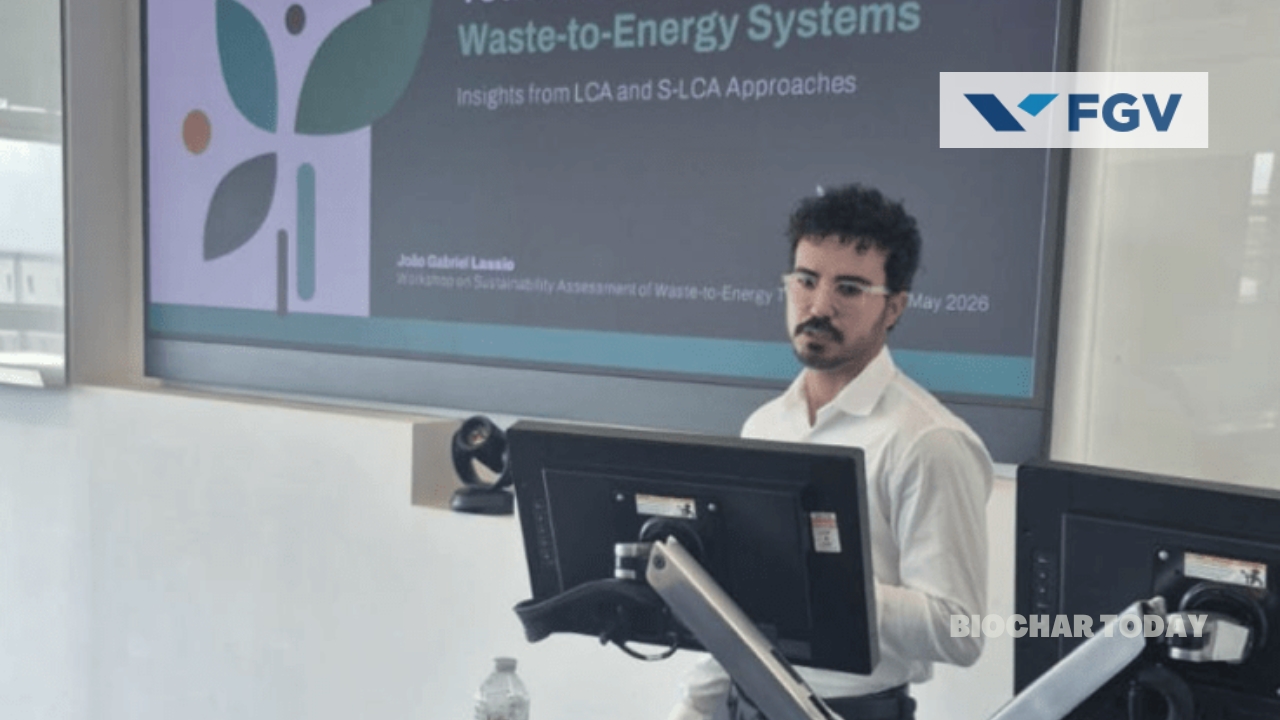
João Gabriel Lassio, a researcher at FGV Energia and a post-doctoral student in the Energy Planning Program at COPPE/UFRJ, presented a comprehensive waste-to-energy study at the Workshop on Sustainability Assessment of Waste-to-Energy Technologies. Held at Brunel University in London, England, the international workshop served as a venue to unveil research titled Towards Sustainable Waste-to-Energy Systems: Insights from LCA and S-LCA Approaches. The study analyzes the chemical valorization of banana peels sourced from a food processing facility located in the State of Rio de Janeiro, Brazil, evaluating the use of pyrolysisPyrolysis is a thermochemical process that converts waste biomass into bio-char, bio-oil, and pyro-gas. It offers significant advantages in waste valorization, turning low-value materials into economically valuable resources. Its versatility allows for tailored products based on operational conditions, presenting itself as a cost-effective and efficient More to convert this organic residue into biocharBiochar is a carbon-rich material created from biomass decomposition in low-oxygen conditions. It has important applications in environmental remediation, soil improvement, agriculture, carbon sequestration, energy storage, and sustainable materials, promoting efficiency and reducing waste in various contexts while addressing climate change challenges. More and bio-oil.
The major challenge addressed by this research is the socio-environmental complexity of executing a just energy transition through waste biomassBiomass is a complex biological organic or non-organic solid product derived from living or recently living organism and available naturally. Various types of wastes such as animal manure, waste paper, sludge and many industrial wastes are also treated as biomass because like natural biomass these More conversion. While scaling decentralized waste-to-energy technologies holds substantial decarbonization potential, project developers often struggle to ensure that processing systems distribute socio-economic benefits equitably across the value chain. Historically, standard techno-economic evaluations fail to rigorously and transparently quantify localized social risks to workers and regional communities, or to adequately weigh those human factors against broader environmental performance indices.
To address these assessment gaps, the study integrates dual frameworks by applying both Life Cycle Assessment (LCA) and Social Life Cycle Assessment (S-LCA) methodologies to the food waste processing system. Conducted under the international South-North Network on Life Cycle Sustainability Assessment of Waste-to-Energy Technologies (SEN4WTE), this combined analytical approach models both the environmental impacts of the thermochemical conversion and the direct social consequences on localized stakeholders. This dual-lens modeling ensures that the thermodynamic parameters of pyrolysis are evaluated alongside human-centric variables.
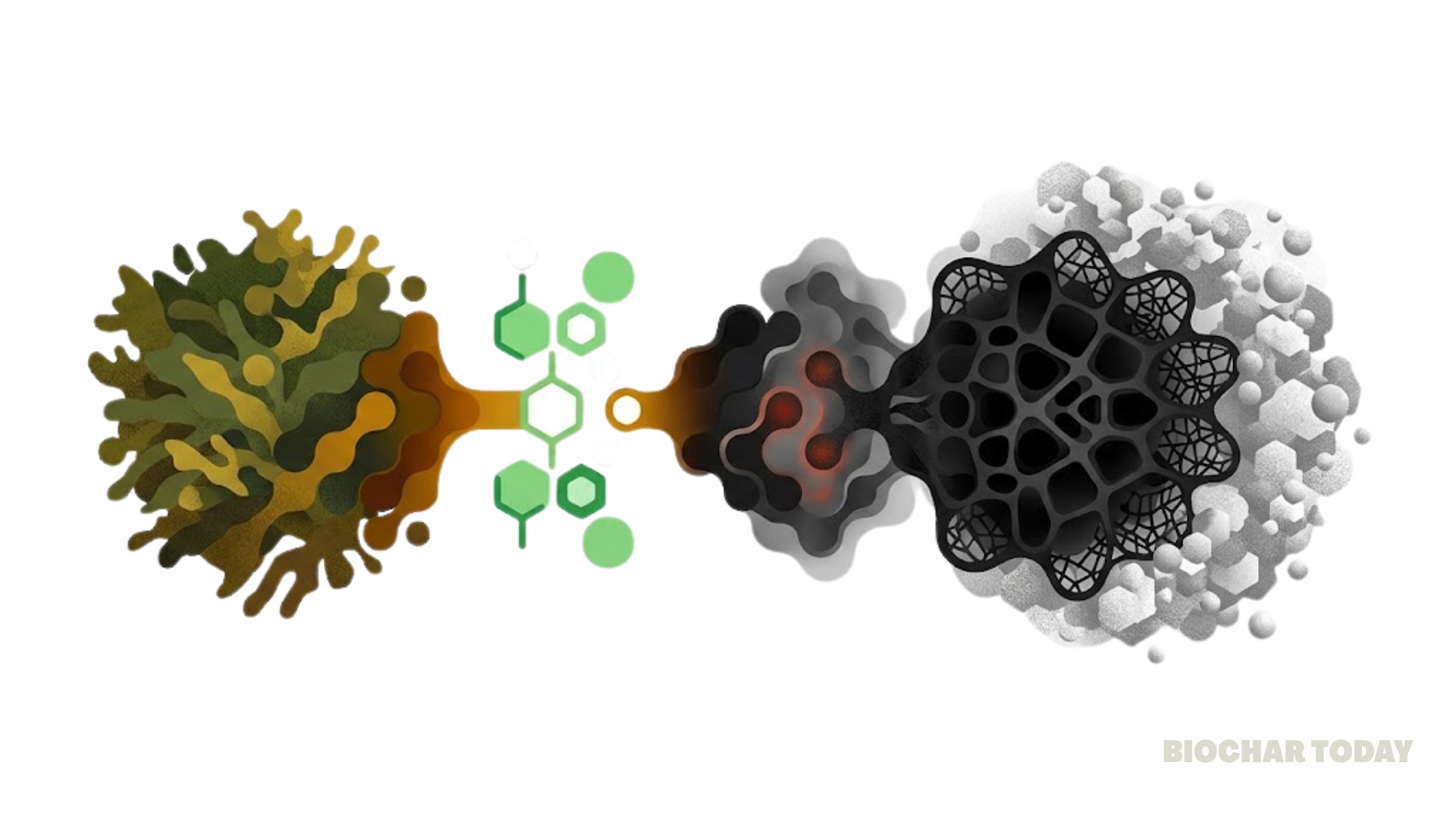
The outcomes of this research establish a methodological blueprint for evaluating organic waste streams within a circular economy framework. By mapping the full life cycle of converting fruit processing residues into high-value biochar and bio-oil, the study provides quantified insights into resource circularity for the agricultural sector. Ultimately, the integration of LCA and S-LCA data demonstrates how targeted biomass pyrolysis can simultaneously alleviate municipal food waste burdens, generate stable carbon-retaining materials, and foster equitable social advancements for local industry workers and nearby populations.

Leave a Reply