
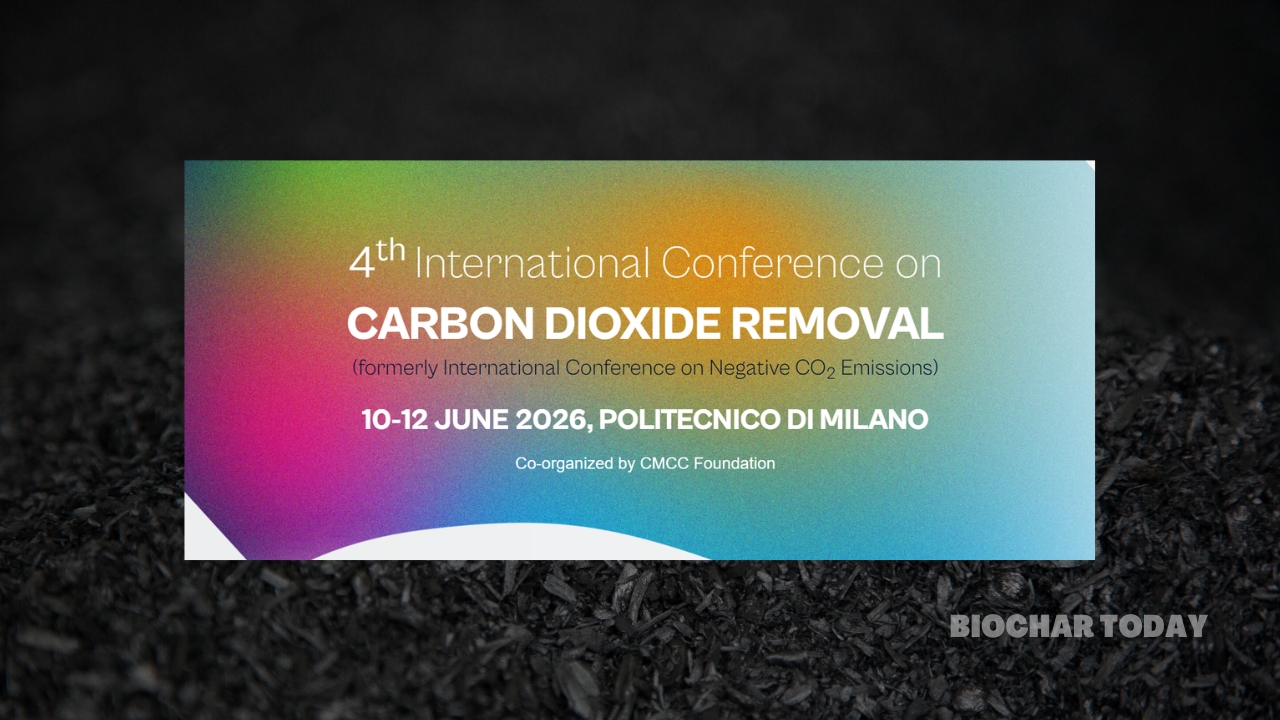
In Italy, more than 260 researchers from the Euro-Mediterranean Center on Climate Change (CMCC), the Potsdam Institute for Climate Impact Research (PIK), the University of Wisconsin, and the RFF-CMCC European Institute on Economics and the Environment convened at the Politecnico di Milano to evaluate global scaling requirements for carbon dioxide removal (CDR). The conference highlighted the central role that atmospheric carbon drawdown must play in compensating for hard-to-decarbonize residual emissions and managing global climate thresholds. Experts emphasized that long-term stabilization requires an aggressive expansion of carbon removal strategies alongside accelerated decarbonization.
The major challenge addressed by the delegates is the impending scenario of global temperature “overshoot,” wherein average warming surpasses the 1.5-degree Celsius limit. Current emissions scenarios for the seventh phase of the Coupled Model Intercomparison Project (CMIP7) explicitly incorporate an overshoot phase, which creates acute physical risks. Many conventional CDR approaches lack the climate resilience required to withstand elevated temperatures and environmental disturbances. Furthermore, systemic inertia means that even if global net-negative emissions are achieved, deep oceans will continue to warm, acidify, and deoxygenate for decades.
To resolve these systemic planetary risks, participating scientists detailed a solution anchored in a rapid, coordinated expansion of global CDR capacity. Data from the 2026 State of CDR report specifies that global removal efforts must scale up from 2.2 billion metric tons of carbon dioxide per year today to 8.8 billion metric tons annually by 2050. Achieving this four-fold increase requires transitioning CDR from voluntary initiatives into standardized policy priorities. This framework separates immediate emissions cuts from long-term removal portfolios, aligning technology options with specific hard-to-abate industrial profiles.
The outcomes of this conference establish a clear, quantified baseline for climate modelers and global policymakers. By embedding robust carbon drawdown metrics directly into the CMIP7 framework, the research community has formalized the necessity of scaling durable CDR technologies to execute a massive planetary restoration. For industrial carbon removal sectors like biocharBiochar is a carbon-rich material created from biomass decomposition in low-oxygen conditions. It has important applications in environmental remediation, soil improvement, agriculture, carbon sequestration, energy storage, and sustainable materials, promoting efficiency and reducing waste in various contexts while addressing climate change challenges. More, these conclusions underscore an inevitable transition toward long-term procurement mandates as vulnerable natural sinks prove insufficient against climate disturbances. The event successfully shifted the regulatory focus toward accelerating infrastructure deployment to meet the 2050 mandate.




Leave a Reply