
Key Takeaways
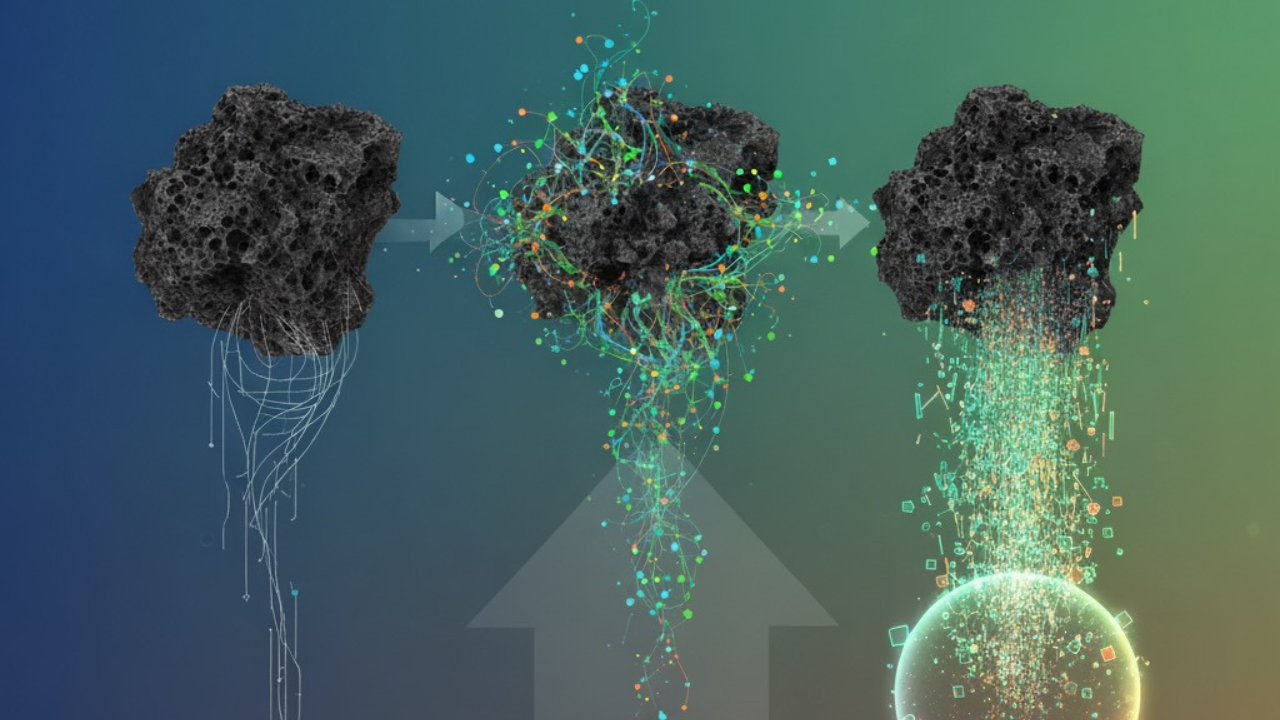
- A Two-Part Cleanup Team: The most effective pollution cleanup method is pairing biocharBiochar is a carbon-rich material created from biomass decomposition in low-oxygen conditions. It has important applications in environmental remediation, soil improvement, agriculture, carbon sequestration, energy storage, and sustainable materials, promoting efficiency and reducing waste in various contexts while addressing climate change challenges. More (which traps pollutants like a sponge) with microbes (which eat and break down the pollutants).
- Better than Biochar Alone: This combined approach dramatically speeds up and increases the amount of pollutant removed. One study showed it was 63% to 83% more efficient than using the biochar material by itself or just the free-floating microbes.
- Microbes Stay Safe and Active: Biochar’s structure acts like a tiny apartment building, protecting the helpful microbes from harsh chemicals, dehydration, and pHpH is a measure of how acidic or alkaline a substance is. A pH of 7 is neutral, while lower pH values indicate acidity and higher values indicate alkalinity. Biochars are normally alkaline and can influence soil pH, often increasing it, which can be beneficial More shifts, allowing them to work longer and more effectively.
- Cleaner Water and Soil: This technology is successfully being used to remove tough-to-degrade chemicals, like pesticides and industrial solvents, from contaminated wastewater and agricultural soils.
The review article, “Biochar-supported microbial systems: a strategy for remediation of persistent organic pollutants,” by Haowei Wu, Yuxin Huo, Fengyuan Qi, Yuqi Zhang, Ran Li, and Min Qiao, published in the journal Biochar is highly impactful. Persistent organic pollutants (POPs)—such as polycyclic aromatic hydrocarbons (PAHs), pesticides, and chlorinated solvents—pose a severe threat due to their toxicity, bioaccumulation, and resistance to natural degradation. Traditional physicochemical cleanup methods are often expensive and inefficient, while standard bioremediation struggles with low microbial survival and sensitivity to environmental stress. This review details how combining the superior adsorption capacity of biochar with microbial degradation creates a highly effective, transformative solution for environmental cleanup.
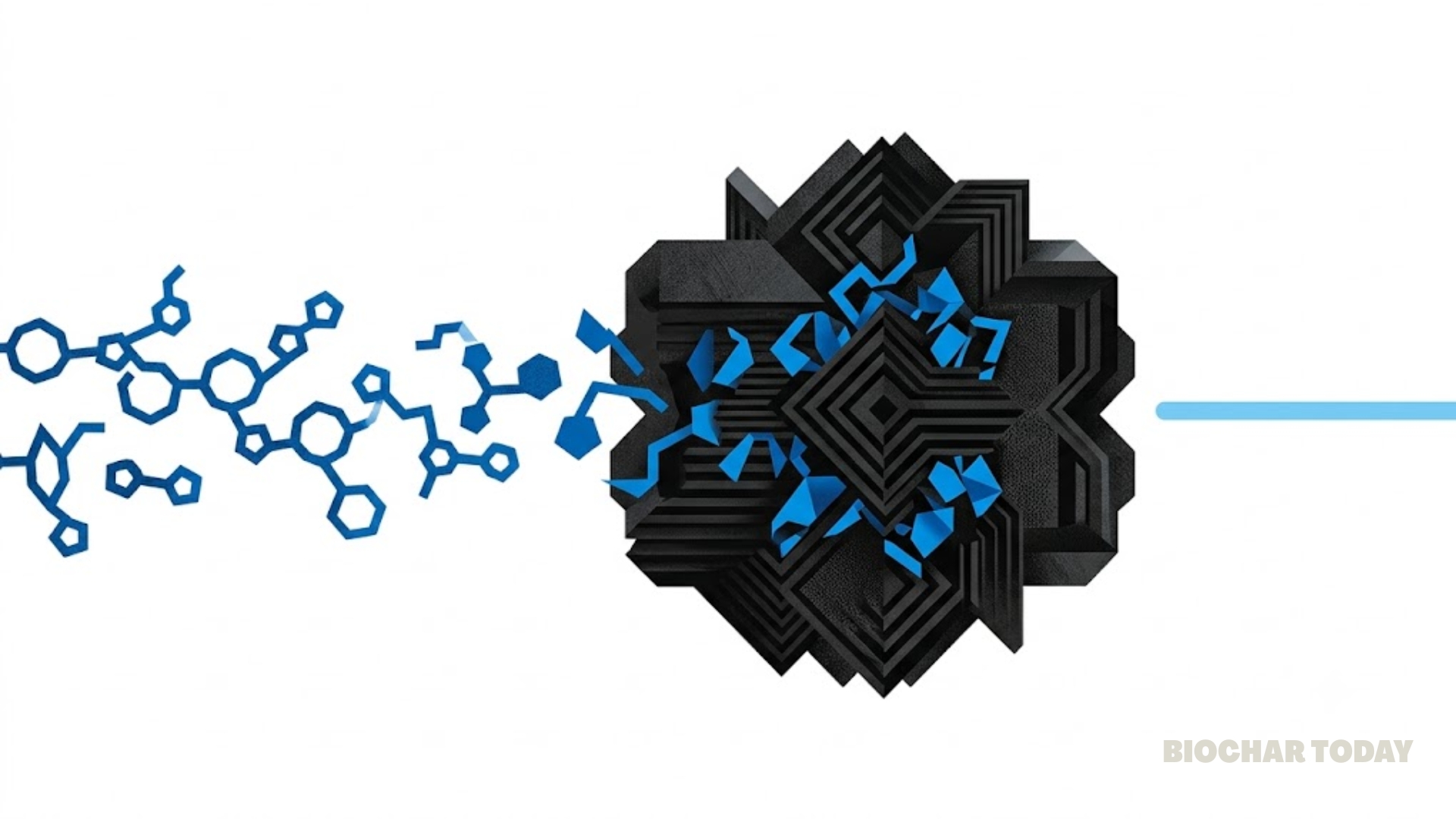
Biochar, is an ideal platform for microbial support. Its superior remediation potential comes from a dual mechanism due to the Adsorption and Enrichment: Biochar’s high surface area, hierarchically porous structure, and functional groups (like hydroxyl and carboxyl) allow it to immobilize pollutants, reducing their immediate toxicity to microbes. This creates “nutrient hotspots” that concentrate both nutrients and substrates near microbial cells; Microenvironmental Regulation and Protection: The porous structure creates stable microhabitats, shielding functional microorganisms from environmental stressors like predation, desiccation, pH fluctuations, and UV damage. Biochar’s inherent buffering capacity stabilizes pH, and its conductive properties can facilitate extracellular electron transfer, which is crucial for the microbial breakdown of recalcitrant pollutants. This stable environment significantly enhances microbial resilience and accelerates degradation kinetics.
To build a stable and efficient biochar-supported microbial system, four main immobilization techniques are employed, with varying characteristics for different scenarios like Adsorption: This is the most prevalent method, relying on non-specific forces (e.g., surface tension) between microbes and biochar. It is simple, cost-effective, and minimally affects microbial viability, making it ideal for low-toxicity, stable environments. The main drawback is a relatively weak binding strength, making microbes prone to desorption under stress; Covalent Bonding: This method, which creates a strong, stable binding between the active functional groups on the biochar and the microbial cell surface, compensates for the weakness of adsorption. It offers high stability and shock resistance, making it suitable for long-term or extreme conditions, though the vigorous reactions may risk microbial inactivation; Entrapment: This technique physically embeds microbes within the biochar’s pores or encapsulates them in high-molecular-weight polymers like sodium alginate. Entrapment offers high protection for microbial activity in highly toxic or unstable environments, providing a controlled-release effect and extended lifespan. However, it may limit the penetration of large-molecule pollutants and increase mass transfer resistance; Biofilm Formation: Mimicking natural microbial behavior, this self-forming method involves microbial attachment, proliferation, and the synthesis of an extracellular polymeric substance (EPS) layer on the biochar surface. The EPS layer significantly enhances microbial tolerance to recalcitrant organic compounds like phenols and PAHs. Studies have shown that biochar-loaded functional bacterial biofilms can achieve removal efficiencies 1.23 to 1.48 times higher than single- or mixed-strain biofilms.
Biochar-supported microbial systems have demonstrated significant success in both aquatic and soil environments. For example, studies on industrial wastewater showed that immobilizing degrading bacteria onto corn stover biochar improved the removal rate of polybrominated diphenyl ethers by 63% and 83% compared to biochar alone and free bacteria, respectively. In soil, utilizing corn stover biochar to immobilize bacteria achieved a high chlorpyrifos removal rate of 82.18% within 40 days. Another system maintained over 80% removal efficiency of a herbicide even after five cycles of reuse.
Despite clear advantages, challenges remain, notably the need for better methods to ensure long-term microbial viability during transport and storage, and a thorough assessment of biochar aging effects. By systematically addressing these issues, biochar-supported microbial systems can become a standardized, scalable, and sustainable strategy for environmental rehabilitation, supporting a circular economy goal.
Source: Wu, H., Huo, Y., Qi, F., Zhang, Y., Li, R., & Qiao, M. (2025). Biochar-supported microbial systems: a strategy for remediation of persistent organic pollutants. Biochar, 7(1), 113.



Leave a Reply