

Major Takeaways
- BiocharBiochar is a carbon-rich material created from biomass decomposition in low-oxygen conditions. It has important applications in environmental remediation, soil improvement, agriculture, carbon sequestration, energy storage, and sustainable materials, promoting efficiency and reducing waste in various contexts while addressing climate change challenges. More is super-charged for farming: By modifying standard biochar, scientists are creating a more effective, low-cost product that helps soil and plants grow better.
- It’s a “slow-release” fertilizer: Biochar enriched with nutrients like Nitrogen, Phosphorus, and Potassium acts like a slow-drip feeder for plants, meaning the nutrients last longer, and less fertilizer is needed.
- It fights pollution in the soil: Modified biochar, especially in the form of nanocomposites, can grab onto and neutralize toxic heavy metals and other pollutants, making the soil safer for crops.
- It makes crops more resilient and productive: In one real-world test on contaminated land, iron-modified biochar increased crop yield by 32%.
- It improves soil health: Modified biochar increases the soil’s ability to hold water and nutrients, which is crucial for healthy plant growth, especially in poor or stressed soils.
In a recent review published in Agriculture (Poľnohospodárstvo), Kazem Ghassemi-Golezani and Saeedeh Rahimzadeh explored the modification and application of biochar to enhance soil fertility and crop productivity. Biochar is already an eco-friendly and low-cost soil amendmentA soil amendment is any material added to the soil to enhance its physical or chemical properties, improving its suitability for plant growth. Biochar is considered a soil amendment as it can improve soil structure, water retention, nutrient availability, and microbial activity. More. However, modifying biochar is a new approach that significantly improves its functionality, making it a powerful tool for sustainable agriculture. Modified biochar is generally categorized into four types: chemical, physical, enriched with minerals, and nanocomposites. These modifications improve key physicochemical properties like bulk density, cation exchange capacity (CEC), specific surface area, and porosityPorosity of biochar is a key factor in its effectiveness as a soil amendment and its ability to retain water and nutrients. Biochar’s porosity is influenced by feedstock type and pyrolysis temperature, and it plays a crucial role in microbial activity and overall soil health. Biochar More, as well as nutritional value. These enhancements are particularly beneficial for poor-nutrient soils and offer a high capacity for adsorbing and immobilizing various pollutants.
One of the most promising modification types is nutrient-enriched biochar, which essentially mixes biochar with minerals to create a slow-release fertilizer alternative. Biochar’s high adsorption capacity helps it hold nutrients, reducing leachingLeaching is the process where nutrients are dissolved and carried away from the soil by water. This can lead to nutrient depletion and environmental pollution. Biochar can help reduce leaching by improving nutrient retention in the soil. More and improving nutrient use efficiencyNutrient use efficiency refers to how effectively plants can take up and utilize nutrients from the soil. Biochar can improve nutrient use efficiency by enhancing nutrient availability and retention in the soil. More for plants. For instance, enriching biochar with nitrogen, phosphorus, and potassium (N, P, and K) creates slow-release fertilizers. Studies have shown that nitrogen-enriched biochar can increase a soil’s total nitrogen concentration and mineral nitrogen content, ultimately affecting plant productivity and limiting greenhouse gas emissions like
CO2 and N2O. In one study, biochar enriched with ammonium sulfate improved cotton plant growth by acting as a slow-release nitrogen fertilizer, increasing both soil water-holding capacity and nitrogen-use efficiency. Another example involved phosphorus-enriched biochar, which significantly enhanced the growth and yield of chickpeas by improving nodulation and physiological performance. The superior performance of iron-modified biochar in contaminated paddy soil, as mentioned earlier, demonstrated a notable 32% increase in plant yield.
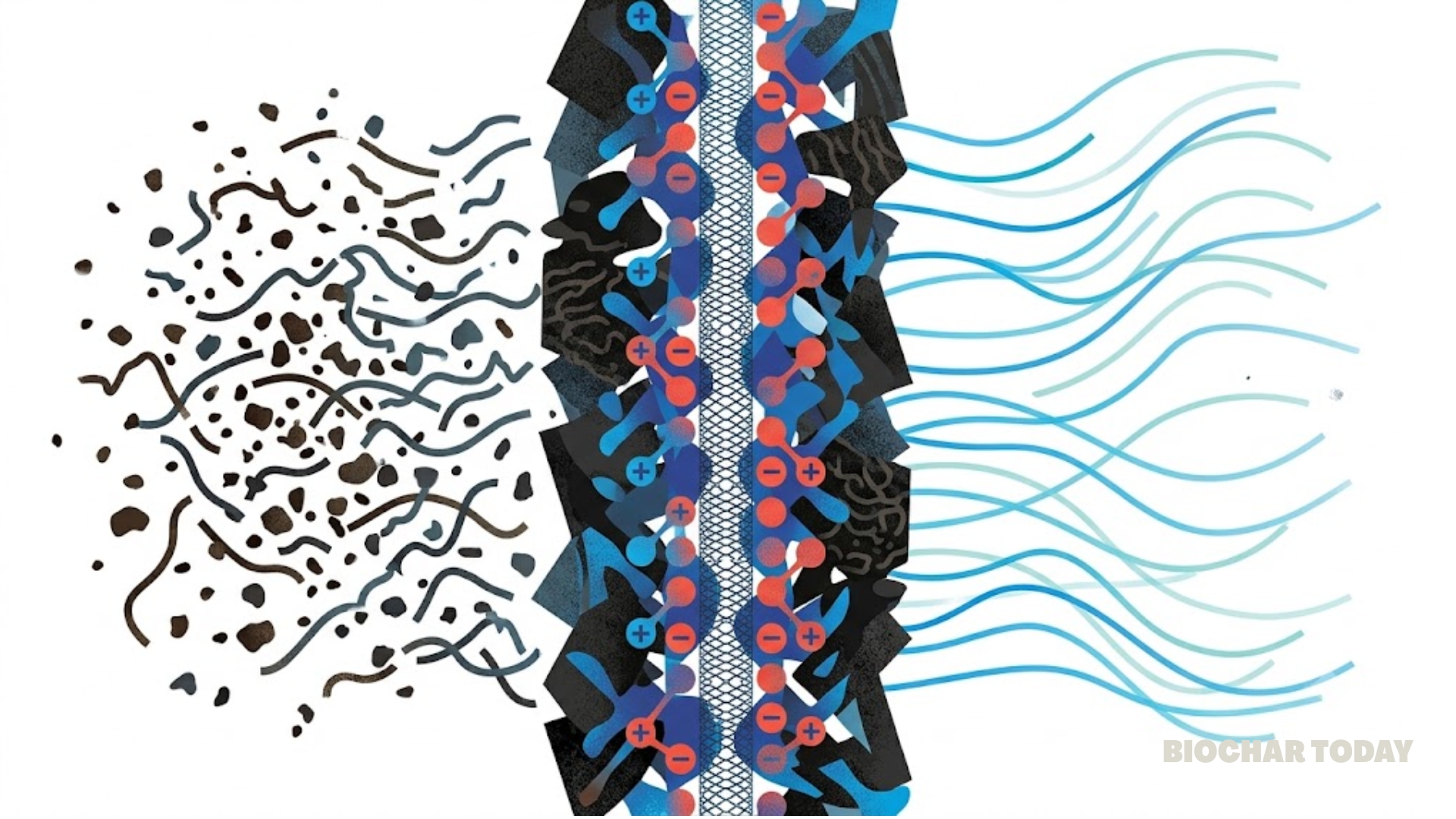
Another powerful modification is the creation of biochar-based nanocomposites, which leverage the benefits of both biochar and nanomaterials. These composites show significant improvements in physical and chemical properties, including porosity and surface-active sites. Types include magnetic biochar composites, nano-metal oxide/hydroxide-biochar composites, and functional nanoparticles-coated biochar. Magnetic biochar composites, for example, which often use iron oxides, not only adsorb contaminants like heavy metals (e.g., Pb(II) and Cd(II)) and anions (e.g., nitrate, phosphate) but can also be recovered easily from the soil. These composites have demonstrated positive effects on plant performance and stress tolerance. For instance, biochar-based nanocomposites of Fe and Zn have been shown to potentially alleviate salt toxicity, decrease Na uptake, and increase nutrient availability, leading to improved plant biomassBiomass is a complex biological organic or non-organic solid product derived from living or recently living organism and available naturally. Various types of wastes such as animal manure, waste paper, sludge and many industrial wastes are also treated as biomass because like natural biomass these More. Furthermore, the application of nano−Fe2O3 modified biochar has been reported to increase soil CEC by 9.4%−164.1%.
Physical and chemical activation are also used to modify biochar, primarily to increase porosity, specific surface area, and functional groups, which are crucial for adsorption capacity and nutrient retention. Chemically activated biochar uses agents like acids (HCl, H3PO4) or alkali (KOH, NaOH) to develop porosity and create active functional groups, though the carbonized material must be washed afterward to remove the chemical agents. Chemical activation offers advantages such as a lower carbonization temperature and a high percentage of activated carbonActivated carbon is a form of carbon that has been processed to create a vast network of tiny pores, increasing its surface area significantly. This extensive surface area makes activated carbon exceptionally effective at trapping and holding impurities, like a molecular sponge. It is commonly More yield. Physically activated biochar uses methods like gas activation or microwave/ultrasound irradiation. While often more energy-intensive and costly, physical modification avoids toxic or harmful pollutants. Steam activation, a form of physical activation, has been shown to enhance the availability of nutrients like N and P and the holding capacity of the soil.
Overall, modified biochars are proving to be more efficient than pristine biochar in various ways. They boost soil fertility and plant production, enhance the immobilization of contaminants like heavy metals (e.g., reducing Ni, Cd, and Zn by 57.2%, 30.1%, and 12.7%, respectively, in one study), and improve soil properties such as CEC, bulk density, and water-holding capacity. Future research is needed to identify more cost-effective modification methods and to better understand the mechanisms by which these modified biochars enhance plant stress tolerance.
Source: Ghassemi-Golezani, K., & Rahimzadeh, S. (2022). Biochar modification and application to improve soil fertility and crop productivity. Agriculture (Poľnohospodárstvo), 68(2), 45–61.




Leave a Reply