
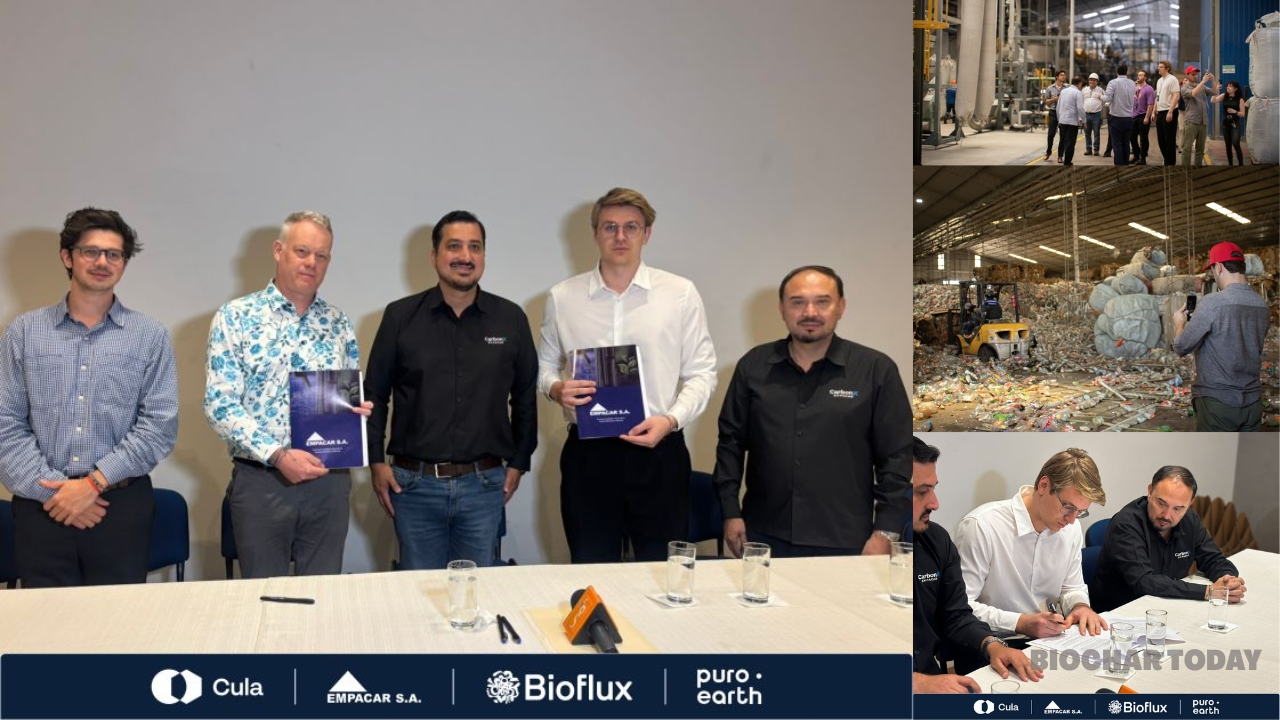
Empacar, a prominent circular economy enterprise in Bolivia, has entered into a strategic partnership with Cula, a provider of digital Monitoring, Reporting, and Verification (dMRV) solutions. This collaboration is designed to scale the production of biocharBiochar is a carbon-rich material created from biomass decomposition in low-oxygen conditions. It has important applications in environmental remediation, soil improvement, agriculture, carbon sequestration, energy storage, and sustainable materials, promoting efficiency and reducing waste in various contexts while addressing climate change challenges. More and formalize its role as a high-integrity carbon dioxide removal (CDR) pathway within the South American region. By integrating Cula’s specialized software with Empacar’s industrial capabilities, the initiative seeks to align local production with international carbon market standards. The partnership represents a significant step in professionalizing the Bolivian biochar sector, transforming organic waste into a verifiable climate asset while strengthening the regional circular economy.
The primary challenge addressed by this partnership is the “trust gap” that often exists between localized biochar production and the rigorous demands of global carbon credit buyers. In Bolivia, while the technical capacity to produce biochar exists, the industry has historically lacked the transparent, data-driven verification needed to prove the permanence and quantity of sequestered carbon. Without granular tracking of feedstockFeedstock refers to the raw organic material used to produce biochar. This can include a wide range of materials, such as wood chips, agricultural residues, and animal manure. More origin, processing temperatures, and final application, biochar producers struggle to access high-value voluntary carbon markets. This lack of transparency limits the financial viability of scaling pyrolysisPyrolysis is a thermochemical process that converts waste biomass into bio-char, bio-oil, and pyro-gas. It offers significant advantages in waste valorization, turning low-value materials into economically valuable resources. Its versatility allows for tailored products based on operational conditions, presenting itself as a cost-effective and efficient More operations and hinders the integration of biochar into broader climate mitigation strategies.
To resolve these verification hurdles, Empacar is implementing Cula’s dMRV platform to automate the collection of lifecycle data throughout the biochar production process. This digital solution replaces manual documentation with real-time monitoring of key performance indicators, ensuring that every ton of biochar produced meets strict “high-integrity” criteria. By digitizing the supply chain—from the collection of biomassBiomass is a complex biological organic or non-organic solid product derived from living or recently living organism and available naturally. Various types of wastes such as animal manure, waste paper, sludge and many industrial wastes are also treated as biomass because like natural biomass these More waste to the final distribution of the carbon-rich material—the partners can provide prospective credit buyers with audited evidence of carbon sequestration. This technological layer ensures that the environmental impact is measurable, reportable, and verifiable according to international methodologies.
The outcomes of this collaboration include the establishment of a scalable model for carbon removal in Bolivia that attracts international climate finance. By securing high-integrity certification, Empacar can generate premium carbon credits, the proceeds of which can be reinvested into expanding its pyrolysis infrastructure. Furthermore, the availability of high-quality biochar provides local agricultural and industrial sectors with a consistent tool for soil enhancement and water filtration. This partnership effectively bridges the gap between industrial waste management and global environmental markets, positioning Bolivia as a notable participant in the global effort to achieve durable carbon dioxide removal.


Leave a Reply