
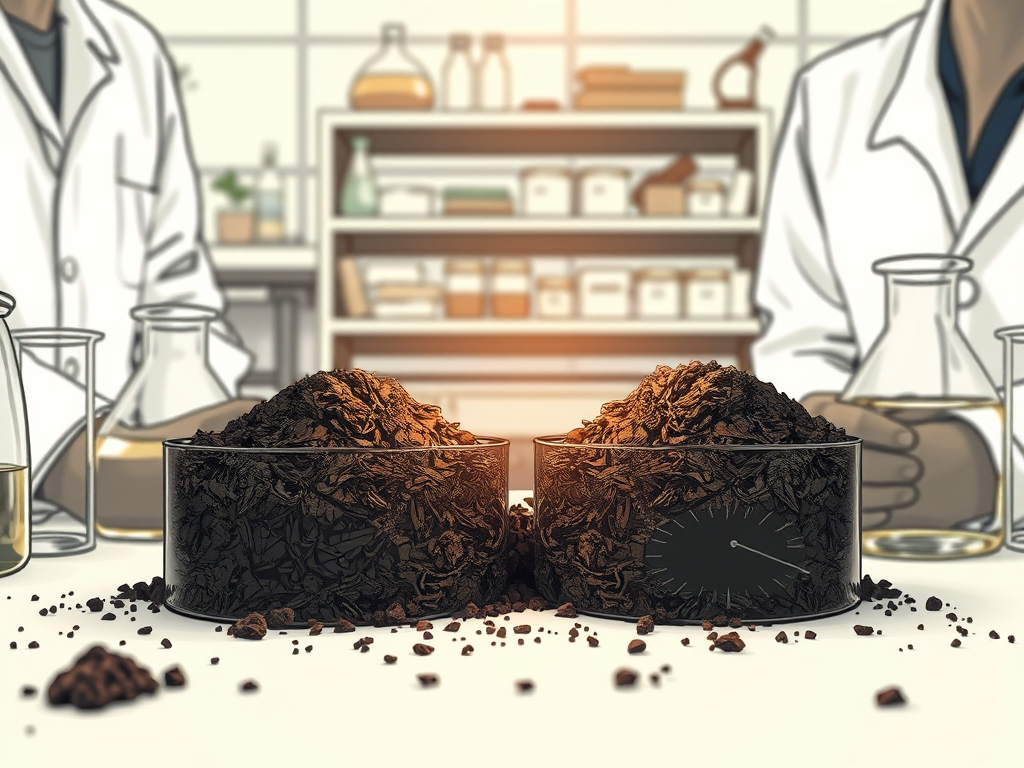
In a study published in Scientific Reports, Tayachew Nega, Eyob Sisay Yeshanew, Ramesh Babu Nallamothu, and Ermias Aswossie examined the impact of biocharBiochar is a carbon-rich material created from biomass decomposition in low-oxygen conditions. It has important applications in environmental remediation, soil improvement, agriculture, carbon sequestration, energy storage, and sustainable materials, promoting efficiency and reducing waste in various contexts while addressing climate change challenges. More on soil nutrients. Biochar, produced from slaughterhouse waste (CUD) and waste paper, was tested for its effects on soil pHpH is a measure of how acidic or alkaline a substance is. A pH of 7 is neutral, while lower pH values indicate acidity and higher values indicate alkalinity. Biochars are normally alkaline and can influence soil pH, often increasing it, which can be beneficial More, organic carbon, nitrogen, and cation exchange capacity. The research aimed to explore sustainable ways to improve soil fertility, particularly in Ethiopia, where agriculture is crucial but faces challenges like soil acidity.
The study revealed significant differences in how the two types of biochar affected soil properties. Soil treated with cud biochar showed a pH of 9.80, while paper biochar treatment resulted in a pH of 7.8. Compared to untreated soil, cud biochar increased pH by 4.43 units, and paper biochar increased it by 2.43 units. Cud biochar also led to a greater increase in soil organic carbon, with a mean value increase of 6.22, compared to paper biochar’s 2.31 increase.
The authors concluded that cud biochar generally enhances soil nutrients more effectively than paper biochar under the study’s conditions. This finding suggests that biochar from slaughterhouse waste could be a valuable resource for improving soil fertility and promoting sustainable agriculture.
SOURCE: Nega, T., Yeshanew, E. S., Nallamothu, R. B., & Aswossie, E. (2025). Enhancing soil fertility through Biochar using slaughter-house waste as a feedstockFeedstock refers to the raw organic material used to produce biochar. This can include a wide range of materials, such as wood chips, agricultural residues, and animal manure. More. Scientific Reports, 15(11109).





Leave a Reply