
Key Takeaways
- Arsenic contamination in agricultural land is a serious risk to food safety and human health.
- Researchers have found a highly effective, low-cost solution by creating a composite material from two industrial and agricultural wastes: steel slag and corn straw biocharBiochar is a carbon-rich material created from biomass decomposition in low-oxygen conditions. It has important applications in environmental remediation, soil improvement, agriculture, carbon sequestration, energy storage, and sustainable materials, promoting efficiency and reducing waste in various contexts while addressing climate change challenges. More.
- This composite dramatically increases the ability of the soil to lock away toxic arsenic, preventing it from entering crops like ryegrass.
- The most effective version of the composite reduced the plant-available arsenic in contaminated soil by over half, while also promoting plant growth.
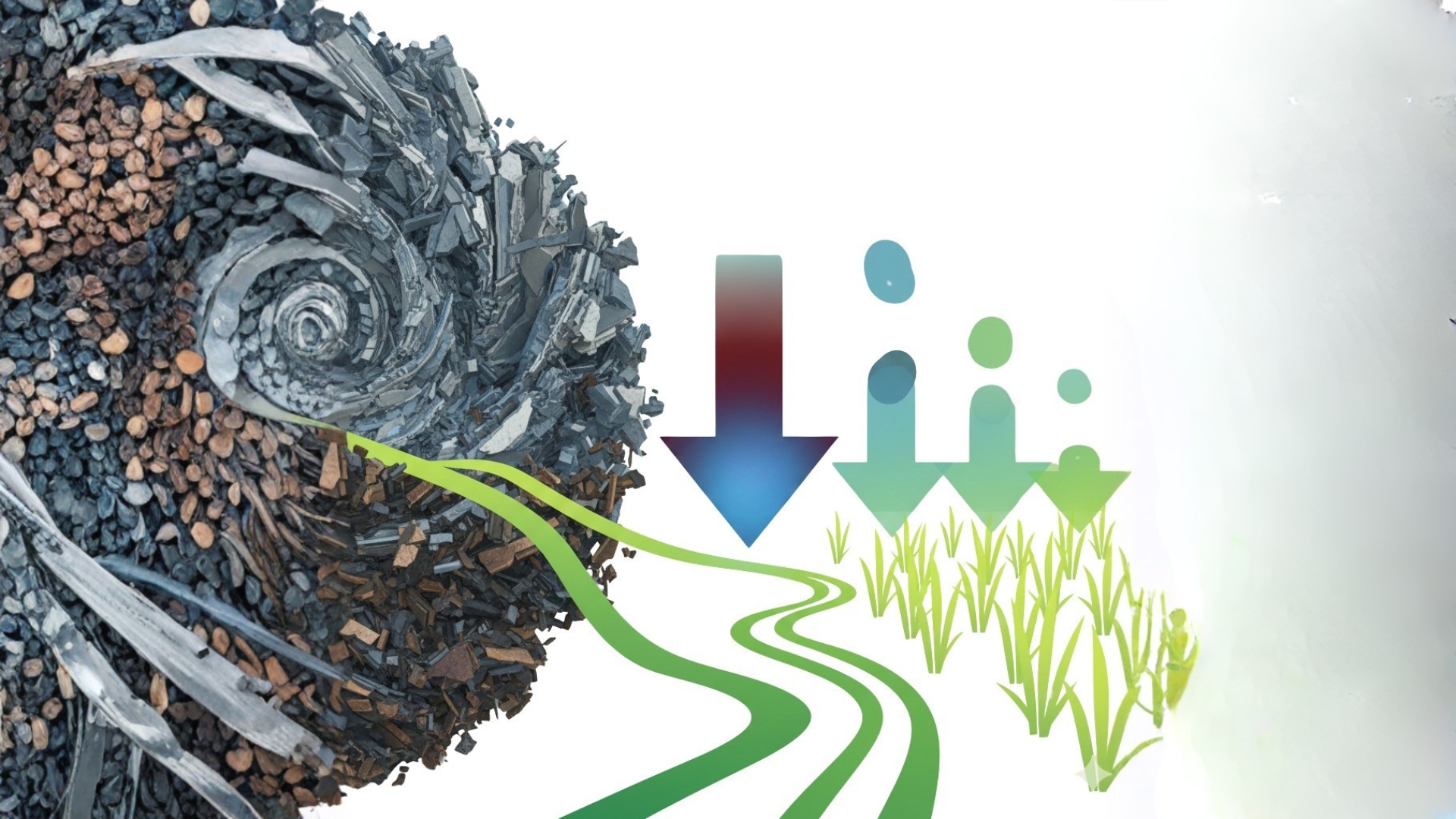
- The mechanism works by combining the porous structure of the biochar with the metal oxides in the steel slag, enhancing the chemical trapping of arsenic.
In a recent study published in the journal Industrial Crops & Products, Xuemei Yang, Minling Gao, Weiwen Qiu, Youming Dong, Cheng Qiu, and Zhengguo Song investigated a highly promising and economical method for reducing arsenic bioavailability in contaminated soils. Arsenic (As) is a prevalent and dangerous pollutant, often introduced into agricultural areas through mining, industrial effluent, and the prolonged use of arsenic-based chemicals. Chronic exposure is classified as a Group 1 human carcinogen by the International Agency for Research on Cancer (IARC). The authors focused on developing a powerful soil amendmentA soil amendment is any material added to the soil to enhance its physical or chemical properties, improving its suitability for plant growth. Biochar is considered a soil amendment as it can improve soil structure, water retention, nutrient availability, and microbial activity. More from two readily available, low-cost waste products: steel slag (SS), a massive by-product of steel manufacturing , and corn straw biochar (BC), derived from agricultural residues. By creating a composite material, steel slag-corn straw biochar composites (SSBCs), through co-pyrolysis , the researchers aimed to leverage the benefits of both while overcoming the low removal efficiency and limited adsorption capacity of the individual materials.
The effectiveness of the SSBCs was rigorously evaluated through pot experiments using ryegrass grown in two types of arsenic-contaminated paddy soil, one with low and one with high arsenic levels. The results confirmed a significant improvement in plant health and a reduction in toxicity. Specifically, the application of 2% SSBCs consistently increased ryegrass biomassBiomass is a complex biological organic or non-organic solid product derived from living or recently living organism and available naturally. Various types of wastes such as animal manure, waste paper, sludge and many industrial wastes are also treated as biomass because like natural biomass these More compared to the control group, demonstrating its ability to mitigate As toxicity and promote ryegrass growth. More crucially, all amendments reduced As accumulation in both the roots and shoots of the ryegrass, with the reduction rate generally increasing with application rate. In the low-As soil, the 2% SSBC1 amendment (steel slag to biochar ratio of 1:1) achieved the highest reduction in root As at 78.89% and shoot As at 73.20%. The SSBC1 treatment again showed the highest reduction in both tissues in the high-As soil, underscoring its efficacy in limiting arsenic uptake and translocation.
The composite’s superior performance stems from its ability to reduce the amount of available arsenic in the soil, which is the fraction that plants can absorb. The application of SSBCs significantly affected the concentration of available As, with SSBC1 reducing it by 37.87%−55.51% in the low-As soil and by 18.91%−28.38% in the high-As soil. This immobilization is largely attributed to the synergistic integration of the porous BC matrix with SS-derived reactive phases. Characterization analyses confirmed that the enhanced arsenic(III) removal efficiency was primarily due to the composite’s hydroxyl, Ca-O, and Fe-O functional groups and its porous structure, which promote surface complexation and electrostatic adsorption. The presence of Fe-O and Ca-O functional groups, confirmed by FTIR, enables specific complexation and precipitation reactions.
Adsorption experiments in a water solution further elucidated the mechanism. The SSBC1 composite demonstrated the highest arsenic(III) adsorption capacity, reaching 21.63 mg g−1 according to the Langmuir model. This capacity was 6.25 times higher than that of BC alone. Kinetic studies showed that SSBCs reached equilibrium within approximately 2 hours (120 minutes), which is a critical advantage for practical applications. Within the pH range of 3−7, the highest adsorption of arsenic(III) was observed at pH 3, and adsorption decreased as the pH increased. XPS analysis revealed a key mechanistic advantage of SSBCs: the oxidation of arsenic(III) to the more stable arsenic(V) during adsorption, with arsenic(V) accounting for 69.57% of the total adsorbed arsenic.
The composite also positively regulated the soil environment. All SSBC treatments significantly increased soil pH , but the BC matrix helped to moderate the strong alkalinity associated with raw SS. This pH buffering is advantageous for both plant growth and microbial functioning. Furthermore, the application of SSBCs enhanced soil active organic matter content. Notably, SSBC treatments increased soil catalase (S-CAT) activity, suggesting the alleviation of oxidative stress and reduced toxic effects of arsenic on the microbial community.
This “waste-treats-waste” strategy successfully converts low-cost solid waste materials, steel slag and corn straw, into an efficient and multifunctional remediation agent. The superior performance of SSBC1 is due to the synergistic combination of the components, which provides enhanced chemical immobilization sites, stable alkalinity, and an improved porous structure, confirming its strong potential for the sustainable recovery of arsenic-contaminated paddy soils.
Source: Yang, X., Gao, M., Qiu, W., Dong, Y., Qiu, C., & Song, Z. Steel slag corn straw biochar composite for reducing arsenic bioavailability in paddy soil: Effectiveness and mechanisms. Industrial Crops & Products, 239, 122464 (2026).




Leave a Reply