

Key Takeaways
- Mixing oxygen-packed irrigation water with soil charcoalCharcoal is a black, brittle, and porous material produced by heating wood or other organic substances in a low-oxygen environment. It is primarily used as a fuel source for cooking and heating. More significantly increases harvest amounts and saves water.
- The combined treatment can lower total crop water use by more than forty percent.
- Crop water use efficiency more than doubles under the most effective combination of treatments.
- Important crop quality indicators like sugar ratios and vitamin contents improve under specific treatment combinations.
- This farming approach offers a practical way to fix compacted and hardened soils that typically choke plant roots.
In a paper published in Agricultural Water Management, researchers Zan Ouyang, Chuang Wen, Junhao Xia, Shi Han, Xueli Liang, Rong Tang, Qihua Yu, Yong Zhang, Jie Zhang, and Hui Wang investigated a novel soil management strategy to solve the common issue of red soil compaction. Compacted and hardened soils severely restrict gas and water movement, which blocks root metabolism, limits plant development, and eventually decreases harvest output. To address this agricultural bottleneck, the authors tested a combined treatment system that introduces highly oxygenated irrigation water alongside charcoal soil amendments for crops grown under underground drip irrigation lines. Their experiments tracked how different combinations of oxygen levels and charcoal application rates alter soil conditions, harvest outcomes, and fruit health across several successive growing seasons.
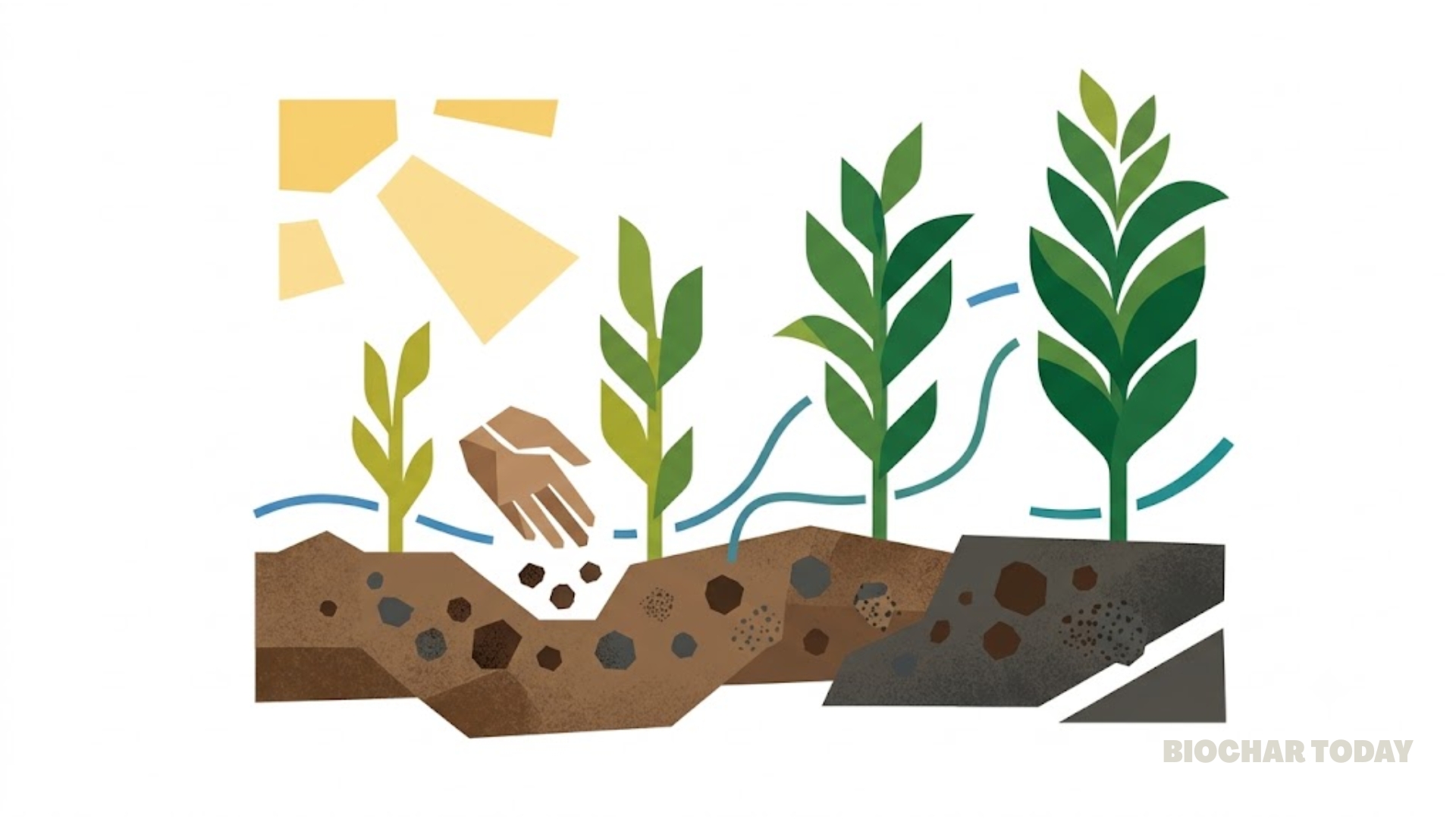
The findings demonstrate that combining highly oxygenated water with charcoal creates an exceptional environment for plant root zones. When used together, these two components significantly raise average soil moisture levels, optimize overall crop yield, and elevate water productivity. Specifically, the experiments revealed that as the dissolved oxygen concentration in the irrigation water and the total amount of soil charcoal increase, the positive impacts on the harvest become more pronounced. This integrated strategy effectively solves the historical dilemma of underground drip lines, which traditionally squeeze essential air out of the dirt when moisture levels get too high. Instead, the porous structure of the charcoal retains the oxygen-rich bubbles directly in the root zone, keeping the soil well-aerated and moist.
The quantitative results highlight massive gains in both efficiency and total production weight. In comparison to traditional farming methods without these amendments, the integrated approach caused cucumber yields to surge. Depending on the specific growing season, crop yields expanded by margins ranging from approximately two percent to nearly eighty-nine percent. The single highest harvest weights occurred when crops received water with maximum oxygenation paired with the highest rate of charcoal application, which reached sixty tons per hectare. This treatment combination effectively produced a robust harvest across all trial seasons, demonstrating the reliability of the method under fluctuating greenhouse temperatures and humidity levels.
Crucially, this substantial boost in food production did not require additional water resources. The combination of amendments dramatically decreased total crop water consumption while maximizing output weight. The data showed that seasonal water consumption dropped by over forty-one percent in certain trials. Because the harvest increased while water expenditures fell, the overall water productivity metric climbed sharply. Water use efficiency improved by up to fifty-five percent in the first season, ninety-eight percent in the second season, and more than one hundred and twenty-five percent in the final season. These calculations show that growers can produce more food using significantly less water, providing an excellent strategy for seasonal arid regions.
Beyond the clear advantages in volume and water savings, the treatment combination altered fruit quality characteristics. The response of the cucumber quality parameters followed a nonlinear path, meaning that the changes were not a simple straight line but rather depended on specific pairings. The proper combination of oxygen and charcoal proved highly beneficial for speeding up sugar accumulation within the fruit while simultaneously driving down total acid concentrations. Consequently, this shift enhanced the sugar-to-acid ratio, which directly translates to better-tasting produce for consumers. Vitamin C concentrations also experienced a notable upgrade, rising by up to twenty-six percent compared to standard irrigation practices.
A detailed statistical breakdown confirmed that crop yield shares an extremely strong positive relationship with high soil moisture retention and elevated water productivity scores. Comprehensive mathematical scoring models verified that the absolute best management framework relies on maintaining high levels of dissolved oxygen in the irrigation stream mixed with sixty tons of charcoal per hectare. This precise configuration balances the soil air and water dynamics perfectly, ensuring that plant roots can breathe efficiently while absorbing nutrients. Ultimately, these results provide a concrete roadmap for agricultural operations looking to maximize the production potential of tough, acidic, and compacted soils without degrading local water supplies.
Source: Ouyang, Z., Wen, C., Xia, J., Han, S., Liang, X., Tang, R., Yu, Q., Zhang, Y., Zhang, J., & Wang, H. (2026). Coupling effect and comprehensive evaluation of micro-nano bubble water with biocharBiochar is a carbon-rich material created from biomass decomposition in low-oxygen conditions. It has important applications in environmental remediation, soil improvement, agriculture, carbon sequestration, energy storage, and sustainable materials, promoting efficiency and reducing waste in various contexts while addressing climate change challenges. More on cucumber yield and quality under subsurface drip irrigation. Agricultural Water Management, 333, 110596.

Leave a Reply