
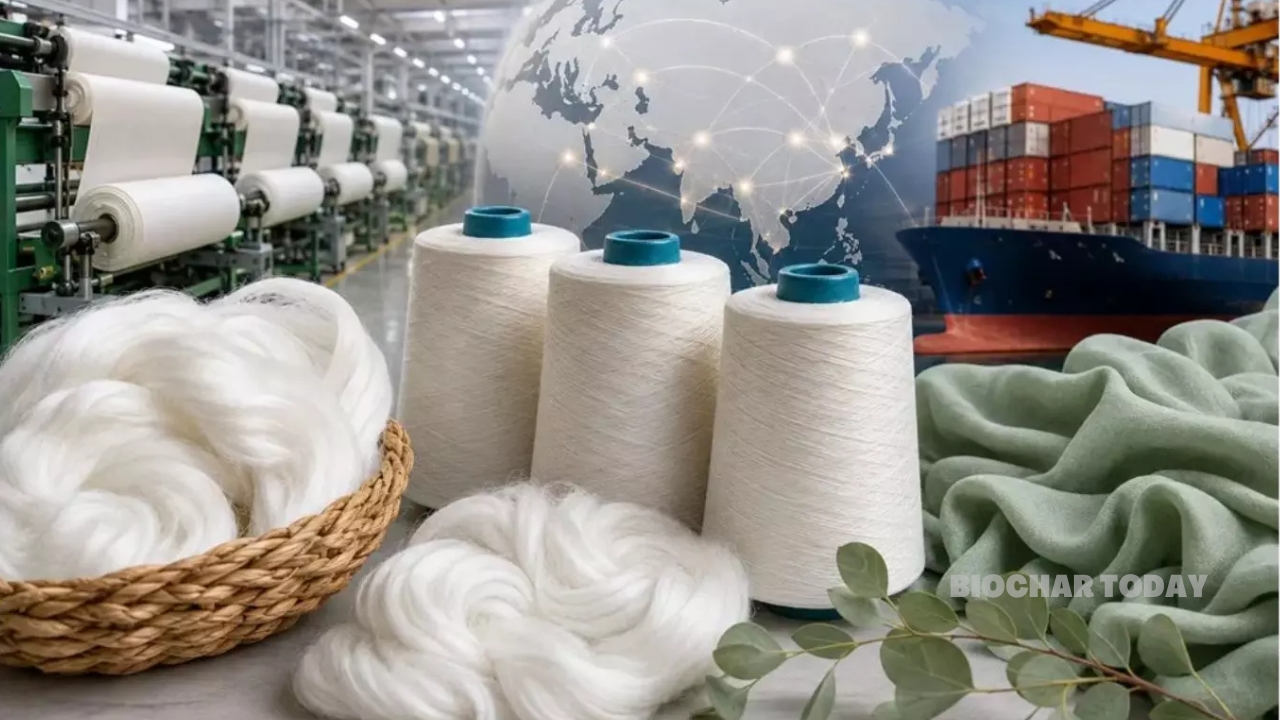
The Confederation of Indian Textile Industry (CITI), the International Cotton Advisory Committee (ICAC), and technology firm Merago Inc. have signed a Memorandum of Understanding (MoU) to establish regenerative agriculture carbon credit projects for cotton farmers in India. The initiative focuses on promoting sustainable cotton farming while providing agricultural producers with supplementary revenue streams generated through carbon credit monetization. The project utilizes the CITI-Cotton Development Research Association (CITI CDRA) network for farmer outreach, with ICAC serving as the principal technical knowledge partner and Merago managing the underlying carbon asset platform.
The primary challenge targeted by the partnership is the need to transition smallholder cotton producers to sustainable land management without compromising economic yields or exposing farmers to financial risk. Traditional biomassBiomass is a complex biological organic or non-organic solid product derived from living or recently living organism and available naturally. Various types of wastes such as animal manure, waste paper, sludge and many industrial wastes are also treated as biomass because like natural biomass these More handling in agricultural fields often results in open burning or loss of organic matter, leading to soil degradation and increased atmospheric emissions. Furthermore, rural agricultural communities frequently lack access to carbon accounting platforms, verification frameworks, and global carbon finance mechanisms needed to monetize soil carbon enhancement practices independently.
To overcome these obstacles, the technical coalition is implementing regenerative agricultural practices that prioritize soil health, including the conversion of agricultural biomass into biocharBiochar is a carbon-rich material created from biomass decomposition in low-oxygen conditions. It has important applications in environmental remediation, soil improvement, agriculture, carbon sequestration, energy storage, and sustainable materials, promoting efficiency and reducing waste in various contexts while addressing climate change challenges. More and compost for direct soil application. CITI CDRA will manage ground-level execution and farmer engagement, while ICAC provides agricultural expertise and training. Merago will deploy a specialized digital platform to track project implementation, manage carbon accounting, and handle carbon asset management. Generated carbon credits will be processed, verified, and recorded in accordance with Article 6 of the Paris Agreement, national carbon registry requirements, and Indian regulatory standards.
The initiative provides an integrated operational structure that enables cotton growers to generate, verify, and commercialize high-integrity carbon removals. Verified carbon credits will be commercialized in domestic and international carbon markets, with revenues distributed among participating farmers, CITI, and ICAC according to a standardized revenue-sharing framework. Ultimately, the project enhances soil carbon sequestration, reduces agricultural lifecycle emissions, and secures financial benefits for Indian cotton farming communities.



Leave a Reply