
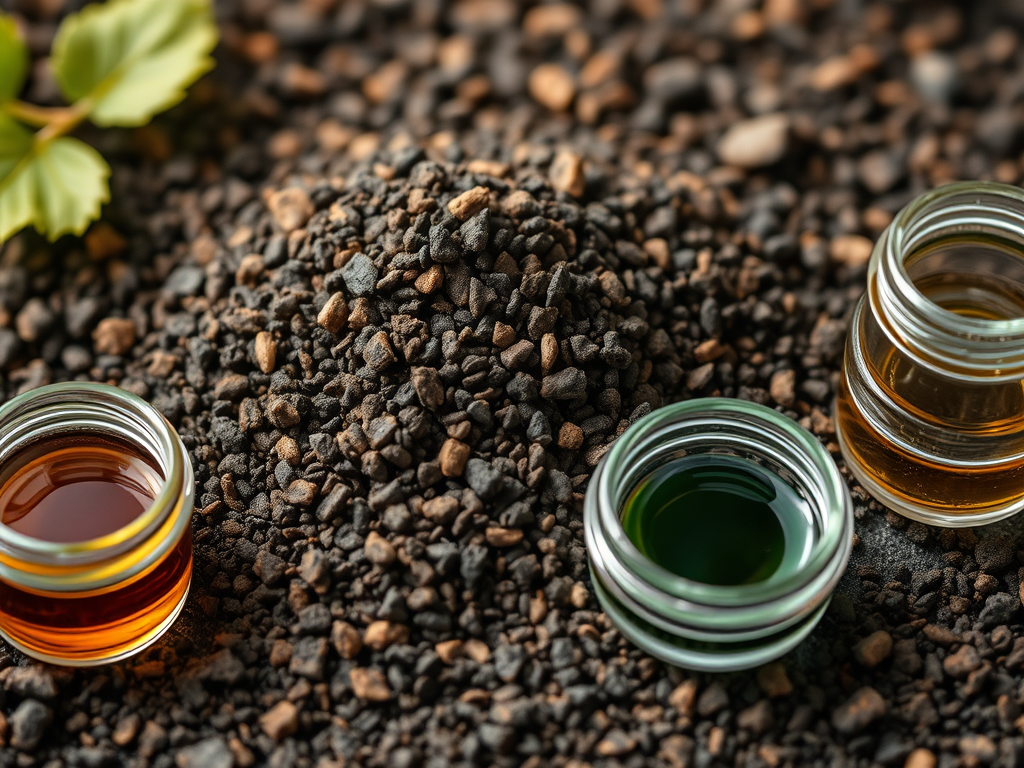
Can agricultural waste improve lubricants? A recent study in Scientific Reports by Rafał Kozdrach and Paweł Radulski explores the potential of biocharBiochar is a carbon-rich material created from biomass decomposition in low-oxygen conditions. It has important applications in environmental remediation, soil improvement, agriculture, carbon sequestration, energy storage, and sustainable materials, promoting efficiency and reducing waste in various contexts while addressing climate change challenges. More derived from chokeberry waste as an additive in vegetable-based lubricants. The results suggest that this eco-friendly modification enhances both tribological (friction and wear resistance) and rheological (flow behavior) properties, making it a promising alternative to conventional additives.
The researchers produced biochar through pyrolysisPyrolysis is a thermochemical process that converts waste biomass into bio-char, bio-oil, and pyro-gas. It offers significant advantages in waste valorization, turning low-value materials into economically valuable resources. Its versatility allows for tailored products based on operational conditions, presenting itself as a cost-effective and efficient More, heating chokeberry biomassBiomass is a complex biological organic or non-organic solid product derived from living or recently living organism and available naturally. Various types of wastes such as animal manure, waste paper, sludge and many industrial wastes are also treated as biomass because like natural biomass these More at 500°C and 700°C. They then incorporated biochar at concentrations of 1%, 3%, and 5% into lubricating greases made from rapeseed oil. Compared to traditional activated carbonActivated carbon is a form of carbon that has been processed to create a vast network of tiny pores, increasing its surface area significantly. This extensive surface area makes activated carbon exceptionally effective at trapping and holding impurities, like a molecular sponge. It is commonly More additives, biochar significantly improved wear resistance and scuffing prevention, particularly at 3% and 5% concentrations.
One key finding was that biochar produced at 500°C offered better anti-wear protection, while biochar from 700°C enhanced thixotropic properties, which help lubricants maintain their structure under mechanical stress. The study also revealed that biochar-modified lubricants exhibited better load-bearing capacity, reduced friction, and improved structural stability, making them suitable for high-performance applications.
Beyond performance, this research highlights an exciting sustainability angle. Poland is one of the world’s largest chokeberry producers, generating significant agricultural waste. Instead of discarding this biomass, converting it into biochar reduces waste and creates a valuable industrial product. With growing demand for green lubricants, biochar-based additives could help reduce dependence on petroleum-derived components while maintaining—or even surpassing—performance standards.
This study opens the door for further research into optimizing biochar’s properties and exploring its applications beyond lubricants, such as in construction, cosmetics, and environmental remediation.
SOURCE: Kozdrach, R., & Radulski, P. (2025). Application of chokeberry biochar as a modified additive to vegetable lubricants: The tribological and rheological properties. Scientific Reports, 15(3964). https://doi.org/10.1038/s41598-025-87374-0





Leave a Reply