
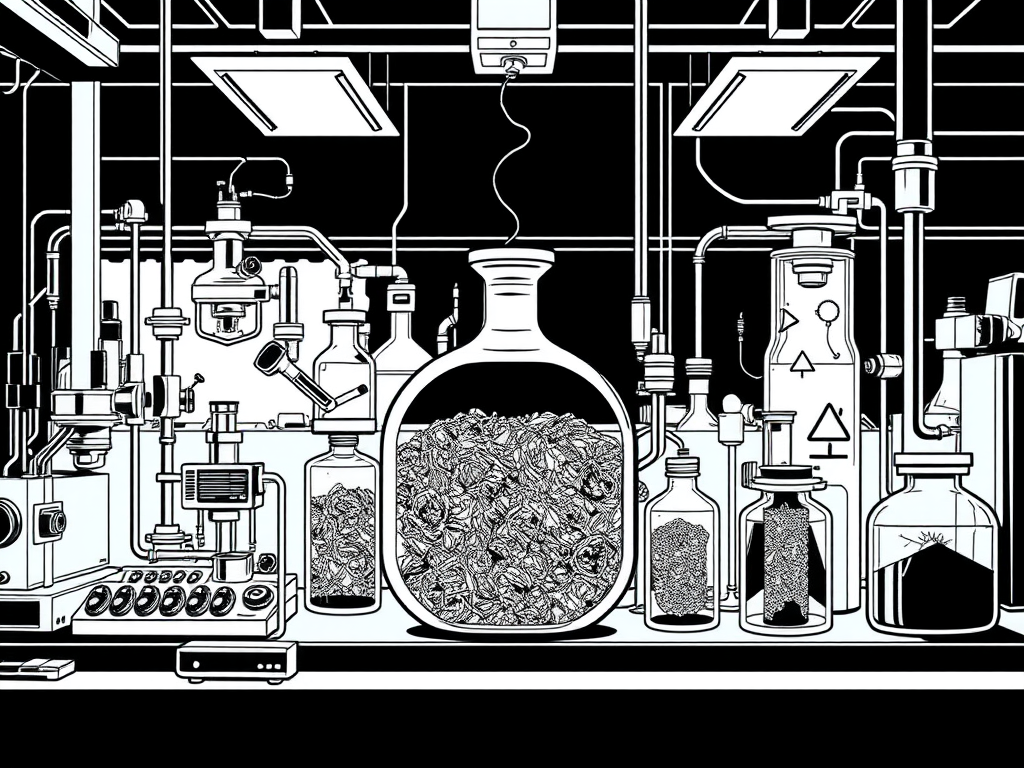
Oil sands extraction generates vast quantities of oil sands process water (OSPW), which is stored in tailings ponds and requires extensive treatment before reuse or discharge. A major concern in OSPW is the presence of naphthenic acids (NAs), toxic and persistent organic contaminants. While biochars show promise for adsorption-based removal, most studies have focused on model compounds rather than the complex mixture found in real OSPW. A recent study published in Energy & Environmental Sustainability by Deborah Cristina Crominski da Silva Medeiros, Muhammad Usman, Pamela Chelme-Ayala, and Mohamed Gamal El-Din investigates the enhanced removal of NAs from real OSPW using biochars derived from municipal sludge and peat, employing novel chemical activation strategies.
The study explored the use of municipal sludge and peat as feedstocks, with and without chemical activation, including a dual FeCl3+ZnCl2 strategy not previously evaluated for OSPW treatment. The results unequivocally demonstrate that both feedstockFeedstock refers to the raw organic material used to produce biochar. This can include a wide range of materials, such as wood chips, agricultural residues, and animal manure. More type and activation methods profoundly influence biocharBiochar is a carbon-rich material created from biomass decomposition in low-oxygen conditions. It has important applications in environmental remediation, soil improvement, agriculture, carbon sequestration, energy storage, and sustainable materials, promoting efficiency and reducing waste in various contexts while addressing climate change challenges. More properties and, consequently, their adsorption performance. Chemical activation was found to significantly increase mesopore volume and the presence of surface functional groups, such as hydroxyl (-OH) and carbon-carbon double bonds (C=C), both of which are crucial for enhancing adsorption capacity.
The findings revealed a dramatic improvement in NA removal with activated biochars. Pristine biochars removed only about 23% of total NAs, while biochars activated with the dual FeCl3+ZnCl2 strategy achieved over 90% removal of both classical and oxidized NAs. This highlights the critical role of chemical activation in boosting performance. Interestingly, FeCl3-activated biochars showed a preference for NAs with larger carbon numbers, suggesting a molecular sieving effect due to narrower pore distributions. In contrast, the FeCl3+ZnCl2-activated biochars effectively removed a broader range of NAs, indicating that the inclusion of ZnCl2 mitigates this selectivity.
A crucial takeaway from this research is the necessity of testing adsorbents in actual wastewater matrices. The study found that biochars performed better in real OSPW than in model compound solutions, emphasizing that evaluating performance with surrogate compounds alone can lead to an inaccurate assessment of practical applicability. Among the various biochar properties examined, mesopore volume was identified as the most critical factor for maximizing NA removal, underscoring the importance of pore structure over total surface area. Mesopores (2-50 nm) facilitate faster transport and adsorption of NAs, which are often high-molecular-weight, multiring, and oxidized species too large for micropores.
The implications of this study are far-reaching. The development of tailored biochar with a range of hydrophilic and hydrophobic surface groups is essential to maximize the adsorption of the diverse NA structures found in OSPW. The reusable nature and environmental safety of ZnCl2-activated biochar, demonstrated in previous work with retention of over 65% NA removal efficiency over five cycles and no detectable levels of toxic metal leachingLeaching is the process where nutrients are dissolved and carried away from the soil by water. This can lead to nutrient depletion and environmental pollution. Biochar can help reduce leaching by improving nutrient retention in the soil. More after 30 days, make it a viable and sustainable option for long-term OSPW treatment. While current laboratory-scale production costs for activated biochar are high (approximately 2000 CAD/kg), the high removal capacity reduces the required dosage in practical settings, and future integration with passive systems like wetlands could significantly offset these costs at a larger scale. This research provides a strong foundation for advancing biochar-based solutions in OSPW treatment, with promising applications extending to land reclamation and carbon sequestration within the oil sands industry.
Source: da Silva Medeiros, D. C. C., Usman, M., Chelme-Ayala, P., & El-Din, M. G. (2025). Biochar-enhanced removal of naphthenic acids from oil sands process water: Influence of feedstock and chemical activation. Energy & Environmental Sustainability, 1(100028).





Leave a Reply