
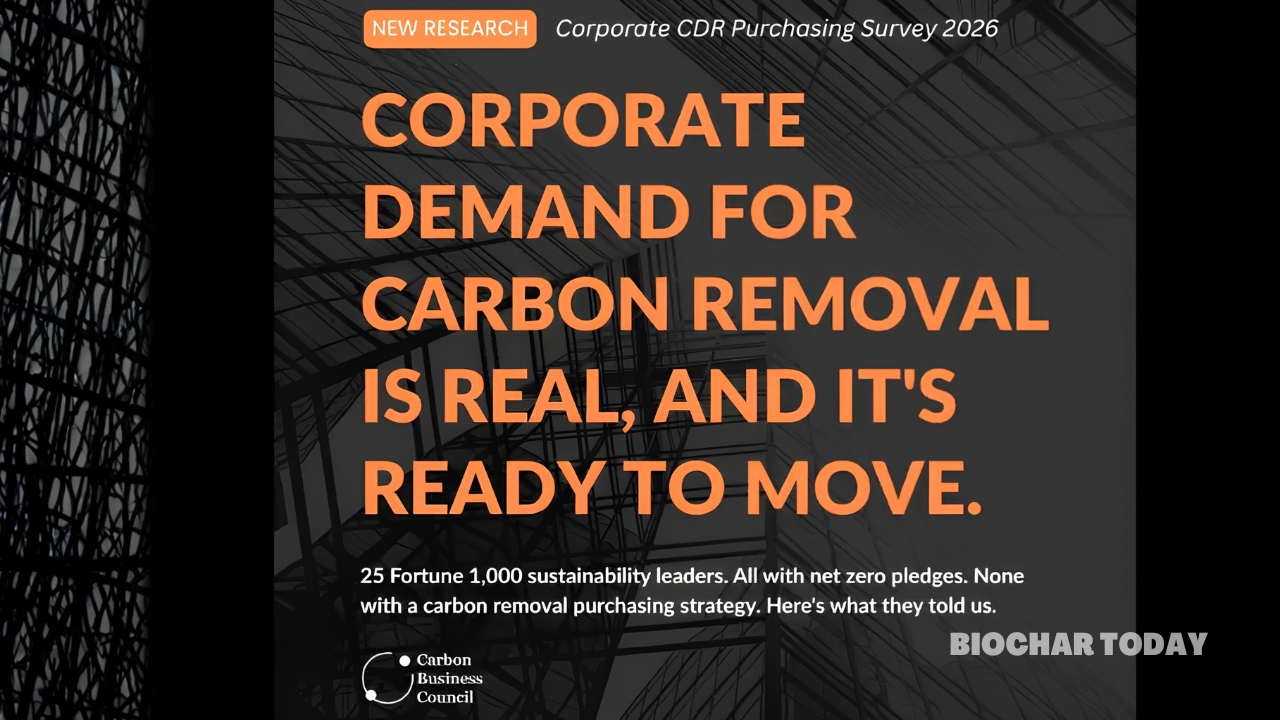
New research published by the Carbon Business Council indicates that major corporations recognize carbon dioxide removal (CDR) as a vital component for achieving net-zero targets, but they are delaying deployment until policy frameworks stabilize. Conducted by Bellwether Research, the study involved 25 detailed interviews with senior sustainability executives at Fortune 1,000 corporations across the United States, the United Kingdom, Germany, and France. Each of these organizations has established net-zero goals but lacks a formalized purchasing strategy for CDR. The findings highlight a market paradox where corporate interest remains high, but capital remains restricted due to systemic administrative and political ambiguities.
The primary challenge addressed by the study is the regulatory uncertainty preventing near-term corporate investment. Executives expressed significant concern that capital allocated to carbon removal credits under existing market conditions might not be recognized under future disclosure rules. In the United States, this operational hesitation stems from federal direction gaps and political volatility. Meanwhile, European respondents cited ambiguity surrounding upcoming compliance mandates, specifically the Corporate Sustainability Reporting Directive (CSRD) and the Green Claims Directive. Without clear long-term verification rules, corporate risk assessment models currently favor a conservative “wait and see” posture rather than active market participation.
To resolve this bottleneck, the research outlines a combination of regulatory adjustments and fiscal structures designed to establish market predictability. Corporate respondents stated that governments must implement mandatory purchasing requirements, even at minimal initial thresholds, to provide an enduring demand signal to the sector. Additionally, the study recommends the introduction of financial incentives, such as tax relief or subsidy mechanisms similar to those historically utilized to scale the wind and solar industries. The research emphasizes that updates to corporate frameworks like the Science Based Targets initiative (SBTi) Corporate Net Zero Standard must align seamlessly with state-level policies to effectively guide corporate procurement behavior.
The resulting outcomes of this research emphasize that upcoming policy decisions will directly determine the scaling velocity of the carbon removal industry. By identifying the exact mechanisms required by buyers—such as compliance mandates and tax subsidies—the study provides policymakers with a clear framework to unlock corporate balance sheets. Clear guidelines would transform CDR from an emerging niche into an established, institutionally backed climate solution. Given that updates to both the European Union Emissions Trading System and the SBTi are scheduled for release this year, the findings underscore that immediate policy leadership is crucial to converting corporate intent into actual market capital.





Leave a Reply