
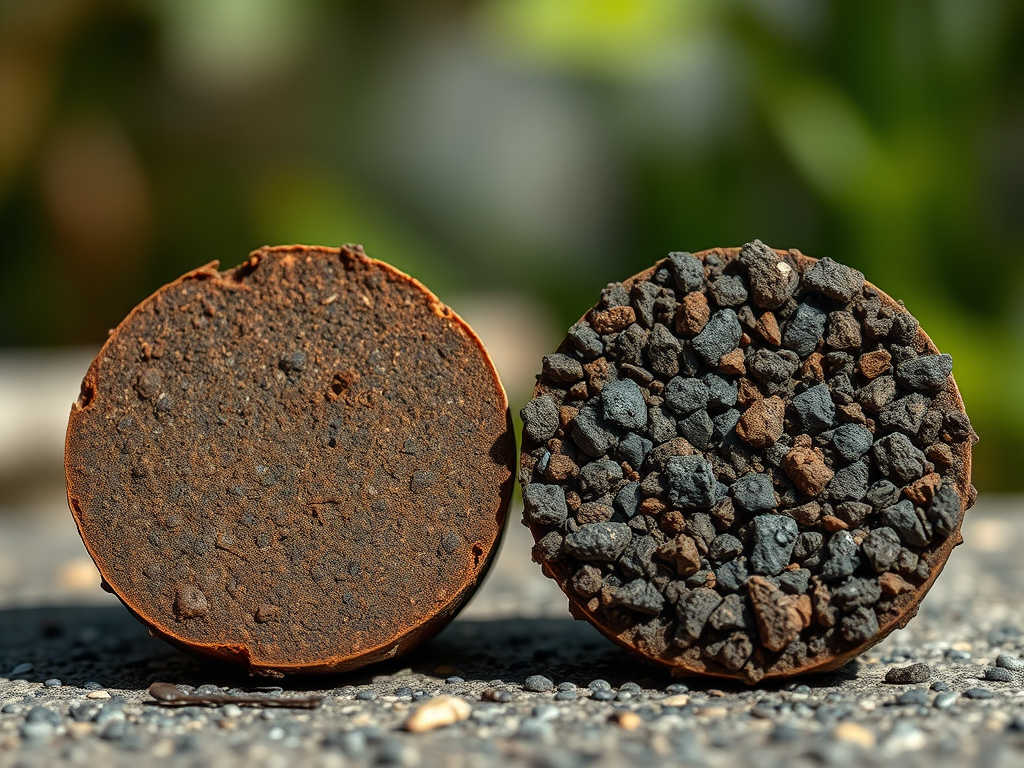
Groundwater contamination by fluoride is a significant public health issue, particularly in arid and semi-arid regions where it serves as the primary source of drinking water. Fluoride levels in excess of WHO standards (0.5–1.5 mg/L) can lead to severe health problems, including dental and skeletal fluorosis. While several water treatment technologies exist, many are costly, create secondary contamination, or are complex to operate. In a search for a more efficient and sustainable solution, a study published in the journal Phycology by Sania Kanwal, Satesh Kumar Devrajani, and Saif Ali Khan Hashmani investigated a novel adsorbent: biocharBiochar is a carbon-rich material created from biomass decomposition in low-oxygen conditions. It has important applications in environmental remediation, soil improvement, agriculture, carbon sequestration, energy storage, and sustainable materials, promoting efficiency and reducing waste in various contexts while addressing climate change challenges. More derived from brown macroalgae, specifically Sargassum polycystum, which was then treated with iron oxide (Fe3O4) nanoparticles. This approach aimed to leverage the unique properties of macroalgae and the enhanced adsorption capabilities of iron-modified materials.
The researchers synthesized the biochar by pyrolyzing the macroalgae at 400°C before impregnating it with iron oxide nanoparticles. This modification was designed to improve the biochar’s surface functionality and create more active sites for fluoride ion binding. The results confirmed this strategy was highly effective. Unmodified biochar had a very low surface area of just 0.52 m2/g. After iron modification, however, the biochar’s surface area dramatically increased to 168.29 m2/g. This significant enhancement in surface area and pore volume, which grew from 0.013 cm3/g to 0.746 cm3/g, was a key factor in the material’s superior performance. This alteration in surface morphology was confirmed by scanning electron microscope (SEM) analysis, which showed the smooth surface of the original biochar becoming rougher and more heterogeneous after the iron was deposited.
The study systematically examined various factors influencing fluoride removal, including pHpH is a measure of how acidic or alkaline a substance is. A pH of 7 is neutral, while lower pH values indicate acidity and higher values indicate alkalinity. Biochars are normally alkaline and can influence soil pH, often increasing it, which can be beneficial More, contact time, and adsorbent dosage. The results highlighted a maximum fluoride removal efficiency of 90.2% under ideal circumstances, specifically at a low pH of 2, with a 60 mg adsorbent dose and a 150-minute contact duration. The research also found that fluoride adsorption capacity increased significantly as the initial fluoride concentration rose, surging from 2.4 mg/g to 21.3 mg/g when the concentration was increased from 5 to 30 mg/L. This is because a higher concentration of fluoride ions leads to more frequent interactions with the adsorbent’s functional groups, which drives the adsorption process.
The mechanism behind this impressive removal efficiency was further explored through isotherm and kinetic modeling. The Langmuir model proved to be a better fit for the experimental data with an R² value of 0.998, suggesting that the adsorption process primarily involved the formation of a single, uniform molecular layer on a homogeneous surface. The kinetic analysis revealed that the pseudo-second-order model provided the best description of the adsorption process, with an R² value of 0.9943. This indicates that chemisorption, a strong chemical bond formation, was the dominant mechanism for fluoride removal. The primary mechanism was identified as surface complexation, facilitated by the abundant active sites on the iron-modified biochar. The introduction of iron also created a new population of highly reactive surface hydroxyl groups, which are crucial for the ligand exchange reaction with fluoride ions.
Overall, the research demonstrates that iron-modified biochar derived from brown macroalgae offers a promising and sustainable solution for fluoride remediation in contaminated water sources. Its high adsorption capacity, coupled with the ease of magnetic separation due to the iron content, positions it as an effective alternative to conventional and often costly treatment methods. This study not only highlights the potential of an abundant and renewable biomassBiomass is a complex biological organic or non-organic solid product derived from living or recently living organism and available naturally. Various types of wastes such as animal manure, waste paper, sludge and many industrial wastes are also treated as biomass because like natural biomass these More source but also provides a clear scientific basis for developing new, low-cost adsorbents for environmental cleanup.
Source: Kanwal, S., Devrajani, S. K., & Hashmani, S. A. K. (2025). Removal of Fluoride from Aqueous Solution Using Biochar Derived from Brown Macroalgae (Sargassum Polycystum) Impregnated with Fe3O4 Nanoparticles. Phycology, 5(3), 37.





Leave a Reply