
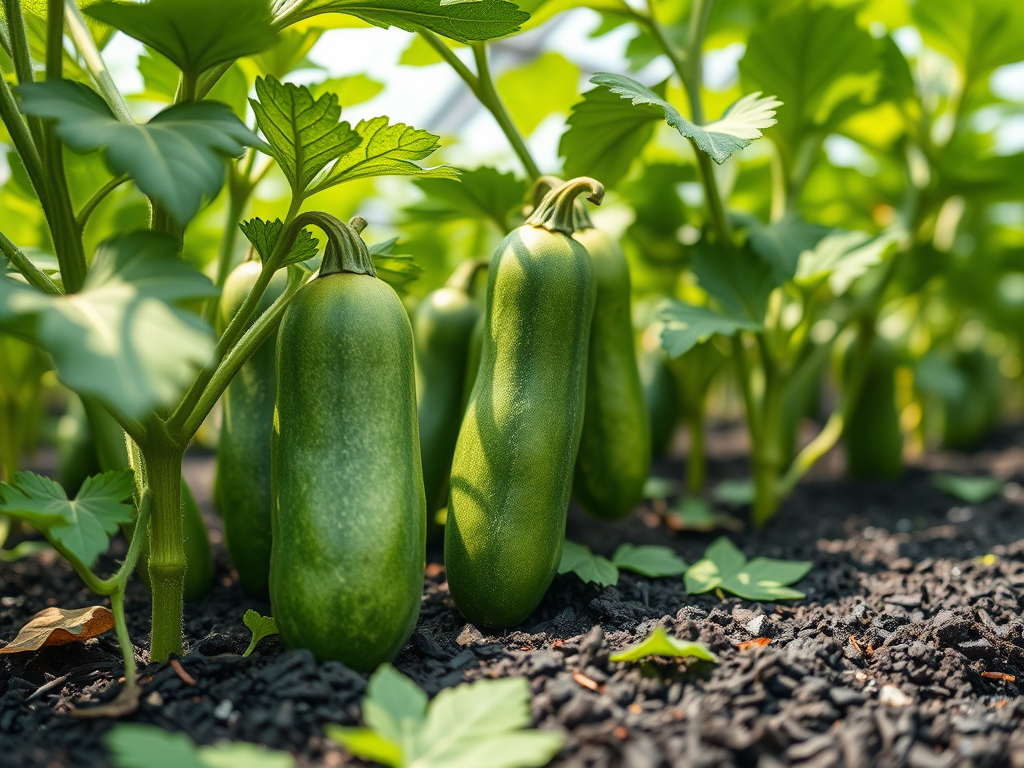
What if tiny bubbles and plant-based charcoalCharcoal is a black, brittle, and porous material produced by heating wood or other organic substances in a low-oxygen environment. It is primarily used as a fuel source for cooking and heating. More could revolutionize how we grow food? A recent study reported in the Journal of Agricultural Water Management demonstrates how combining micro-nano bubble water (MNBW) with biocharBiochar is a carbon-rich material created from biomass decomposition in low-oxygen conditions. It has important applications in environmental remediation, soil improvement, agriculture, carbon sequestration, energy storage, and sustainable materials, promoting efficiency and reducing waste in various contexts while addressing climate change challenges. More and subsurface drip irrigation (SDI) can accelerate cucumber growth in greenhouses while conserving water. Here’s how it works .
MNBW, enriched with oxygen, enhances soil aeration, while biochar—created from organic materials like wood—improves soil porosityPorosity of biochar is a key factor in its effectiveness as a soil amendment and its ability to retain water and nutrients. Biochar’s porosity is influenced by feedstock type and pyrolysis temperature, and it plays a crucial role in microbial activity and overall soil health. Biochar More and reduces its density. Together, these elements create an ideal environment for cucumbers, stimulating root growth, boosting photosynthesis, and increasing yields. The experiment tested various levels of dissolved oxygen in MNBW and different biochar application rates. The results were remarkable: soil oxygen levels increased, photosynthesis significantly improved, and yields soared. Water use efficiency also improved, indicating more crops per drop of water. The best results came from combining high-oxygen MNBW with a high biochar application. This combination promoted cucumber yield and quality, positioning it as a promising solution for greenhouse farming.
While the outcomes are impressive, the study could look into the long-term effects on soil health and examine how this method performs with various crops. Further exploration of cost-effectiveness and scalability for farmers is also essential to ensure broader accessibility.
Ouyang, Zan, et al. (2025). Micro-nano aerated subsurface drip irrigation and biochar promote photosynthesis, dry matter accumulation and yield of cucumbers in greenhouse. Agricultural Water Management 308 : 109295.https://doi.org/10.1016/j.agwat.2025.109295





Leave a Reply