
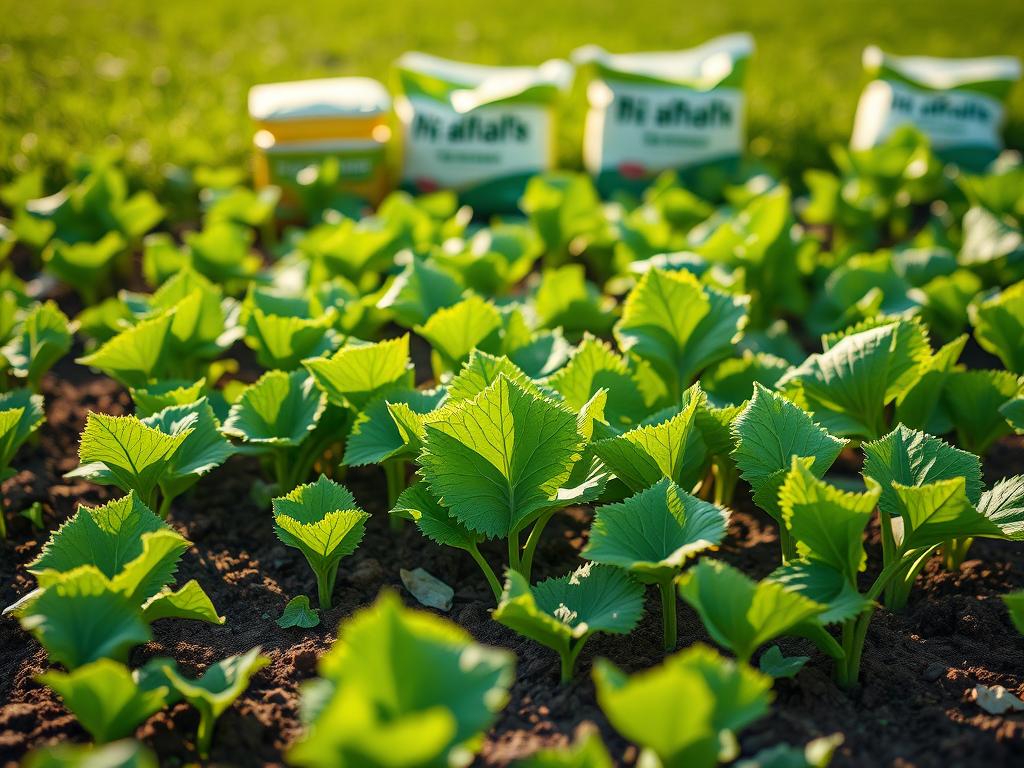
A recent study by Xinwen Li et al., published in Agronomy for Sustainable Development , explores how the combination of biocharBiochar is a carbon-rich material created from biomass decomposition in low-oxygen conditions. It has important applications in environmental remediation, soil improvement, agriculture, carbon sequestration, energy storage, and sustainable materials, promoting efficiency and reducing waste in various contexts while addressing climate change challenges. More and nitrogen (N) fertilizer can enhance alfalfa yield by improving root development and soil properties. The research offers practical insights into sustainable grassland management by addressing both productivity and environmental concerns.
The study evaluated the effects of three biochar application rates (0, 10, 20 t/ha) and four N fertilizer levels (0, 47, 94, 188 kg N/ha/year) on alfalfa growth in sandy loam soils. The findings revealed that the optimal combination of biochar and N fertilizer (10 t/ha biochar and 94 kg N/ha/year) significantly boosted alfalfa biomassBiomass is a complex biological organic or non-organic solid product derived from living or recently living organism and available naturally. Various types of wastes such as animal manure, waste paper, sludge and many industrial wastes are also treated as biomass because like natural biomass these More by promoting robust root traits, including increased root nodule formation, root neck bud development, and root biomass.
Biochar application improved soil properties by reducing bulk density (by 0.8–10.5%) and enhancing the availability of essential nutrients like phosphorus (P) and potassium (K). Meanwhile, the combined application of biochar and N fertilizer elevated soil nitrate and ammonium concentrations, further supporting alfalfa growth. Interestingly, while biochar stimulated root nodule formation, excessive N fertilizer reduced nodule numbers, emphasizing the need for balanced application rates.
This study underscores the synergy between biochar and nitrogen fertilizers in fostering alfalfa growth, improving soil fertility, and promoting sustainable farming practices. However, the authors caution that long-term monitoring is essential to fully understand the effects of biochar and N fertilizer on soil nitrogen dynamics and microbial mechanisms.
SOURCE: Li, X., Zhang, Y., Wang, X., Liu, Q., & Zhao, H. (2025). Biochar and nitrogen fertilizer promote alfalfa yield by regulating root development, osmoregulatory substances, and improving soil physicochemical properties. Agronomy for Sustainable Development, 45(8), 1013–1025. https://doi.org/10.1016/j.agron.2025.101245



Leave a Reply